
The article deals with three Christian writings which originated in Antioch and Asia at the end of the 1st and the first half of the 2nd century, namely Didache, the Letters of Ignatius of Antioch and the Paschal Homily of Melito of Sardis. The first two include only short, marginal paragraphs criticising the Jews. The Paschal Homily, on the other hand, devotes a long, carefully composed passage to their criticism, or more precisely, accusation. It is placed in the text after the presentation of the history of sin, slavery and liberation offered to us by Christ through His death. The passage starts with an accusation against Israel for killing Jesus. The Jews killed Him because they had not recognised God, their Saviour. Then Melito revisits the history of Israel as described in the Old Testament, demonstrating that, from the very beginning, the Jews had been ungrateful and unable to recognise their God. As a result, they deserved their punishment. Though Melito does not mention it directly, it is highly probable that he regards the destruction of Jerusalem and the expulsion of the Jews in 135 AD as their punishment and the sign of their rejection by God. The entire Homily is based on the typological interpretation of the Scripture and demonstrates the author’s excellent knowledge of the Old Testament. The combination of such a violent accusation and such good knowledge of the Jewish tradition, in the context of what we know about the social relations in 2nd century Sardis, suggests that the church in Sardis was dominated by Christians who previously were proselytes.
Download files
Citation rules
Licence

This work is licensed under a Creative Commons Attribution-ShareAlike 4.0 International License.
The Copyright Owners of the submitted texts grant the Reader the right to use the pdf documents under the provisions of the Creative Commons 4.0 International License: Attribution-Share-Alike (CC BY-SA). The user can copy and redistribute the material in any medium or format and remix, transform, and build upon the material for any purpose.
1. License
The University of Silesia Press provides immediate open access to journal’s content under the Creative Commons BY-SA 4.0 license (http://creativecommons.org/licenses/by-sa/4.0/). Authors who publish with this journal retain all copyrights and agree to the terms of the above-mentioned CC BY-SA 4.0 license.
2. Publication Fees Policy
Authors do not bear any costs associated with the publication of their articles, i.e. article processing charges (APCs), language editing fees, colour charges, submission fees, page charges, membership fees, print subscription costs, other supplementary charges. Authors also do not receive any financial gratification for the published articles.
3. Author’s Warranties
The author warrants that the article is original, written by stated author/s, has not been published before, contains no unlawful statements, does not infringe the rights of others, is subject to copyright that is vested exclusively in the author and free of any third party rights, and that any necessary written permissions to quote from other sources have been obtained by the author/s.
If the article contains illustrative material (drawings, photos, graphs, maps), the author declares that the said works are of his authorship, they do not infringe the rights of the third party (including personal rights, i.a. the authorization to reproduce physical likeness) and the author holds exclusive proprietary copyrights. The author publishes the above works as part of the article under the licence "Creative Commons Attribution-ShareAlike 4.0 International".
ATTENTION! When the legal situation of the illustrative material has not been determined and the necessary consent has not been granted by the proprietary copyrights holders, the submitted material will not be accepted for editorial process. At the same time the author takes full responsibility for providing false data (this also regards covering the costs incurred by the University of Silesia Press and financial claims of the third party).
4. User Rights
Under the CC BY-SA 4.0 license, the users are free to share (copy, distribute and transmit the contribution) and adapt (remix, transform, and build upon the material) the article for any purpose, provided they attribute the contribution in the manner specified by the author or licensor.
5. Co-Authorship
If the article was prepared jointly with other authors, the signatory of this form warrants that he/she has been authorized by all co-authors to sign this agreement on their behalf, and agrees to inform his/her co-authors of the terms of this agreement.
I hereby declare that in the event of withdrawal of the text from the publishing process or submitting it to another publisher without agreement from the editorial office, I agree to cover all costs incurred by the University of Silesia in connection with my application.
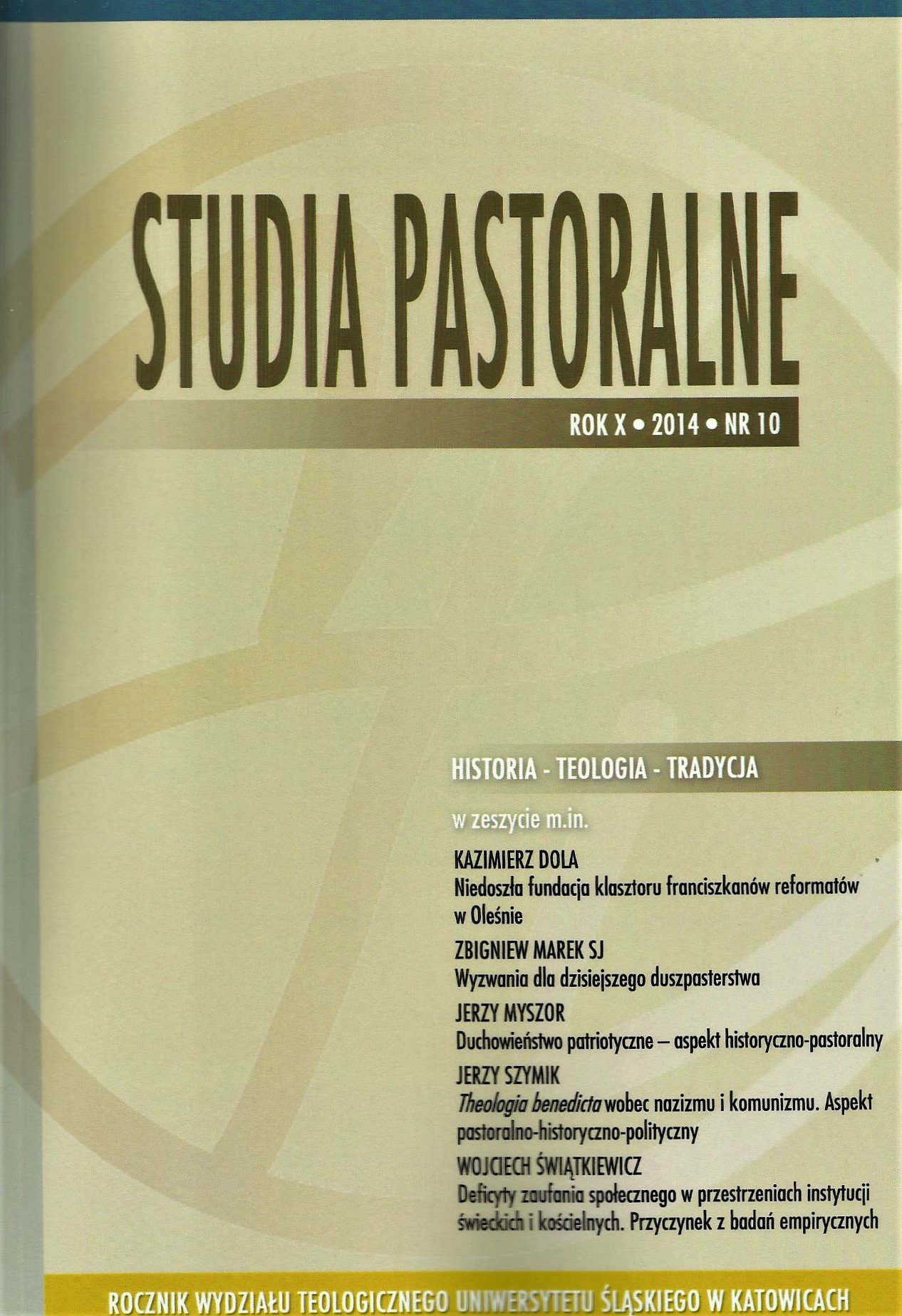
No. 10 (2014)
Published: 2021-08-04
This work is licensed under a Creative Commons Attribution-ShareAlike 4.0 International License.

 English
 Italiano
 Język Polski
 Deutsch