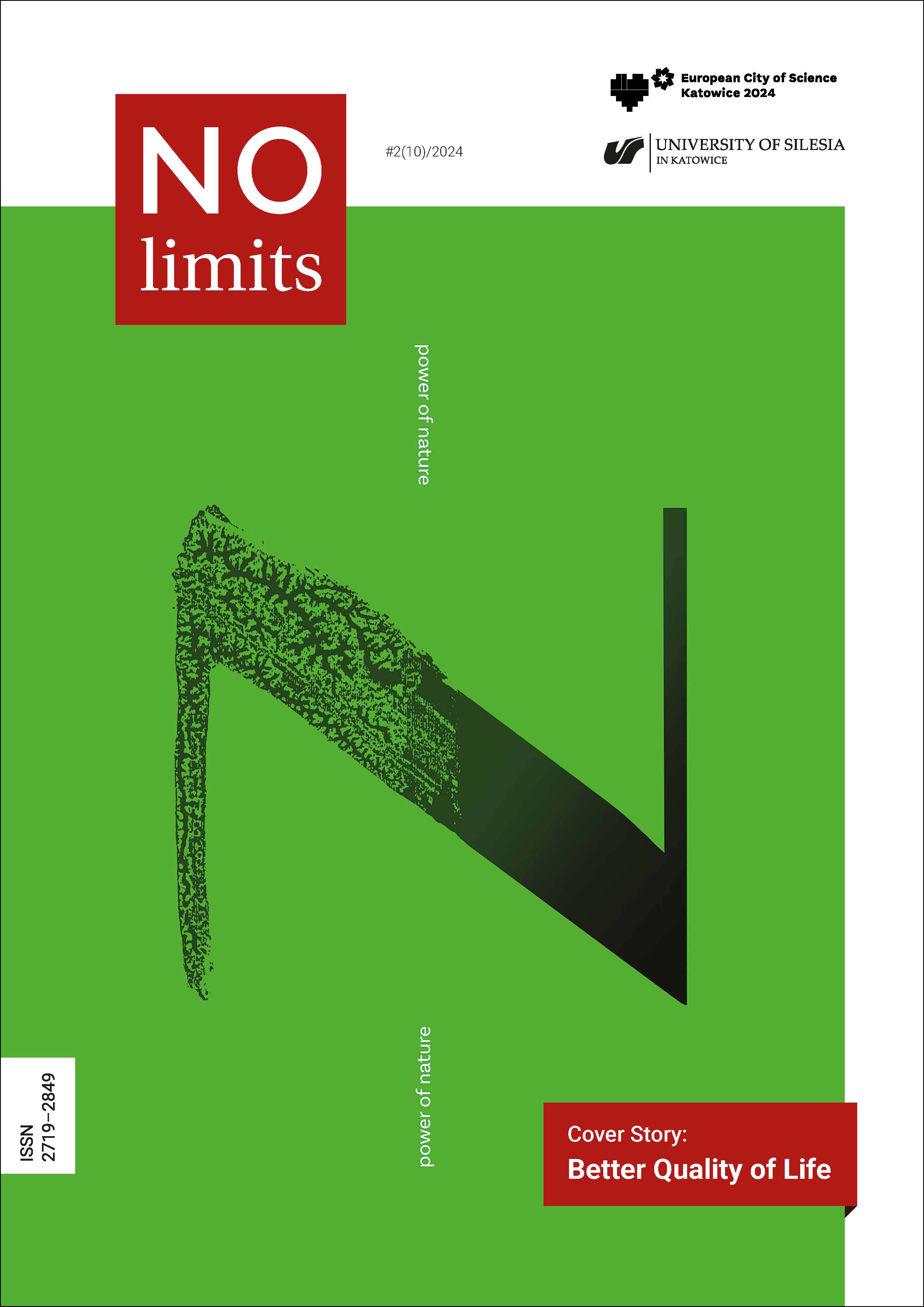
Contemporary cities are mostly seen through the lens of organised greenery, while the potential of unorganised greenery growing on wasteland and post-industrial sites remains underappreciated despite being equally valuable. In such places, nature itself shapes plant communities that are best adapted to difficult environmental conditions, contributing to soil remediation, water retention, and biodiversity. Examples from Silesia, such as the Silesian Park, Żabie Doły, and Uroczysko Zielona show that nature can be an effective partner in the process of revitalising urban spaces. The concept of a ‘novel ecosystem’ created by plant succession in degraded areas points the way towards sustainable urban development in the face of climate change. Therefore, we should learn to trust nature and consider it an ally in urban planning.
The article discusses the revitalisation of post-industrial areas in Poland, with particular emphasis on Upper Silesia. Using the example of the Queen Louise Adit complex in Zabrze and other sites, it shows how former industrial plants are gaining new functions: tourist, educational, social, and environmental. The researcher points to the changes that have taken place in the approach to industrial heritage – from the demolition of infrastructure to its conscious preservation and adaptation. She also reminds us of the importance of grassroots initiatives, the role of local communities, and the need for revitalisation planning that takes into account environmental and social aspects.
If progress is accelerating and science and technology are advancing faster than ever, why are we still facing cancers, immunological diseases, and new ailments and the arsenal of so-called ‘civilisational diseases' is expanding? This article provides an overview of the state of modern research into new therapies and drugs. It describes groundbreaking discoveries, such as CRISPR/Cas9 technology, click chemistry, and mRNA vaccines, as well as the everyday challenges faced by scientists, including testing substances on biological models, the limitations of nanotechnology, and the high costs of gene therapy. The expert explains why the road from the laboratory to the pharmacy can be long and full of obstacles. The development of personalised medicine is also of key importance.
Glioblastoma multiforme is one of the most aggressive forms of glioma, capable of growing rapidly, mutating and spreading throughout the brain. It is characterised by invasiveness, i.e. rapid spread to neighbouring brain tissues, making complete surgical removal difficult. It is also highly resistant to standard treatment options such as radiotherapy and chemotherapy. The article presents a multifaceted approach to combating this type of cancer, combining surgery, radiotherapy, and chemotherapy with personalised medicine based on genetic testing. The author points to nanotechnology as a future aid in delivering drugs directly to cancer cells, thereby minimising side effects, and suggests that nanoparticles could also serve as diagnostic tools.
Implants, like clothes, are produced in only a few sizes and usually correspond to the most common shapes. It is our body, i.e. the broken bone or damaged joint, that, with the help of surgeons, has to ‘adapt’ to them. Personalised implants made with the use of 3D printing are an enticing alternative. They are created as a result of close cooperation between doctors, engineers, technicians, and physicists. The process allows the bone structure and joint geometry to be perfectly reproduced. Although today such solutions are primarily used for young patients and people with severe bone deformities, in the near future they could become a hospital standard.
The problem of obesity among children and young people is growing, and Polish schools are not always prepared to respond appropriately. Data from studies conducted in Warsaw and Katowice show that a significant percentage of students struggle with excess weight, the main causes of which are poor diet and lack of physical activity. The text addresses the lack of systemic support in schools and the inadequate implementation of preventive programmes. It also points to the need for more educational activities. The importance of counteracting discrimination, supporting overweight students during classes, and the proper approach on the part of teachers and parents cannot be overstated.
The article addresses the issue of social inclusion of people with disabilities, especially intellectual disabilities, and the role played by teachers and special education teachers in this process. It highlights the challenges and opportunities associated with educational and social work with people with diverse needs. The text draws attention to the need to overcome mental barriers, use simple language in communication, and listen carefully when interacting with people with intellectual disabilities. Working with people with intellectual disabilities can be not only an important professional experience but also a source of deep reflection and personal development. The article emphasises that the basis for effective support is the recognition of the equality and dignity of every human being.
The article addresses the problem of alcoholism as a phenomenon that affects not only addicts but also their loved ones, especially children. It cites troubling statistics on alcohol consumption in Poland and Europe and presents the social and psychological consequences of addiction, focusing on the experiences of adult children of alcoholics (ACAs). It also highlights the importance of therapy, self-discovery and personal development as tools for regaining control over one's life. It draws attention to the need for education, support, and breaking social taboos related to alcoholism and co-dependency. The article is based on the results of many years of research by scholars, which led to the publication of a monograph – a compendium of knowledge on how to overcome the trauma of growing up in a family affected by alcoholism.
The concept of quality of life understood as a certain standard of living came into use in the second half of the 20th century. It encompassed various numbers and statistics, indicating a person’s economic well-being. By the end of the 20th century, quality of life ceased to be defined on the basis of material conditions and began to be perceived based on values, well-being, and positive interpersonal relationships. It has become the equivalent of happiness and life satisfaction. A moral theologian and chaplain at a Catholic centre for people with disabilities explains what else lies behind this concept, with particular emphasis on the role of spirituality.




 English
 Język Polski