

ЛИНГВИСТИЧЕСКИ-ДИДАКТИЧЕСКИЕ РЕФЛЕКСИИНАД ИНОЯЗЫЧНОЙ ИНТЕРКУЛЬТУРНОЙ КОММУНИКАЦИЕЙ
Р е з ю м е
Одно из самых основных направлений в модернизации как теоретической, так и при кладной глоттодидактики, вмещается в понятие иноязычной интеркультурной коммуникации. На этой основе вырисовывается необходимость модификации процесса обучения/учения иностранным языкам с учетом нового переосмысления многих проб-лем современной глоттодидактики, которые до сих пор казались незыблемыми.В указанном выше контексте главная цель данных рассуждений сводится к пред-ставлению следующих вопросов:— определить главную цель кросскультурного общения в обучении/учении ино-стран ным языкам;— определить функции этого общения;— обсудить основной иноязычный аппарат прямо или косвенно касающийся inter cultural communication с одновременной попыткой интерпретации восьми глав ных понятий-терминов;— уточнить факторы детерминирующие интеркультурную коммуникацию (т. наз. об щие, базисные, национально-культурные и специфические);— наметить специфику факторов обусловливающих польско-русский межкультур-ный диалог (специфические факторы) на фоне мифа славянского единства;— обосновать формирование т. наз. третьей культуры как результат аккультура ции.На основании анализа указанных выше вопросов были сформулированы выводы, которые, между прочим, касаются: необходимости дальнейшего уточнения понятийно-го аппарата лингвокультурологии и интеркультурной коммуникации; многоаспектного изучения специфики отражения культуры; отбора и изучения единиц культурных зна-ний для дидактических целей, или переосмысления многих вопросов современной глот тодидактики с учетом теоретических и прикладных основ иноязычной интеркуль-турной коммуникации.
LINGUODIDACTIC REFLECTIONS ON INTERCULTURAL COMMUNICATION IN A FOREIGN LANGUAGE
S u m m a r y
One of the main directions of modernization of both theoretical and applied glottodi-dactics is included in the concept of foreign language intercultural communication. This points to a necessity of modifi cation of the process of teaching/learning foreign languages, considering re-evaluation of numerous problems of contemporary glottodidactics that have so far seemed unquestionable.In this context, the main aim of the present considerations is to present the following issues:— determining the main aim of intercultural communication in foreign language tea-ching,— determining the function of this communication,— presenting the basic conceptual apparatus directly and indirectly pertaining to inter-cultural communication, with a simultaneous attempt at interpretation of the eight main conceptual terms,— identifying the factors determining intercultural communication (global, base, ethno--cultural and specifi c factors),— sketching the specifi c factors determining Polish-Russian intercultural dialogue at the background of the so-called myth of Slavic unity,— justifying the formation of the so-called third culture as a result of acculturation.The analysis of the above-mentioned issues served to formulate a number of conclusions regarding: unifi cation of the conceptual apparatus of linguoculturology and intercultural communication; multidimensional study of the specifi city of the refl ection of culture; des-cription, selection and the study of units of cultural knowledge for didactic purposes; as well as re-evaluation of multiple problems of contemporary glottodidactics considering theoretical and applied foundations of foreign intercultural communication.
Pobierz pliki
Zasady cytowania
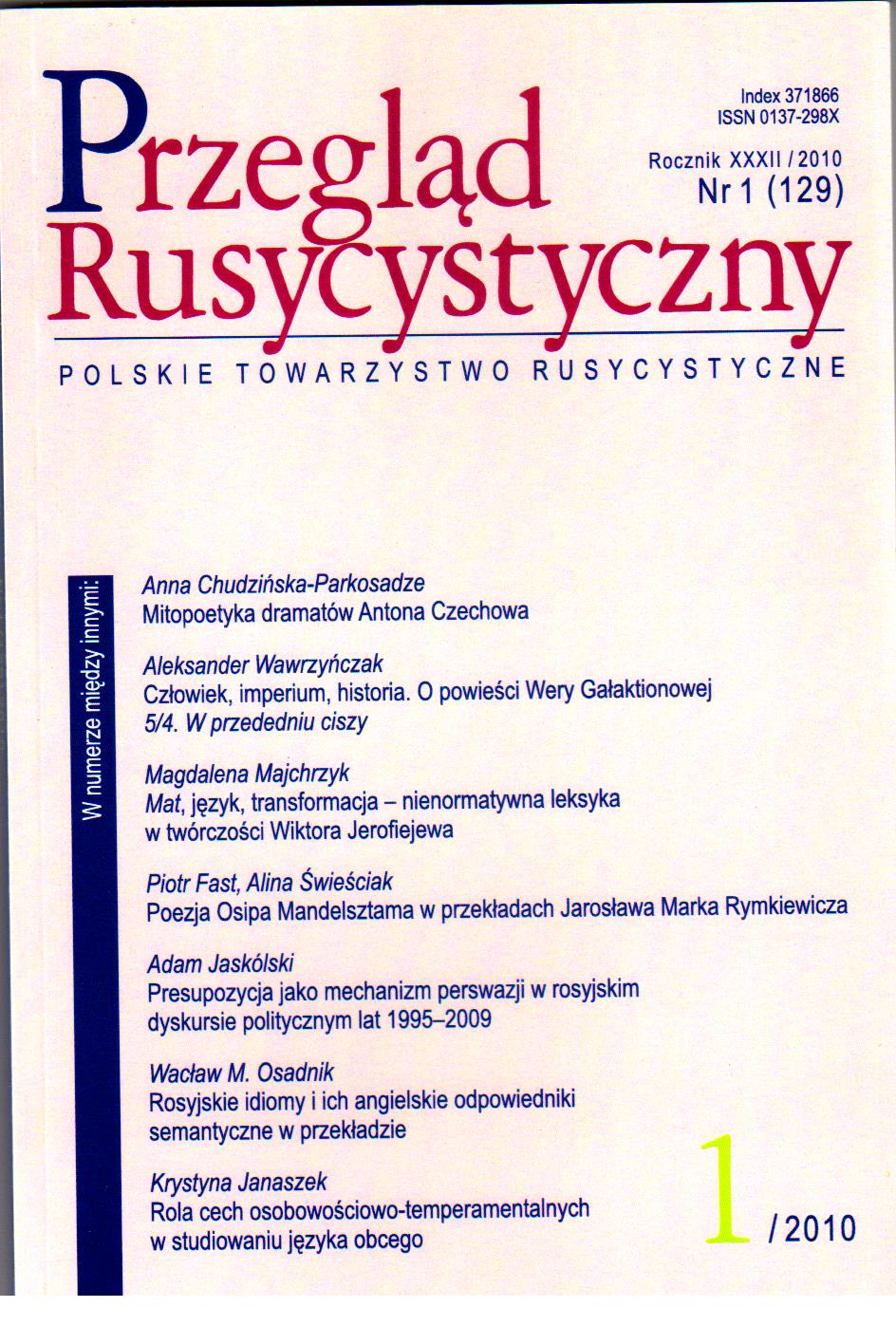
Nr 1 (2010)
Opublikowane: 2015-08-22
 10.31261/pr

 Język Polski
 Русский
 English