

 https://doi.org/10.31261/pr.13296
In this article on the material of Russian-language journalism, the specifics of the formation of noun names with a general meaning of a person in the Russian language of Latvia 1918–1940 in comparison with the language of metropolis. Word formation in this category of names in the language of metropolis in the 20–30s and further characterized by a deepening specification of productive suffixes -ист-; -(ов)ец-/-(ев)ец-; -щик- /-льщик. During the specification, duplexity in the expression of word-forming meanings and a direct consequence of duplexity – competition of nominations in the same meaning with different suffixes – are eliminated. The process of specifying these word-forming suffixes in the Russian language of Latvia during the period under review is not traced, here, on the contrary, there is an increase in duplicity and active competition of duplex nominations. One of the duplets is often unknown to the language of the metropolis and is formed in the Russian language of Latvia: спортист – спортсмен, конторист – конторщик, ленинец – ленинист.
Download files
Citation rules
Cited by / Share




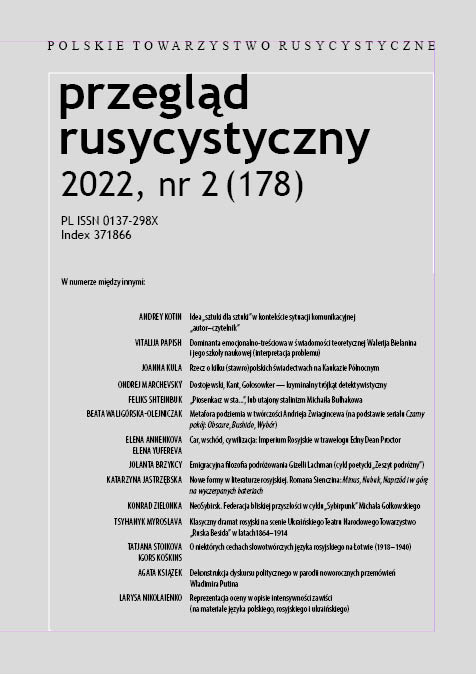
No. 2 (178) (2022)
Published: 2022-05-30
10.31261/pr

 Język Polski
 Русский
 English