
 https://doi.org/10.31261/pr.18631
W artykule zbadano zjawisko tworzenia się wzorców retrospektywnych w literaturze o wojnie 1812 roku. Zarówno w czasie kampanii wojskowej, jak i po niej wykształciło się niezwykle różnorodne zaplecze literacko-informacyjne, spełniające jednocześnie funkcje propagandowe, prawdy i zrozumienia historycznego, a także późniejszej interpretacji. To właśnie w tym okresie pojawiła się literatura patriotyczna, dając impuls późniejszemu kształtowaniu się konserwatywnych partii i słowianofilów. Jednak w tej różnorodności dziennikarstwa, wspomnień, relacji naocznych świadków i literatury wysokiej wyróżniają się motywy przekrojowe, ukształtowane na podstawie wiedzy retrospektywnej (czyli zjawiska wiedzy z perspektywy czasu). Różne kombinacje motywów retrospektywnych tworzą wzorce — duże obrazy, które z góry determinują interpretację wydarzeń. Jednym z tych wzorców jest wzór zwycięstwa, uformowany z perspektywy czasu na długo przed wojnami napoleońskimi. Schemat ten tworzy ideę niezwyciężoności armii rosyjskiej i uwzględnia oczywiste (Austerlitz 1805, Frydland 1807) i nieoczywiste (Borodino 1812) porażki lub bitwy, które nie przyniosły rezultatu w aspekcie zwycięstwa i chwały, straty — w aspekcie świętej ofiary. Ze względu na dominację schematu zwycięstwa relacje z Wojny Ojczyźnianej 1812 roku odbiegają od rzeczywistego stanu rzeczy, gdy zagrożone było istnienie państwa rosyjskiego.
Pobierz pliki
Zasady cytowania
Cited by / Share



Licencja

Utwór dostępny jest na licencji Creative Commons Uznanie autorstwa – Na tych samych warunkach 4.0 Miedzynarodowe.
Właściciele praw autorskich do nadesłanych tekstów udzielają Czytelnikowi prawa do korzystania z dokumentów pdf zgodnie z postanowieniami licencji Creative Commons 4.0 International License: Attribution-Share-Alike (CC BY-SA 4.0). Użytkownik może kopiować i redystrybuować materiał w dowolnym medium lub formacie oraz remiksować, przekształcać i wykorzystywać materiał w dowolnym celu.
1. Licencja
Wydawnictwo Uniwersytetu Śląskiego zapewnia natychmiastowy otwarty dostęp do treści swoich czasopism na licencji Creative Commons BY-SA 4.0 (http://creativecommons.org/licenses/by-sa/4.0/). Autorzy publikujący w tym czasopiśmie zachowują wszelkie prawa autorskie i zgadzają się na warunki wyżej wymienionej licencji CC BY-SA 4.0.
2. Oświadczenie Autora
Autor deklaruje, że artykuł jest oryginalny, napisany przez niego (i współautorów), nie był wcześniej publikowany, nie zawiera stwierdzeń niezgodnych z prawem, nie narusza praw innych osób, jest przedmiotem praw autorskich, które przysługują wyłącznie autorowi i jest wolny od wszelkich praw osób trzecich, a także, że autor uzyskał wszelkie niezbędne pisemne zgody na cytowanie z innych źródeł.
Jeśli artykuł zawiera materiał ilustracyjny (rysunki, zdjęcia, wykresy, mapy itp.), Autor oświadcza, że wskazane dzieła są jego dziełami autorskimi, nie naruszają niczyich praw (w tym osobistych, m.in. prawa do dysponowania wizerunkiem) i posiada do nich pełnię praw majątkowych. Powyższe dzieła udostępnia jako część artykułu na licencji „Creative Commons Uznanie autorstwa-Na tych samych warunkach 4.0 Międzynarodowe”.
UWAGA! Bez określenia sytuacji prawnej materiału ilustracyjnego oraz załączenia stosownych zgód właścicieli majątkowych praw autorskich publikacja nie zostanie przyjęta do opracowania redakcyjnego. Autor/autorka oświadcza równocześnie, że bierze na siebie wszelką odpowiedzialność w przypadku podania nieprawidłowych danych (także w zakresie pokrycia kosztów poniesionych przez Wydawnictwo UŚ oraz roszczeń finansowych stron trzecich).
3. Prawa użytkownika
Zgodnie z licencją CC BY-SA 4.0 użytkownicy mogą udostępniać (kopiować, rozpowszechniać i przekazywać) oraz adaptować (remiksować, przekształcać i tworzyć na podstawie materiału) artykuł w dowolnym celu, pod warunkiem, że oznaczą go w sposób określony przez autora lub licencjodawcę.
4. Współautorstwo
Jeśli artykuł został przygotowany wspólnie z innymi autorami, osoba zgłaszająca niniejszy formularz zapewnia, że została upoważniona przez wszystkich współautorów do podpisania niniejszej umowy w ich imieniu i zobowiązuje się poinformować swoich współautorów o warunkach tej umowy.
Oświadczam, że w przypadku nieuzgodnionego z redakcją i/lub wydawcą czasopisma wycofania przeze mnie tekstu z procesu wydawniczego lub skierowania go równolegle do innego wydawcy zgadzam się pokryć wszelkie koszty poniesione przez Uniwersytet Śląski w związku z procedowaniem mojego zgłoszenia (w tym m.in. koszty recenzji wydawniczych).
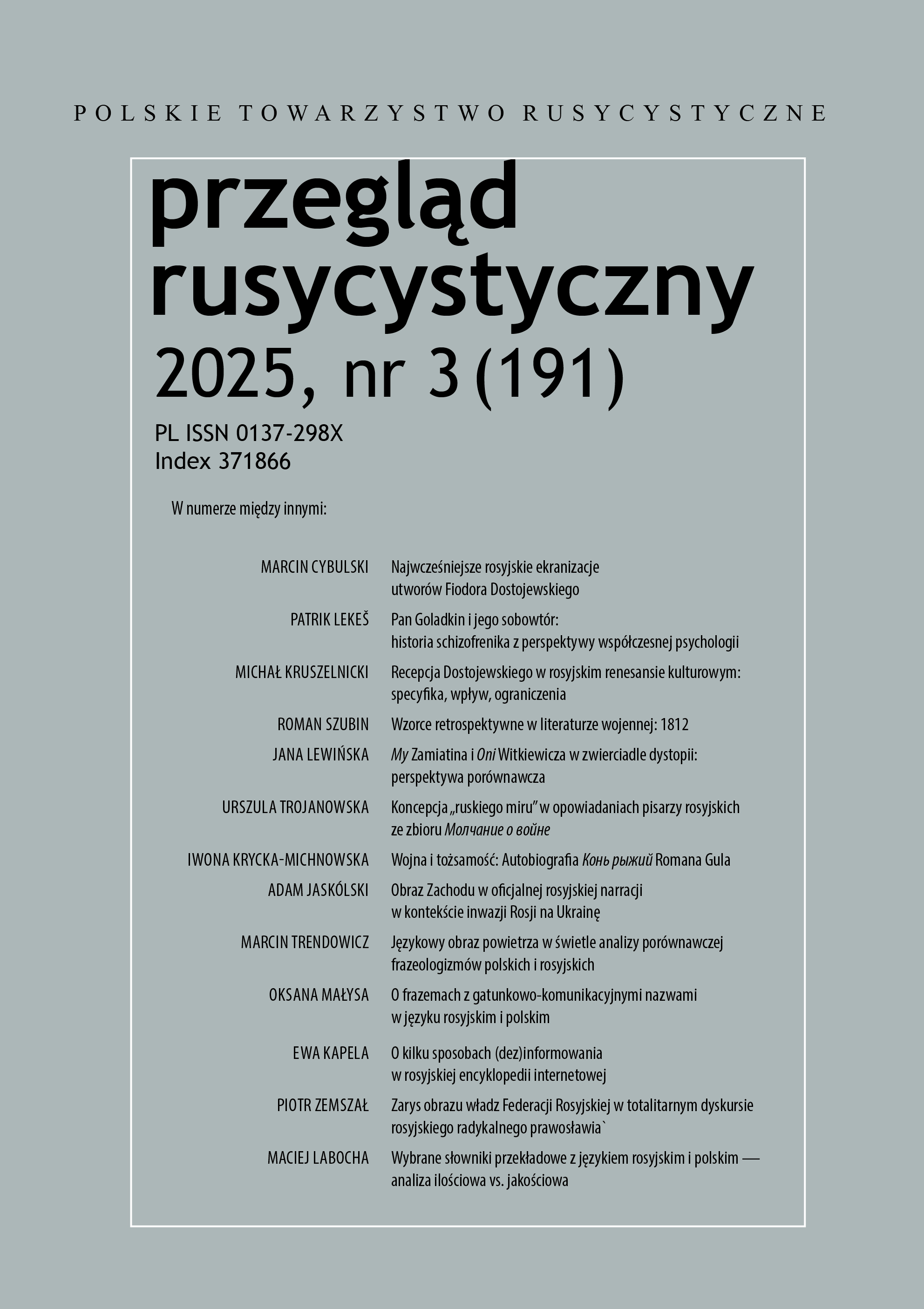
Nr 3 (191) (2025)
Opublikowane: 2025-09-21
10.31261/pr
Utwór dostępny jest na licencji Creative Commons Uznanie autorstwa – Na tych samych warunkach 4.0 Miedzynarodowe.

 Język Polski
 Русский
 English