


 https://doi.org/10.31261/pr.14766
Do tej pory badacze języka rosyjskiego w Ameryce koncentrowali się na największych społecznościach wschodniosłowiańskich na północy i północnym wschodzie kraju. Od lat 90. wraz ze wzrostem metropolii Atlanty rozrasta się także diaspora rosyjskojęzyczna, w której zachodzą ciekawe procesy socjolingwistyczne związane z wyborem języka w określonych dziedzinach życia i przekazem języka mniejszości jako odziedziczonego młodszemu pokoleniu. W artykule przedstawiono wyniki pierwszego etapu badań nad rodzinną polityką językową słowiańskich imigrantów w Georgii na podstawie danych ilościowych i jakościowych związanych z samooceną znajomości języka angielskiego i rosyjskiego w zależności od sfery życia i typu sprawności językowej (czytanie, pisanie, mówienie, słuchanie), motywacją wyboru miejsca zamieszkania, charakterystykami społecznymi, składem etnicznym rodziny, uczestnictwem w życiu kulturalnym diaspory i in.
Pobierz pliki
Zasady cytowania
Cited by / Share




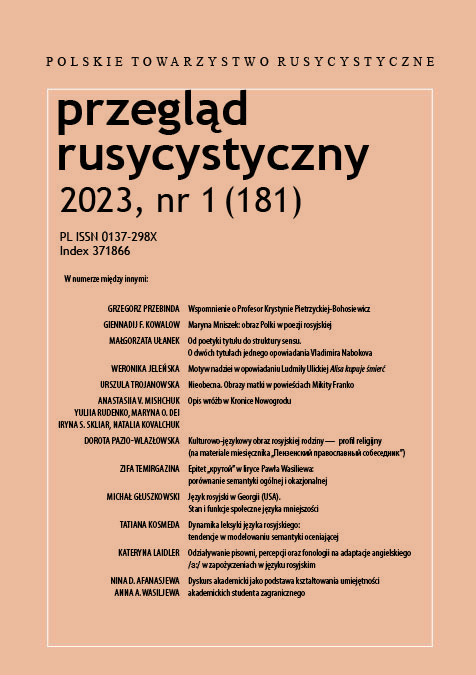
Nr 1 (181) (2023)
Opublikowane: 2023-03-05
10.31261/pr

 Język Polski
 Русский
 English