


 https://doi.org/10.31261/pr.7894
Память из гипса. О хрупкости традиции и моделировании прошлого-будущего в позднем творчестве Виктора Пелевина
Целью нынешней статьи является попытка интерпретации двух поздних романов Виктора Пелевина – Лампы Мафусаилаи iPhuck 10– к ключе хронотопа, памяти и забвения. Проведенный анализ выявил несомненную заинтересованность русского писателя в физических и философских теориях, пытающихся разгадать истинную природу Вселенной. Время и пространство в анализированных произведениях неразделимы, так как создают сложную сеть параллельных миров. К тому же эти новые реальности не функционируют линейным, привычным для человеческого познания образом. В Лампе Мафусаила путешествия во времени возможны, но введение модификаций/улучшений в структуре прошлого полностью уничтожает будущее (в сущности изменение прошлого становится путем в другое пространство-время). С другой стороны, вiPhuck 10 путешествие во времени приобретает оригинальную форму демиургического акта (в данном случае созданный таким образом мир полон тоски и ностальгии по исчезнувшим духовным ценностям). В таком ракурсе путешествия во времени трудны и лишены смысла, так как все возможные реальности существуют и материализируются, будучи параллельными действительностями.
Скачать файлы
Правила цитирования
Цитируется в / Поделиться




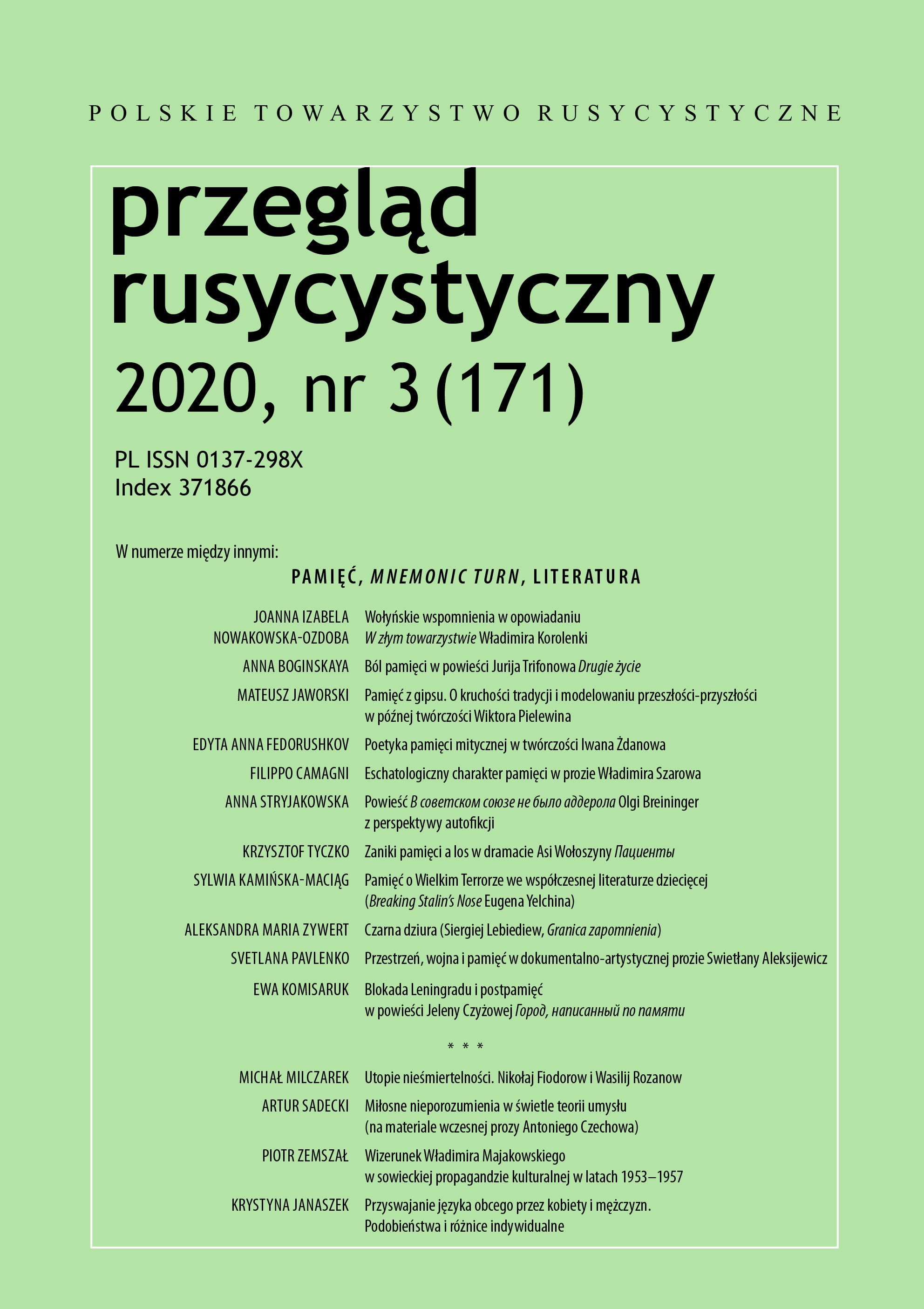
№ 3 (171) (2020)
Опубликовано: 2020-06-10
10.31261/pr

 Język Polski
 Русский
 English