
Similarly as all theological questions, an inquiry about God’s suffering constitutes a deeply existential question, relating to humans and touching their most sensitive aspects of life and faith. While searching for the truth, individually marked intuitions themselves are not sufficient. That is why theology constantly faces this questions in the light of the Holy Bible, Tradition, historical achievements of theologians and mystics, trying to open a way to cognition and understanding through accurate notions. The issue is visible in J. Ratzinger’s works / teachings of Benedict XVI. The Pope has been developing his theological reflection concerning God’s suffering, reaching back to anthropomorphisms from Old Testament, the consequences of Incarnation from New Testament, showing the core of confrontation between young Jewish Christianity and Hellenistic mentality and stoic philosophy. He then takes out the most significant answers from the treasure trove of Tradition to open modern perspectives, on the basis of such synthesis, answering questions of the contemporary world. The most characteristic feature of Pope’s deliberations links the category of God’s co-suffering developed by theology with the category of Divine con-solatio. He convinces that acceptance of someone’s pain involves the very essence of true consolation. As a result, the Christ’s cross – the most generous gesture of God’s co-suffering Love – is of a really consolationary nature. As such, it remains the only hope for those suffering.
Download files
Citation rules
Licence

This work is licensed under a Creative Commons Attribution-NonCommercial-NoDerivatives 4.0 International License.
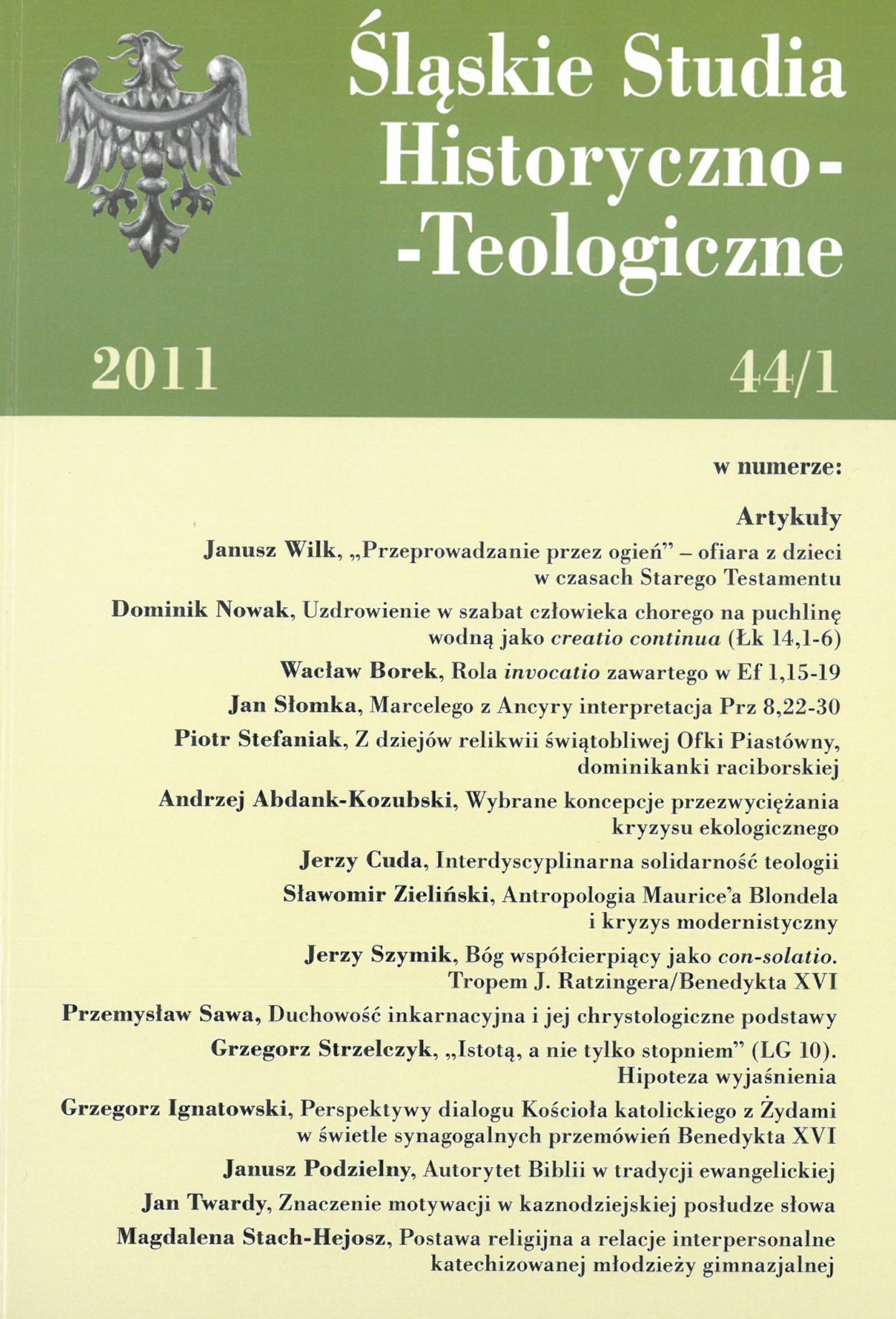
Vol. 44 No. 1 (2011)
Published: 2011-06-30
This work is licensed under a Creative Commons Attribution-NonCommercial-NoDerivatives 4.0 International License.

 English
 Język Polski