

Having been distorted since modern times, the notions of truth and freedom have been radically juxtaposed in post-modern world views, consequently resulting in losing the very values: the truth is questioned, while freedom is determined and limited by worldly purposes. Joseph Ratzinger/Benedict XVI shows that the terms are, de facto, theologically important (Theological Hermeneutics), i.e. they may be fully and properly understood from the heart of Christian faith. God is the right guarantor of the truth (involving
the existence of the objective and judicious reality) and the Embodiment of God’s Son, Logos, is the ultimate argument for its attainability and cognizability. When Jesus confessed: ‘I am the truth’ (John, 14.6), He convinces that the truth is universal and belongs to God. Thereby, it remains universally binding – it is the appropriate basis of ethos. The truth constitutes the key to interpret reality and a superior (independent) criterion for its arrangement (also in the social and political sense). Thus, the task of Christianity and theology is to restore the proper, Christological understanding of truth and freedom for the world, as well as their inseparable, redemptive relationship: ‘the truth will set you free’ (John, 8.32).
Download files
Citation rules
Licence

This work is licensed under a Creative Commons Attribution-NonCommercial-NoDerivatives 4.0 International License.
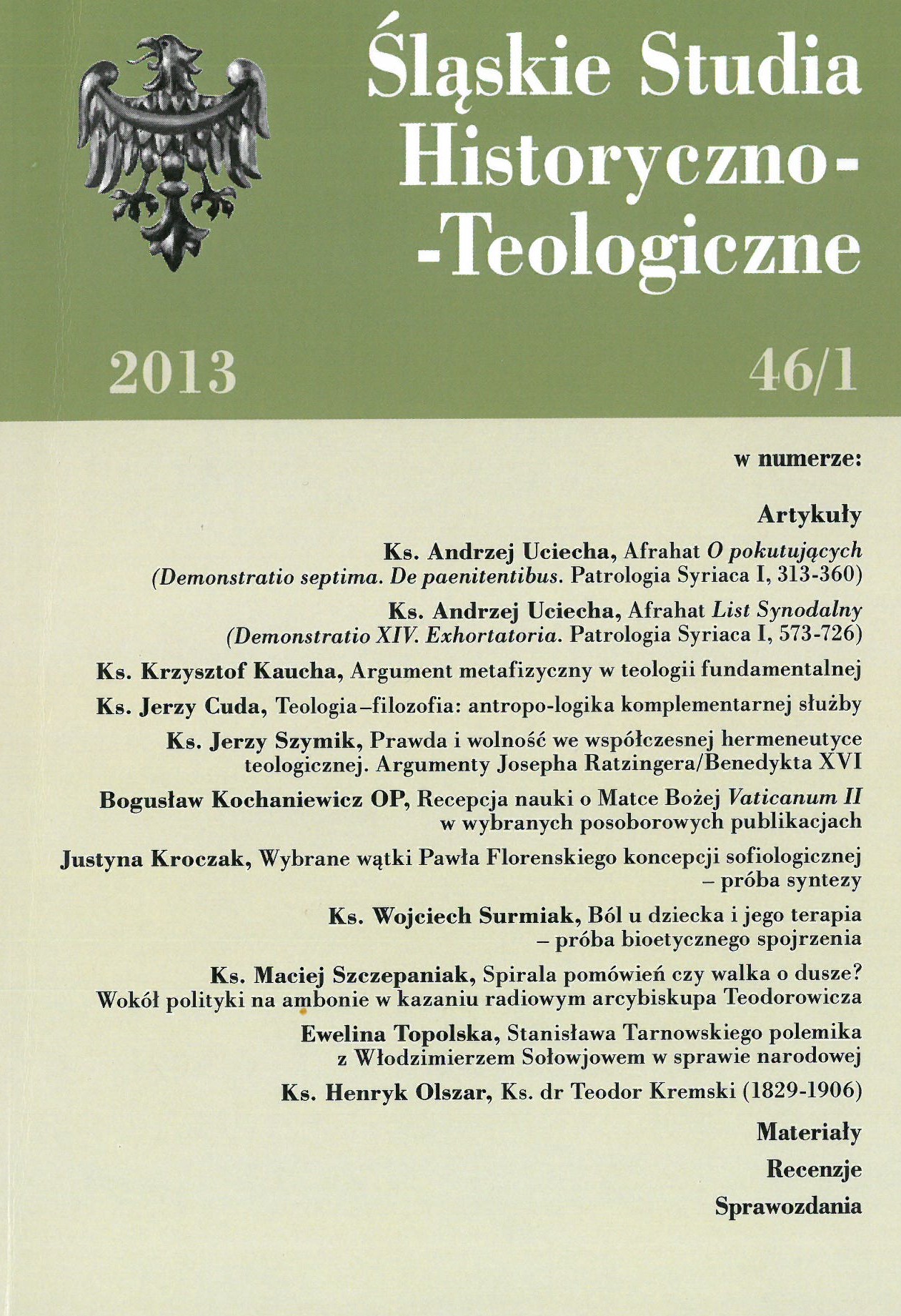
Vol. 46 No. 1 (2013)
Published: 2013-06-30
This work is licensed under a Creative Commons Attribution-NonCommercial-NoDerivatives 4.0 International License.

 English
 Język Polski