
Den Ausgangspunkt dieser Arbeit bildet die Konzilsthese über den Pluralismus der Formen der ethischen Heiligkeit, nämlich, dass die eine und einzige Heiligkeit auf verschiedene Weisen realisiert werden kann, je nach den Umständen des Lebens und der Art der Pflichten. Über den Typus der ethischen Heiligkeit entscheidet also die Berufung des Menschen. Der Autor stellt die Frage nach der spezifischen Heiligkeit der Eheleute im Lichte „Gaudium et spes”.
Man kann die Ehe im personalen Aspekt analysieren und in diesem Sinne bedeutet sie eine personale Gemeinschaft, die durch eine besondere Struktur charakterisiert ist. Im sozialen Aspekt analysiert, ist sie eine familiäre Gesellschaft.
Gemäss dem Prinzip „agere sequitur esse”, nach der Bestimmung des ehelichen „esse”, sowohl in der interpersonalen wie in der sozialen Dimension, wurde das entsprechende für dieses esse — „agere” charakterisiert, in welchem, konform zu den Konzilsforderungen, die fundamentalen Vektore der ethischen Heiligkeit der Eheleute gesucht werden sollen. Die durchgeführten Analysen zeigen, dass die Antwort auf die Problemfrage zweigliedlich ist, adequat zu den zwei Ebenen der ehelichen Wirklichkeit.
Das Spezifikum der Heiligkeit der Eheleute wird von einer speziellen Liebe bestimmt, die nur im Rahmen der ehelichen Gemeinschaft verwirklicht werden kann. Sie ist dem interpersonalen Bunde des Mannes und der Frau eigen und weist Eigenschaften auf, welche in anderen Formen der Liebe nicht vorkommen.
Den zweiten Teil der Antwort sollte man auf der Ebene der Pflichten des Ehestandes suchen. Das Studium der konziliaren Ehelehre lässt keinen Zweifel darüber, dass die Hauptmission der Eheleute die Elternschaft ist. Die prokreariv-edukative Pflicht realisieren die Eheleute entsprechend ihrer Berufung nur dann, wenn sie verantwortlich sind. Daraus folgt, dass die verantwortliche Elternschaft, neben der Liebe, der zweite Vektor ist, der die eheliche Heiligkeit spezifiziert.
Nach dem Grundsatz des Konzils sollte man es vermeiden, eine scharfe Grenzlinie zwischen dem interpersonalen und sozialen Aspekt der Ehe zu ziehen, wodurch der enge Zusammenhang zwischen ehelicher Liebe und Fruchtbarkeit zum Ausdruck kommt. Die integrale Vision der ehelich-familiären Gemeinschaft, die „das Vaticanum II vorstellte, führt zur folgender Konklusion: über das Spezifikum der ethischen Heiligkeit der Eheleute entscheidet die eheliche Liebe, welche ihrem Wesen nach elterlich ist.
Download files
Citation rules
Licence

This work is licensed under a Creative Commons Attribution-NonCommercial-NoDerivatives 4.0 International License.
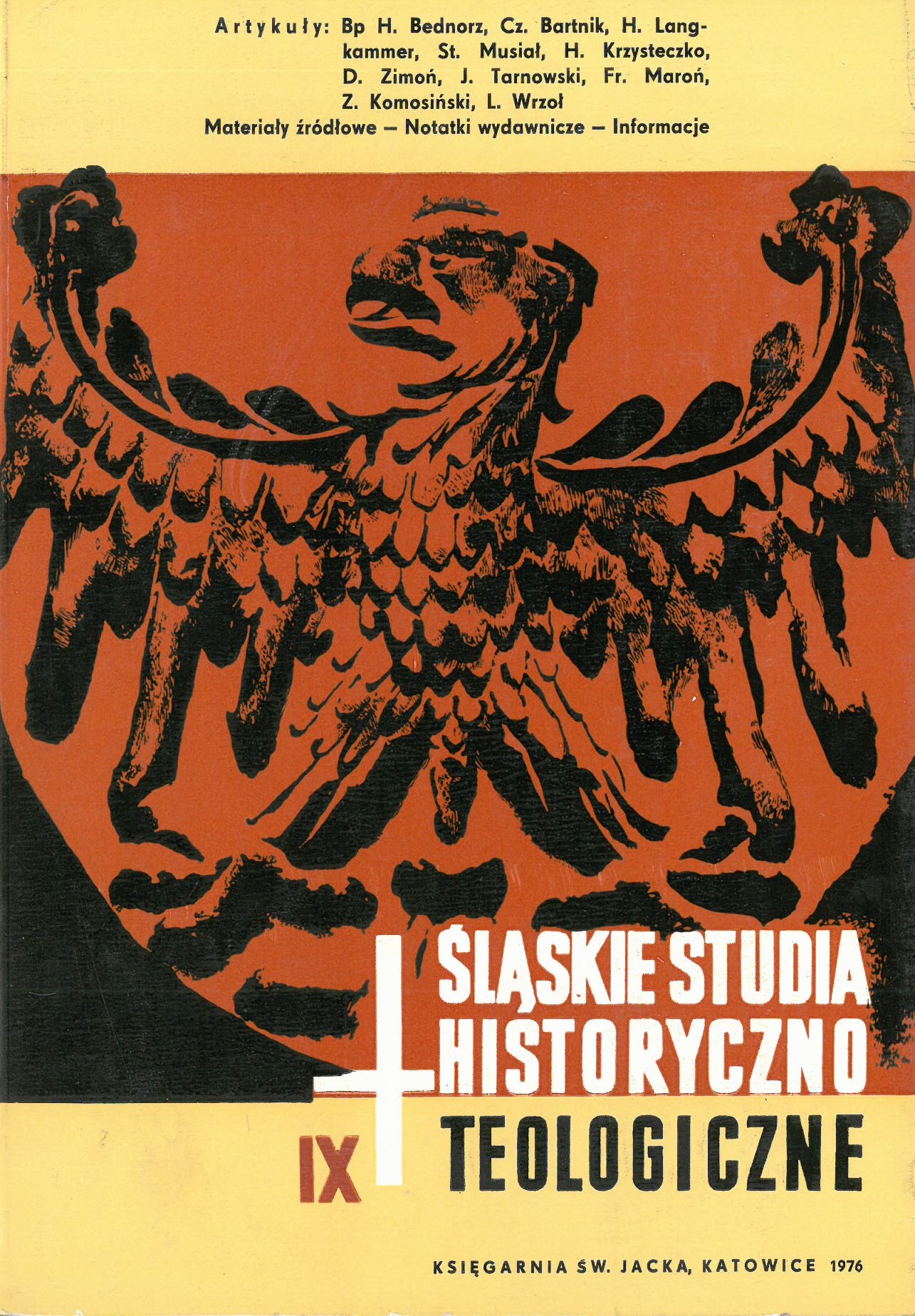
Vol. 9 (1976)
Published: 1976-12-31
This work is licensed under a Creative Commons Attribution-NonCommercial-NoDerivatives 4.0 International License.

 English
 Język Polski