
 https://doi.org/10.31261/SSHT.2015.48.1.11
Nowa ewangelizacja to nie jedynie kwestia metody i stosowanych środków, a więc domena teologii pastoralnej i samego duszpasterstwa, ale w dużej mierze rzeczywistość domagająca się refleksji dogmatycznej. W tym kluczu należy odczytać adhortację apostolską papieża Franciszka Evangelii gaudium. Nowa ewangelizacja zasadza się na odnowionej eklezjologii, która w prezentowanym dokumencie otrzymuje konkretne wskazówki papieskiego nauczania. Ma to tym większe znaczenie, że tekst ten stanowi wyraz głównych założeń pontyfikatu Franciszka. Kościół ukazany w Evangelii gaudium to wspólnota ewangelizująca i wciąż ewangelizowana, a podstawowa jej opcja to zaangażowanie misyjne. Kościół żyje dla Dobrej Nowiny, a jej głoszenie stanowi nieodzowny element jego tożsamości.
Papież ukazuje cały Kościół, a więc duchownych i świeckich, jako podmiot ewangelizacji. Dotyczy to różnych wymiarów – pasterze i wierni, kobiety i mężczyźni, rodziny, młodzież, diecezje i parafie. Szczególne znacznie przypisuje małym wspólnotom. Jednocześnie cały Kościół i ochrzczony indywidualnie, niezależnie od powołania i funkcji, potrzebuje ciągłego przyjmowania Ewangelii i nawracania się według Słowa Bożego. Nie jest to tylko kwestia osobistej czy wspólnotowej moralności. Franciszek wzywa Kościół do nawrócenia pastoralnego. Oznacza ono po pierwsze radykalne skoncentrowanie się na orędziu zbawczym. Z tego wypływa odważna rewizja zwyczajów, praktyk, podejmowanych działań – ocena ich skuteczności, zasadności we współczesnym świecie, przede wszystkim w aspekcie bezapelacyjnego ukazywania Jezusa i Jego orędzia. Evangelii gaudium ukazuje kondycję Kościoła, jego mocne i słabe strony. Nie zostawia jednak tylko samego opisu – wskazuje na drogi wyjścia z kryzysów i pomnożenie dobra, które jest bogactwem Kościoła. Tekst bowiem wyraża optymistyczną wizję świata, Kościoła, ewangelizacji. Dzieje się tak zawsze wtedy, kiedy ochrzczeni koncentrują się na Jezusie, a rozwijany zapał misyjny prowadzi do doświadczania prawdziwej radości.
Główne kierunki dla postrzegania Kościoła, który jest ewangelizowany i ewangelizuje oddają krótkie sugestywne wezwania papieża Franciszka: „Nie pozostawmy ich [tj. ubogich] nigdy samych”, „Nie pozwólmy się okradać z misyjnego entuzjazmu!”, „...nie pozwólmy się okradać z radości ewangelizacji!”, „Nie pozwólmy się okraść z nadziei!”, „Nie pozwólmy się okraść ze wspólnoty!”, „Nie dajmy się okraść z Ewangelii”, „Nie ograniczajmy ani żądajmy kontroli tej siły misyjnej!”, „Przyjmijmy wzniosły skarb objawionego Słowa”, „Nie bądźmy na uboczu tego marszu żywej nadziei”.
Pobierz pliki
Zasady cytowania
Cited by / Share




Licencja

Utwór dostępny jest na licencji Creative Commons Uznanie autorstwa – Użycie niekomercyjne – Bez utworów zależnych 4.0 Międzynarodowe.
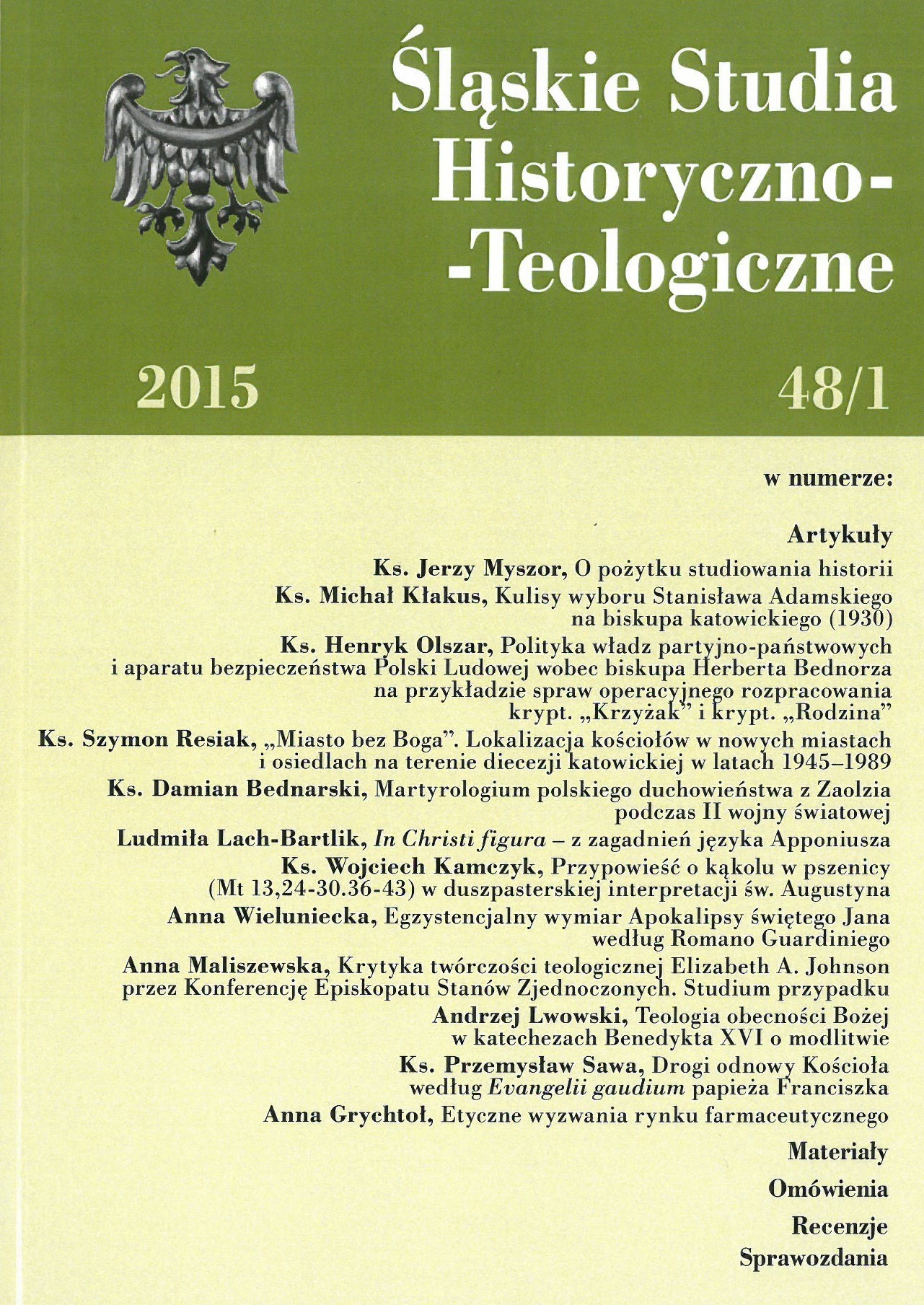
Tom 48 Nr 1 (2015)
Opublikowane: 30.06.2015
Utwór dostępny jest na licencji Creative Commons Uznanie autorstwa – Użycie niekomercyjne – Bez utworów zależnych 4.0 Międzynarodowe.

 English
 Język Polski