

Traktat apologetyczny Euzebiusza z Cezarei Przeciwko Hieroklesowi zawiera krytykę filozoficzną i teologiczną determinizmu fatalistycznego, prezentowanego przez Apoloniusza z Tiany w jego nauczaniu o Mojrach i Konieczności. Według Euzebiusza, przypisując własne działanie przeznaczeniu i istotom wyższym, takim jak Mojry i Konieczność, neguje się Opatrzność Bożą, osobistą odpowiedzialność i wolną wolę człowieka. Zwolennik takich poglądów powinien być zatem uważany za bezbożnika i głupca, ale nie za prawdziwego filozofa. W koncepcji chrześcijańskiego autora, człowiek jest wolny w swoim wyborze rzeczy, „które od nas zależą”, i jest odpowiedzialny za swoje wybory.
Pobierz pliki
Zasady cytowania
Licencja

Utwór dostępny jest na licencji Creative Commons Uznanie autorstwa – Użycie niekomercyjne – Bez utworów zależnych 4.0 Międzynarodowe.
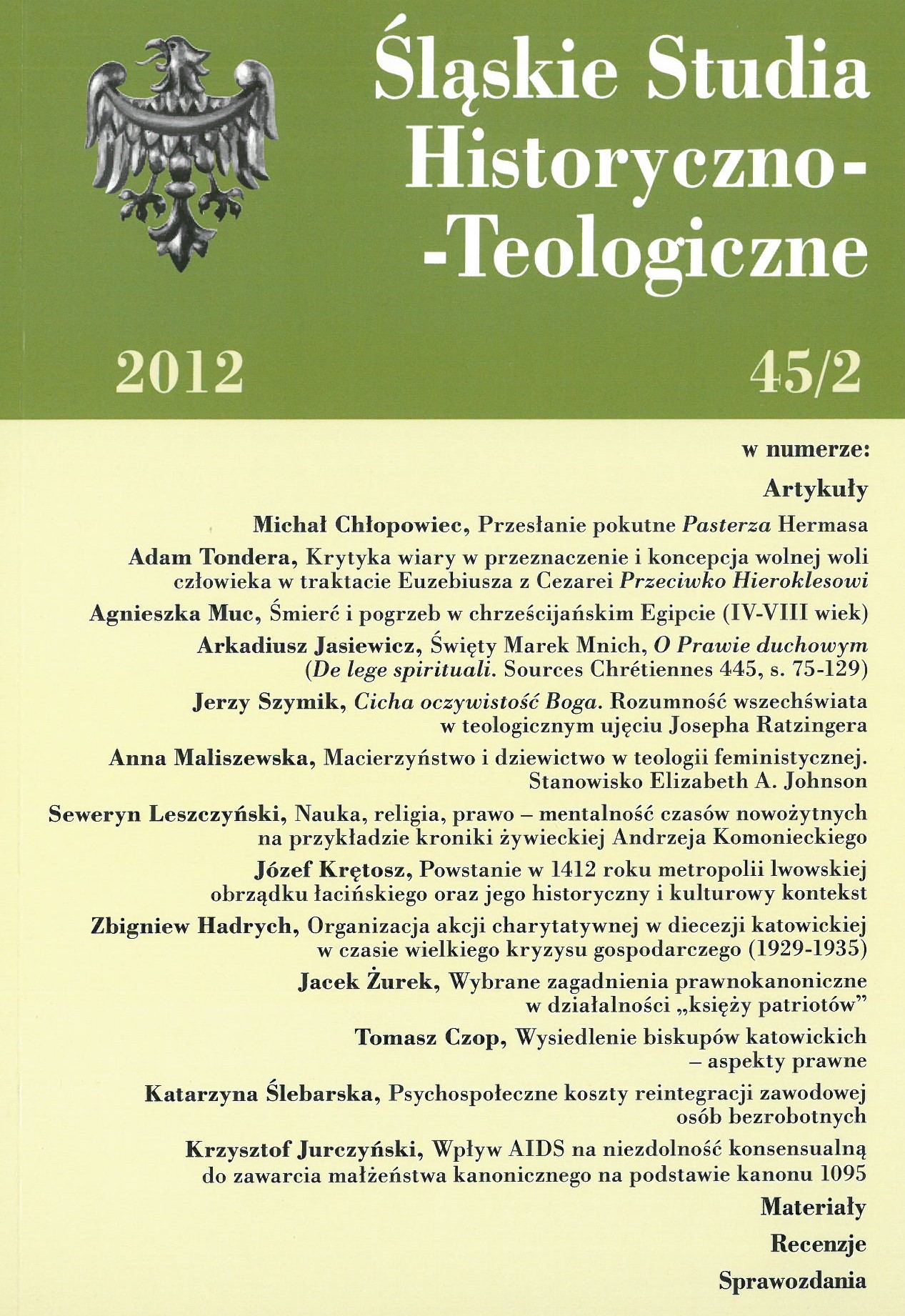
Tom 45 Nr 2 (2012)
Opublikowane: 31.12.2012
Utwór dostępny jest na licencji Creative Commons Uznanie autorstwa – Użycie niekomercyjne – Bez utworów zależnych 4.0 Międzynarodowe.

 English
 Język Polski