

Der Autor bespricht das Verhältnis der Nupturienten zum katholischen Modell der Ehe und Familie auf Grund von 340 Aussagen welche aus der Diözese Katowice stammen. Diese Forschungen ergänzen eine breiter angelegte Anfrage (2 139 Nupturienten), die von Prof. F. Adamski im Jahre 1973 durchgeführt wurde.
Unter den Befragten in Katowice war auch eine Gruppe, die das Eheseminar beendet hat, was dem Autor eine Einsicht bot, wie weit der seelsorgliche Einfluss in den Meinungsbildungen über die Rolle des Kindes in der Familie sich bemerkbar machte.
Das Problem "Wert des Kindes" wurde anhand des optimalen Kinderfreudigkeitsmodells besprochen. Auf die Frage der Enquête: "Wieviel Kinder wollen Sie in ihrer Familie haben" — 85% antwortete mit einer konkreten Kinderzahl. 14% dagegen sieht den Wert des Kindes nicht ein, da sie das Kind überhaupt nicht planen (10%) oder keine Antwort geben können (4%). Fast alle aber erklären sich für ein Kleinfamilienmodell. Nur eine auf vier Frauen stimmt 3 oder 4 Kindern zu, zwei planen 4 Kinder. Von Männern war niemand für über 3 Kinder. Das populärste Modell für sie ist das 2-Kindermodell. Dafür erklären sich 62% aller Befragten, für 1 Kind sind es 7% (Männer von 30—34 Jahren, Frauen von 25—29 Jahren). Für 3 Kinder in der Familie deklarieren sich etwa 10% der jungen Leute, wieder mehr Frauen (13%), weniger Männer (7%).
Die Analyse der Motivation führt zum überraschenden Ergebnis, dass ein sehr grosser Teil der Respondenten (40%) ihre Entscheidung nicht begründen kann. Entweder geben sie keine Antwort, oder erklären, sie ihre prokreativen Pläne begründen, kann man in 3 Gruppen einteilen. Die grösste von ihnen umfasst Motive ökonomischer Natur. Die zweite besteht aus Motiven einer guten Kindererziehung. 26% aller Befragten — wobei die Männer überwiegen — unterstreichen diese Motivation. Nur 4% der Befragten motiviert ihre Pläne mit der Wohnungsknappheit, noch weniger mit der Berufsarbeit der Frau. Die Frauen jedoch sehen immer mehr in den Kindern ein Hindernis in der Ausübung ihrer Berufstätigkeit.
Zusammenfassend kann man feststellen, dass junge Katholiken in der Familienplanung und ihrer Begründung sehr stark den neuzeitlichen Tendenzen, sogar der Mode unterliegen. Man kann fast keine Bemühung um die Bildung eigener, kritischer und auf kirchlicher Lehre gestützten Meinung feststellen. Die seelsorgliche Reflexion führt zum Schluss, dass man der Bildung einer christlichen Bewertung das Kindes mehr Aufmerksamkeit schenken sollte, und dies besonders in der Jugendseelsorge.
Download files
Citation rules
Licence

This work is licensed under a Creative Commons Attribution-NonCommercial-NoDerivatives 4.0 International License.
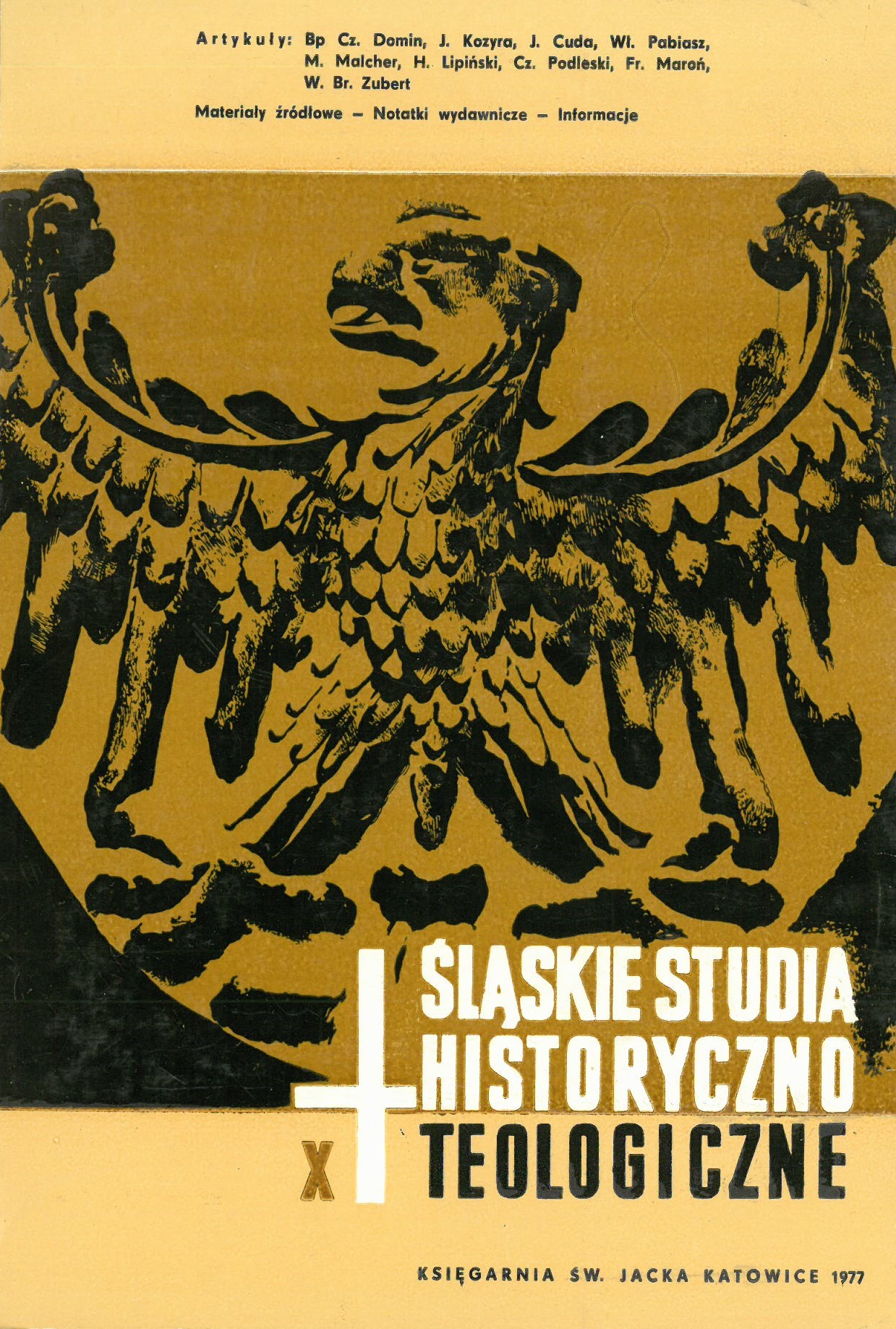
Vol. 10 (1977)
Published: 1977-12-31
This work is licensed under a Creative Commons Attribution-NonCommercial-NoDerivatives 4.0 International License.

 English
 Język Polski