
Published: 1976-12-31

Kan. 1086 § 2 und der passive Willensakt des Kontrahenten bei Eheschliessung

Ludwik Wrzoł

Abstract

Der Autor zeigt in seinem Artikel die Polemik zweier Kanonisten: H. Flatten und H. Mitterer angesichts des passiven Willenaktes bei der Eheschliessung.
Die religiöse Indifferenz oder auch eine feindliche Einstellung zur Kirche bewirkt oft ein „passive se habere” zur Ehe. Bei so einer Willenshaltung ist die Eheschliessung in der Kirche ein Akt, mit dem die Kontrahenten keine rechtliche Folgen verbinden. Der Konsens im Standesamt ist natürlich sufficiens, aber im Lichte des Eherechts unwirksam. Der naturale Konsens gilt nur dann, wenn er in der Kirche ausgesprochen oder in der Kirche saniert wird. In der Kirche wird er gültig, wenn er in sie „hineingebracht” wird. Der Kontrahent bringt ihn zwar in die Kirche hinein, aber es entsteht die Frage, ob so ein passives Verhalten zu einem Sakrament ausreicht (Flatten). Der Nupturient erteilt sich ja selber und empfängt auch selbst das Sakrament. Ohne dem positiven Willen kommt nur eine gewöhnliche Registrierung der Ehe zustande. Nach der allgemein angenommene, Lehre der Kirche, wonach man das Sakrament nur durch den wahren Ehekonsens empfangen kann, müsste man fordern, dass der Wille zur Ehe durch einen positiven Willensakt gezeigt wird. Die Passivität reicht sonst nicht aus. Aus diesem Grunde scheint die These Flattens begründet zu sein, aber bis zur Zeit, wo die interpretative Behörde nicht eingreift, muss man alle Rechtsstreite nach den bisherigen Kriterien, im Zweifelsfall zugunsten des bestehenden Ehebandes entscheiden.

Download files

Citation rules

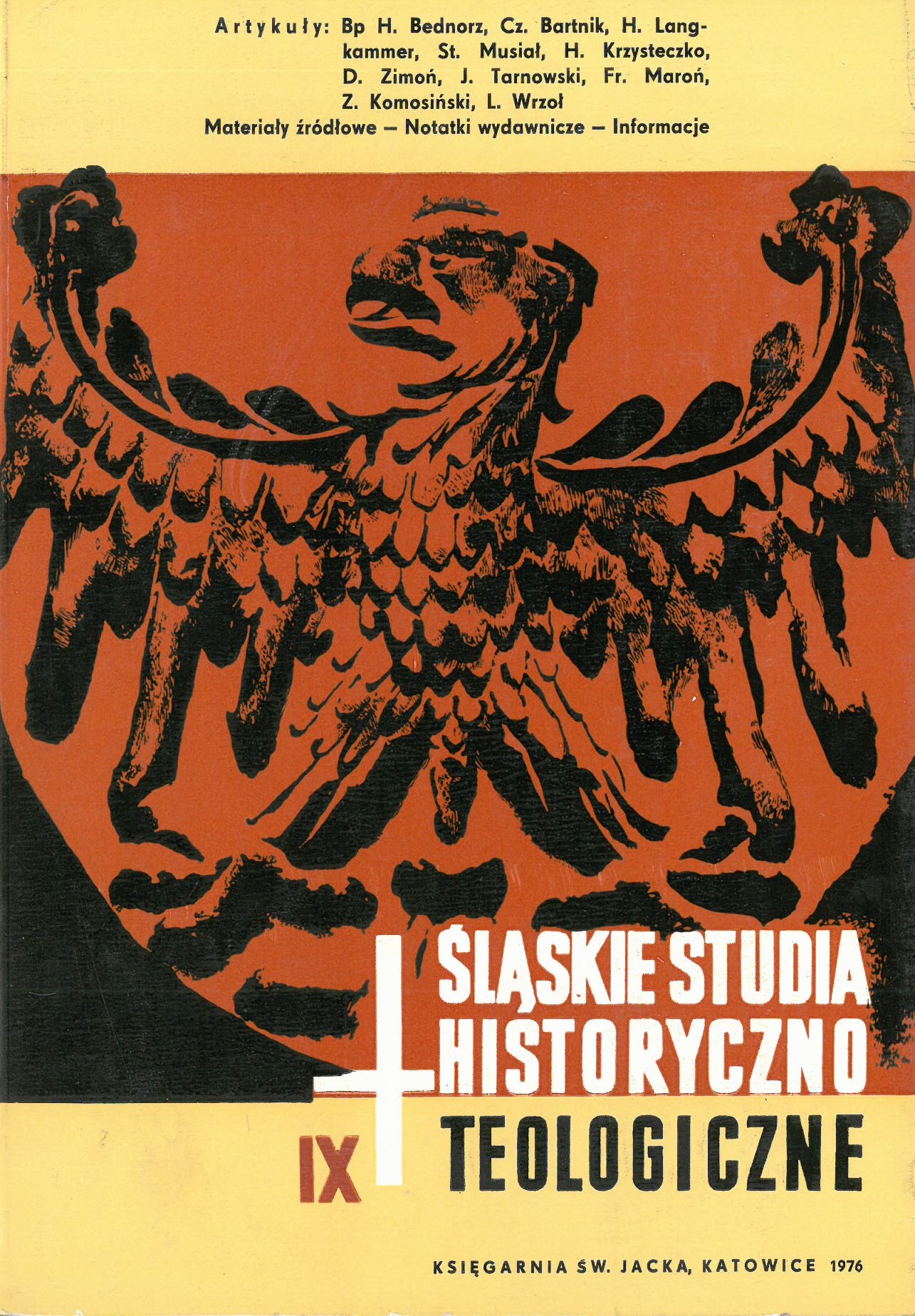
Wrzoł, L. (1976). Kan. 1086 § 2 und der passive Willensakt des Kontrahenten bei Eheschliessung. Śląskie Studia Historyczno-Teologiczne, 9, 255–274. Retrieved from https://journals.us.edu.pl/index.php/ssht/article/view/22352

Licence

Creative Commons License

This work is licensed under a Creative Commons Attribution-ShareAlike 4.0 International License.


The Copyright Owners of the submitted texts grant the Reader the right to use the pdf documents under the provisions of the Creative Commons 4.0 International License: Attribution-Share-Alike (CC BY-SA). The user can copy and redistribute the material in any medium or format and remix, transform, and build upon the material for any purpose.

1. License

The University of Silesia Press provides immediate open access to journal’s content under the Creative Commons BY-SA 4.0 license (http://creativecommons.org/licenses/by-sa/4.0/). Authors who publish with this journal retain all copyrights and agree to the terms of the above-mentioned CC BY-SA 4.0 license.

2. Author’s Warranties

The author warrants that the article is original, written by stated author/s, has not been published before, contains no unlawful statements, does not infringe the rights of others, is subject to copyright that is vested exclusively in the author and free of any third party rights, and that any necessary written permissions to quote from other sources have been obtained by the author/s.

If the article contains illustrative material (drawings, photos, graphs, maps), the author declares that the said works are of his authorship, they do not infringe the rights of the third party (including personal rights, i.a. the authorization to reproduce physical likeness) and the author holds exclusive proprietary copyrights. The author publishes the above works as part of the article under the licence "Creative Commons Attribution-ShareAlike 4.0 International".

ATTENTION! When the legal situation of the illustrative material has not been determined and the necessary consent has not been granted by the proprietary copyrights holders, the submitted material will not be accepted for editorial process. At the same time the author takes full responsibility for providing false data (this also regards covering the costs incurred by the University of Silesia Press and financial claims of the third party).

3. User Rights

Under the CC BY-SA 4.0 license, the users are free to share (copy, distribute and transmit the contribution) and adapt (remix, transform, and build upon the material) the article for any purpose, provided they attribute the contribution in the manner specified by the author or licensor.

4. Co-Authorship

If the article was prepared jointly with other authors, the signatory of this form warrants that he/she has been authorized by all co-authors to sign this agreement on their behalf, and agrees to inform his/her co-authors of the terms of this agreement.

I hereby declare that in the event of withdrawal of the text from the publishing process or submitting it to another publisher without agreement from the editorial office, I agree to cover all costs incurred by the University of Silesia in connection with my application.

Vol. 9 (1976)
Published: 2021-03-10


ISSN: 0137-3447
eISSN: 2956-6185

Publisher
Księgarnia św. Jacka

Licence CC Creative Commons License

This work is licensed under a Creative Commons Attribution-ShareAlike 4.0 International License.

This website uses cookies for proper operation, in order to use the portal fully you must accept cookies.