
La „Déclaration sur la Liberté Religieuse” non seulement donne à l'Eglise un visage nouveau „à l'extérieur”, mais encore elle rehausse indirectement la valeur de la liberté en général à l'intérieur même de la vie de l'Eglise. La cosmocentrisme suarésien, qui marque aujourd'hui encore la théologie morale courante, a fait donner à la liberté le sens d'un instrument dans la réalisation de l'ordre cosmique. On doit, en partie, à cette façon de penser la facilité avec laquelle on s'est parfois démis dans la société ecclésiastique de la liberté de l'individu, quand, sans liberté, il était plus aisé et plus rapide d'obtenir l'ordre voulu. La Déclaration Conciliaire, replaçant la liberté dans l'essence même de l'acte bon, ne nous permet plus de comprendre la liberté en tant qu'instrument pour obtenir le bien. Concevant la liberté comme une manifestation de la vie personnelle et non comme une indépendance de la loi morale, il nous est permis d'affirmer que liberté des individus particuliers constitue la fin commune de la communauté ecclésiale.
Un acte de liberté est toujours, sur terre, un acte libre incarné. De ce fait découle pour les membres d'une société — entre autres pour les membres de sociétés closes comme les couvents ou les séminaires — le droit de disposer à leur gré de l'espace et du temps. Par ailleurs, le bien commun exige le besoin d'une certaine contrainte de la part des supérieurs. Une question se pose: la contrainte, qui s'oppose à la liberté, n'est-elle pas un mal? Dans l'affirmative, le supérieur, qui use de la contrainte, n'approuvet-t-il pas le principe: „la fin justifie les moyens”? Or, il semble que le supérieur ecclésiastique n'a le droit de donner des ordres que dans le cas où leur contrainte est seulement accidentelle. Ce à quoi s'adresse directement l'ordre du supérieur, c'est à la liberté du sujet. Le Supérieur ne peut vouloir contraindre. Si son activité est liée à une contrainte de fait, celle-ci ne peut avoir lieu qu'accidentellement. Le supérieur doit, prendre conscience qu'il est appelé à provoquer chez ses sujets des prises de décisions originales, car elles seules peuvent enrichir la vie sociale ecclésiastique.
Download files
Citation rules
Licence

This work is licensed under a Creative Commons Attribution-ShareAlike 4.0 International License.
The Copyright Owners of the submitted texts grant the Reader the right to use the pdf documents under the provisions of the Creative Commons 4.0 International License: Attribution-Share-Alike (CC BY-SA). The user can copy and redistribute the material in any medium or format and remix, transform, and build upon the material for any purpose.
1. License
The editorial board provides immediate open access to the journal’s content under the Creative Commons BY-SA 4.0 license (http://creativecommons.org/licenses/by-sa/4.0/). Authors who publish with this journal retain all copyrights and agree to the terms of the above-mentioned CC BY-SA 4.0 license.
2. Author’s Warranties
The author warrants that the article is original, written by stated author/s, has not been published before, contains no unlawful statements, does not infringe the rights of others, is subject to copyright that is vested exclusively in the author and free of any third party rights, and that any necessary written permissions to quote from other sources have been obtained by the author/s.
If the article contains illustrative material (drawings, photos, graphs, maps), the author declares that the said works are of his authorship, they do not infringe the rights of the third party (including personal rights, i.a. the authorization to reproduce physical likeness) and the author holds exclusive proprietary copyrights. The author publishes the above works as part of the article under the licence "Creative Commons Attribution-ShareAlike 4.0 International".
ATTENTION! When the legal situation of the illustrative material has not been determined and the necessary consent has not been granted by the proprietary copyrights holders, the submitted material will not be accepted for editorial process. At the same time the author takes full responsibility for providing false data (this also regards covering the costs incurred by the Publisher and financial claims of the third party).
3. User Rights
Under the CC BY-SA 4.0 license, the users are free to share (copy, distribute and transmit the contribution) and adapt (remix, transform, and build upon the material) the article for any purpose, provided they attribute the contribution in the manner specified by the author or licensor.
4. Co-Authorship
If the article was prepared jointly with other authors, the signatory of this form warrants that he/she has been authorized by all co-authors to sign this agreement on their behalf, and agrees to inform his/her co-authors of the terms of this agreement.
I hereby declare that in the event of withdrawal of the text from the publishing process or submitting it to another publisher without agreement from the editorial office, I agree to cover all costs incurred by the Publisher in connection with my application.
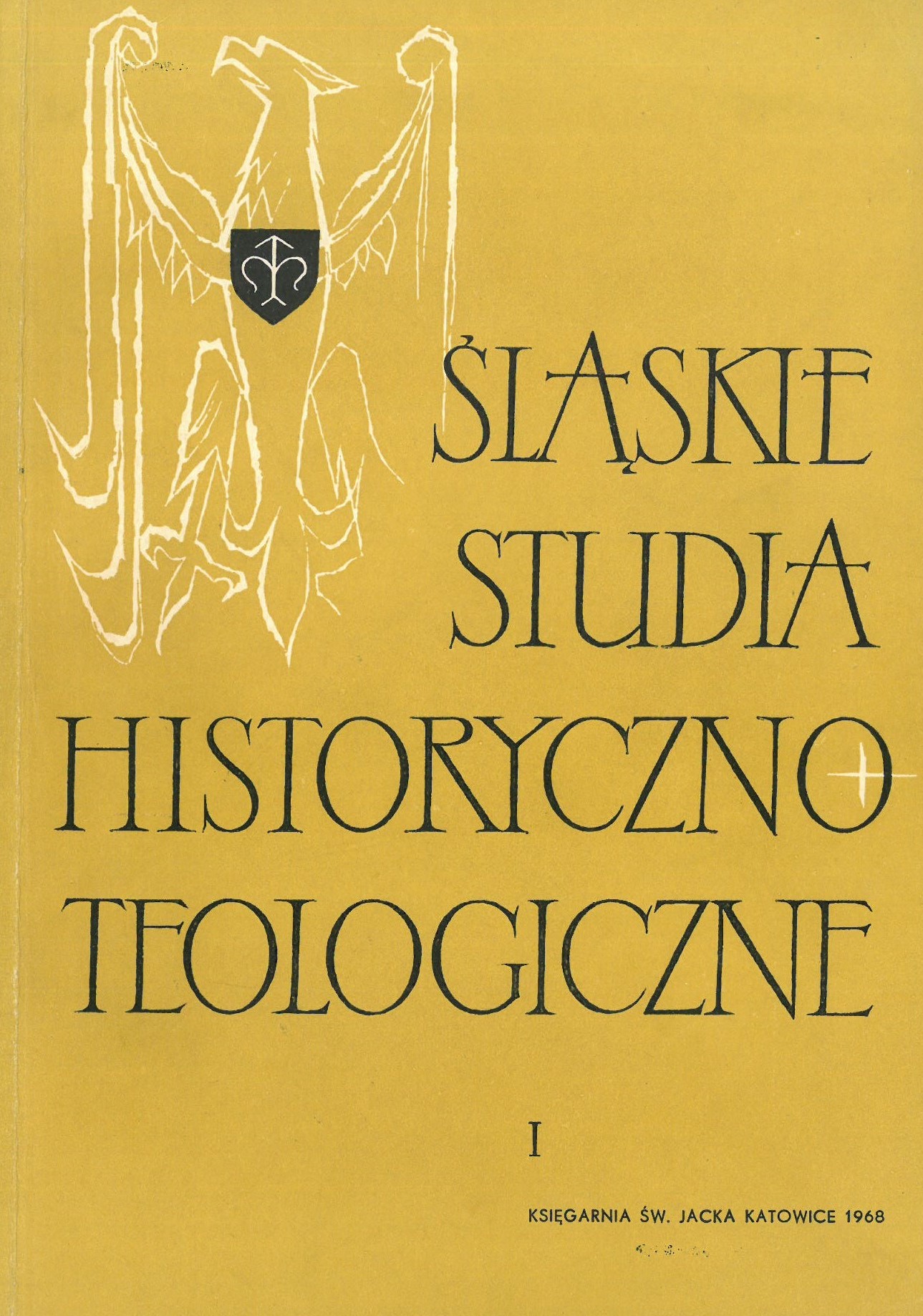
Vol. 1 (1968)
Published: 2021-03-10
This work is licensed under a Creative Commons Attribution-ShareAlike 4.0 International License.

 English
 Język Polski