
Das Thema wurde von Teilnehmern: Stefan Cichy, Damian Zimoń und Romuald Rak behandelt.
1. Stefan Cichy, Die Grundsätze der freien Improvisation in der erneuerten Liturgie
Es ist heute möglich viele liturgische Texte selbst zu wählen sowohl in der Eucharistie wie auch beim Spenden der Sakramente und Sakramentalien. Es wird eine Auswahl von Lesungen und viele Gebete zur Auswahl geboten. Wir haben heute 4 bezw. 5 eucharistische Hochgebete. Überall kann man Anreden mit eigenen Worten halten, so in den Begrüssungsansprachen, in den Einführungen und Komentaren. An vielen Stellen lesen wir die Rubrik „his vel similibus verbis”. Die Auswahlmöglichkeiten werden noch nicht völlig ausgenutzt.
2. Damian Zimoń, Inspiration und Rubrizistik
Der Verfasser sprach über die Anfänge der Christenheit. In der Liturgie wurde notwendigerweise viel improvisiert wobei die Entwicklung verschieden war in der aramäischen, griechischen und lateinischen Sprache. Jeder Sprachbereich hatte seine Besonderheiten, und so kam schon damals die Pluriformität der Liturgie zum Ausdruck. Das späte Mittelalter und besonders das Trienter Konzil und die Gründung der Ritenkongregation haben jedoch — auch was die Sprache betrifft — zur Versteifung der liturgischen Formen geführt. Die Liturgie wurde in allen Einzelheiten vorgeschrieben. Erst das II. Vatikanische Konzil brachte eine Lockerung mit. Die neuen liturgischen Bücher bieten viele Möglichkeiten im Gebrauch verschiedener Formel und auch der nationalen Sprachen. Es kann jedoch nicht dazu führen, immer weitere Veränderungen anzustreben, ohne zuerst innerlich in den Inhalt neuer Texte und Formen eindringen zu können.
Der Verfasser endet mit einer grösseren Aussage des Frère M. Thurian aus Taizé über die Gefahr der unkontrollierten individuellen Improvisation in der Liturgie. Die Liturgie bleibt immer Eigentum der ganzen Kirche und ist niemals Eigentum des Einzelnen.
3. Romuald Rak, Praktische Weisungen zum Problem der Improvisation
Es ist wahr, dass in den ersten Jahrhunderten die Improvisation in der Liturgie gepflegt wurde, aber sie wurde nie ganz frei getrieben. Der Bischof hielt sich an einige Rahmen, die von den Aposteln übernommen wurden und die nicht überschritten werden durften. Zu den Rahmen der Eucharistie gehörte: die Danksagung, die Epilekse, die Konsekrationsworte, die Anamnese und andere Opfergebete und schliesslich die Doxologie. Es ist merkwürdig, dass die Priester, die heute auf eigene Hand Veränderungen vornehmen, diese Rahmen überhaupt nicht kennen.
Der Bischof, der improvisierte, war sich auch dessen bewusst, dass er im Namen Jesu und im Namen der Kirche spricht. Darum der wunderbare Wechsel von „ich” und „wir”. Dem Bischof kam es nicht in den Sinn zu sagen: „Der Herr sei mit uns” oder „Es segne uns ...”, denn er sprach im Namen — in persona — Christi. Die Gebete wurden jedoch durch „wir” — im Namen der Kirche gesprochen.
Es war auch nicht möglich, dass ein Bischof die Texte der Hl. Schrift eigenwillig änderte. Es war unmöglich zu sagen: „Siehe, es ist Christus, der hinwegnimmt die Sünden der Welt”, weil die Worte „sieht das Lamm Gottes” — Worte der Hl. Schrift sind (J 1,29). Auch andere Beispiele zitiert hier der Verfasser.
Die Improvisation war in den ersten Jahrhunderten möglich, weil es keine geordnete Bücher gab und weil viele Bischöfe und Priester heilige Charismatiker waren und die Grenzen der Improvisation gut kannten. Wir wissen, dass heute viele improvisierte Texte Eigentum der ganzen Kirche geworden sind. Man muss dies bejahen und in Demut aufnehmen, eben weil bessere Texte nicht ausgearbeitet werden können ohne dass man zuvor in die bestehenden Texte geistig eindringt.
Pobierz pliki
Zasady cytowania
Licencja

Utwór dostępny jest na licencji Creative Commons Uznanie autorstwa – Użycie niekomercyjne – Bez utworów zależnych 4.0 Międzynarodowe.
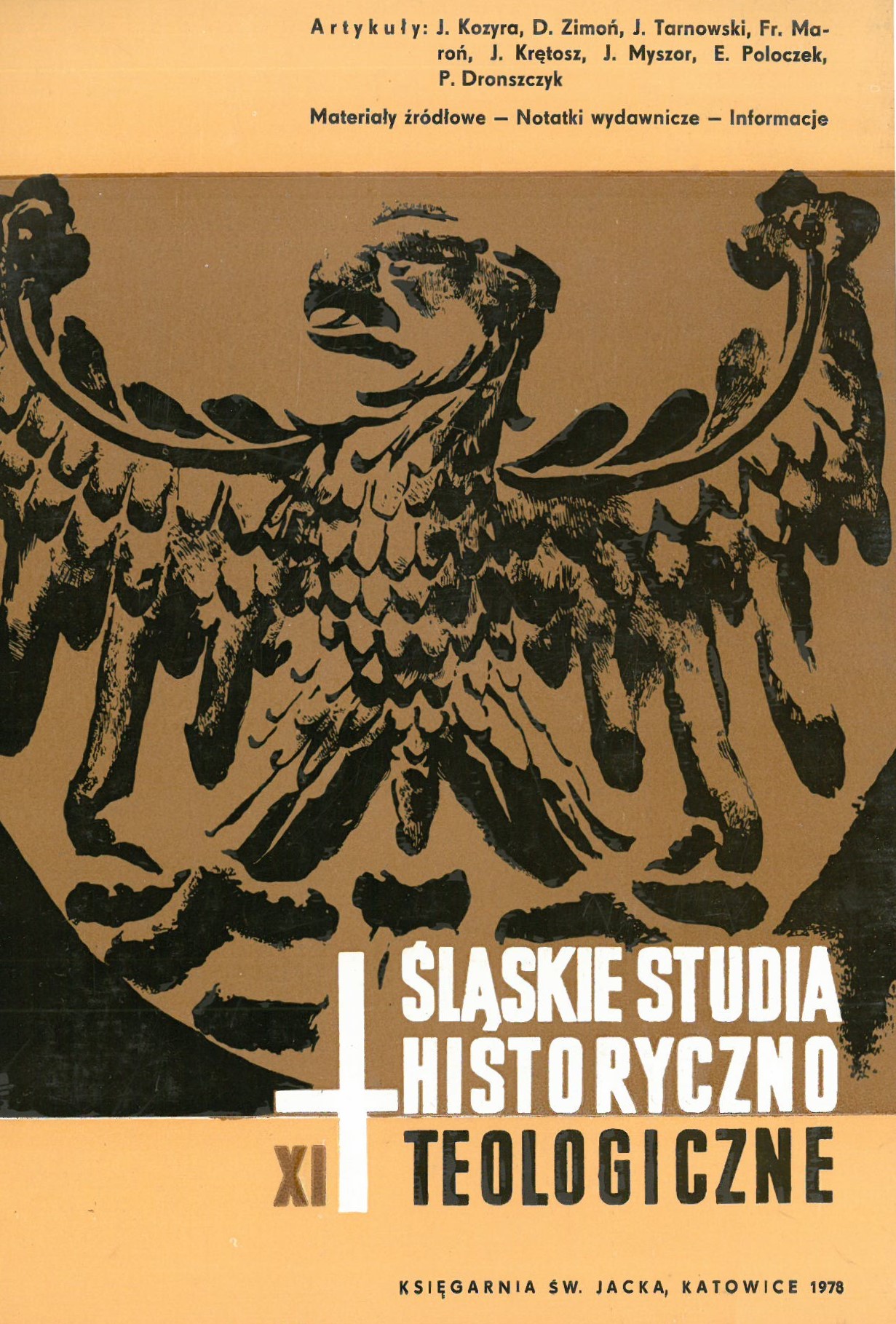
Tom 11 (1978)
Opublikowane: 31.12.1978
Utwór dostępny jest na licencji Creative Commons Uznanie autorstwa – Użycie niekomercyjne – Bez utworów zależnych 4.0 Międzynarodowe.

 English
 Język Polski