
Das Plesser Dekanat bewahrte bis Ende des 19. Jh. eine Reihe von typischen Merkmalen, die auch für andere Gegenden von Oberschlesien charakteristisch sind und deshalb bis zu einem gewissen Grade als allgemeine Wesenszüge des Landes angenommen werden können. Als Quelle für diesen Artikel wurden die Visitationsprotokolle der Erzpriester und die Pfarrvermeldungen in der Pfarrei Pszczyna aus den Jahren 1875—1914 ausgenutzt.
Am Ende des 19. Jh. stand die Seelsorge vor einer grossen Erneuerung auf dem Gebiete der Teilnahme an dem eucharistischen Mahle.
Diese Erneuerung — Vorzeichen waren schon da — wurde dann durch die grossen päpstlichen Dokumente über die öftere hl. Kommunion (1905) und die Frühkommunion (1910) gekrönt. Doch in Pless musste man mit grossen Problemem kämpfen. Man war sich einer sehr schwachen Teilnahme an sonntäglichen Gottesdienst bewusst, besonders wegen Mangel an grösseren Kirchen (die bestehenden waren zu klein, um alle aufzunehmen), auch die Entfernung der Dörfer von der Pfarrkirche war meist gross. Diese Zeit ist jedoch sehr interressiert an verschiedenen paraliturgischen Andachten, besonders an den marianischen. Man kann das anhand zahlreicher Bruderschaften und Vereine beobachten (Lebendiger Rosenkranz, der hl. Familienverein u.a.). Man muss hier auch die rege Verbindung zwischen Pless und Krakau unterstreichen. Sehr viele Gläubige nahmen an Exerzitien in Krakau teil, die von den Lazaristenpatern organisiert wurden. Zu dieser Zeit musste man auch feststellen, dass der Kulturkampf zu einem anderen Ressort des religiösen Lebens viel beigetregen hat. Man hat nämlich den Kindern in der Schule die deutsche Sprache aufgezwungen. Folgedessen wurde der Beicht- und Kommunionunterricht aus der Schule in die Kirche verlegt. Dies ergab den Vorteil, dass der Empfang der Erstkommunion nicht mehr mit der Schulentlassung verbunden war, sondern früher stattfinden konnte.
Die Visitationsprotokolle und Kanzelvermeldungen notieren u.a. einige Folgen der Trunksucht. Zwar wurde die Gefahr des Alkoholismus schon einigermassen beherrscht durch die Abstinenzaktion des Piekarer Pfarrers Fitzek (Mitte des 19. Jh.) und des Tichauer Pfarrers Kapica (Anfang des 20. Jh.). Die Gefahr war aber immer noch akut. Die Materialquelle1n weisen auch auf die Gefahr eines religiösen Indifferentismus, der mit den moralisch-religiöse Bild des Dekanates ist die Zahl der unehelichen Kinder, die von den Erzpriestern in den Visitationsprotokollen notiert wurden.
Pobierz pliki
Zasady cytowania
Licencja

Utwór dostępny jest na licencji Creative Commons Uznanie autorstwa – Użycie niekomercyjne – Bez utworów zależnych 4.0 Międzynarodowe.
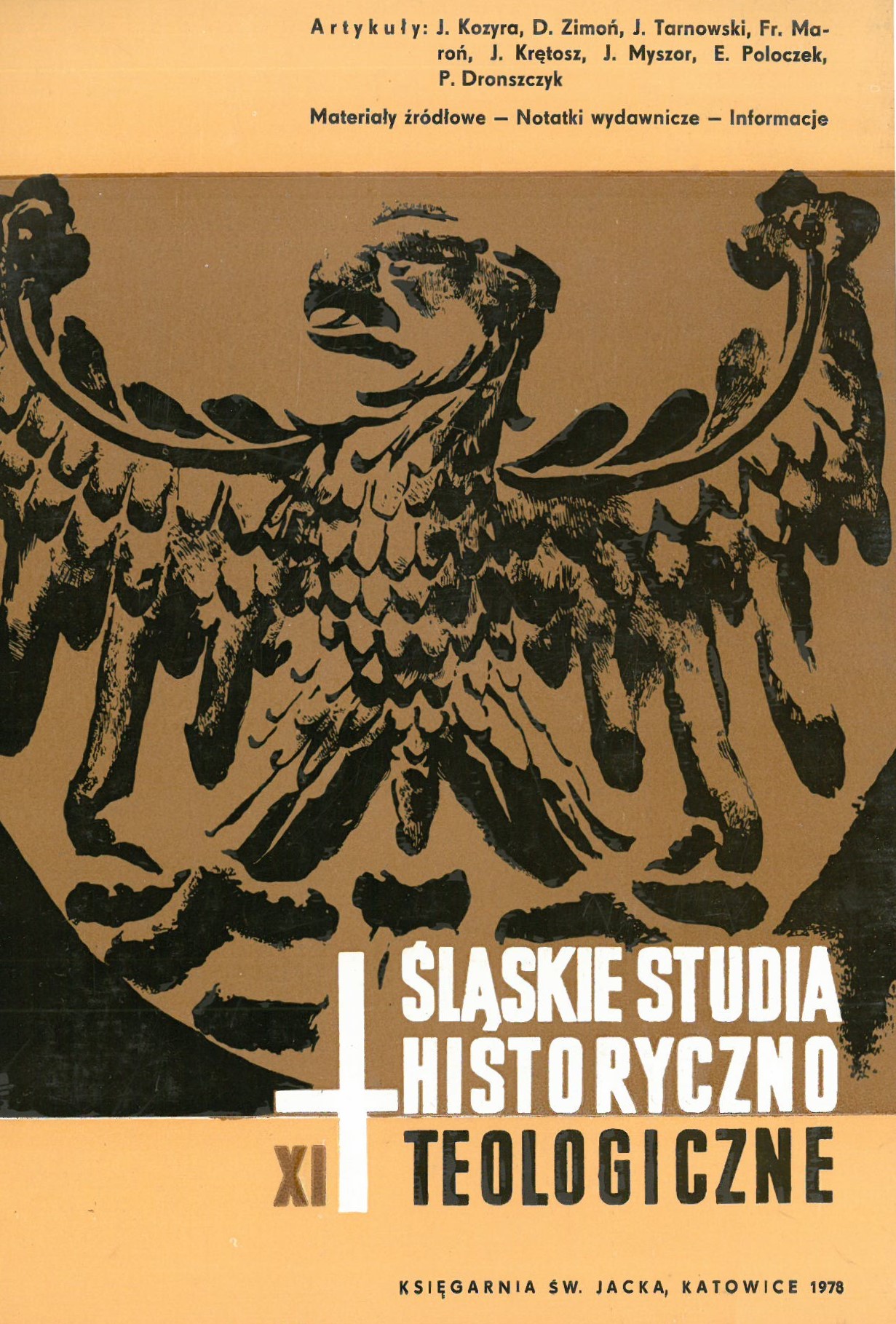
Tom 11 (1978)
Opublikowane: 31.12.1978
Utwór dostępny jest na licencji Creative Commons Uznanie autorstwa – Użycie niekomercyjne – Bez utworów zależnych 4.0 Międzynarodowe.

 English
 Język Polski