

 https://doi.org/10.31261/SSHT.2018.51.2.03
The paper discusses the consequences of technological change for agent’s spiritual development, defined here as a form of experiencing one’s life, its meaning and relation with the key aspects of reality. The analysis revolves around the concept of the “Butlerian Jihad” adapted from Frank Herbert’s Dune. I start with brief discussion of Samuel Butler’s claim against the machines to pinpoint his and early XIX-century luddites’s insights into the consequences of technological development. This is followed by addressing anarcho-primitivist critique of industrial society by Theodore Kaczynski and John Zerzan. Part three deals with the notion of “jihad” which offers useful insights into both the religious presuppositions underlying some of the innovations, as well as enables rising some important questions concerning agent-related consequences of the wide spread use of technology. This, I argue, might be best dealt with within the virtue ethics framework.
Download files
Citation rules
Cited by / Share




Licence

This work is licensed under a Creative Commons Attribution-NonCommercial-NoDerivatives 4.0 International License.
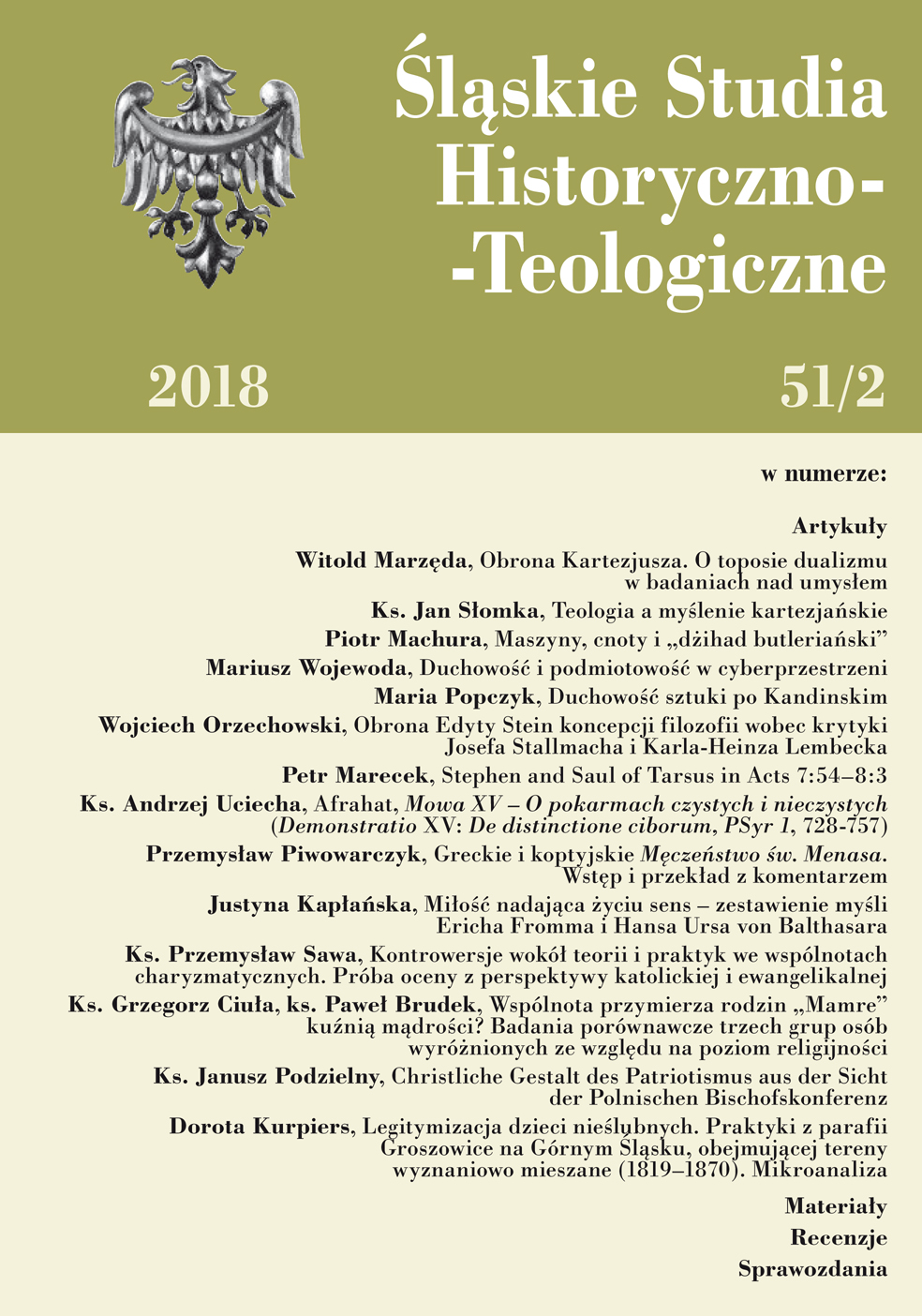
Vol. 51 No. 2 (2018)
Published: 2018-12-31
This work is licensed under a Creative Commons Attribution-NonCommercial-NoDerivatives 4.0 International License.

 English
 Język Polski