
Die seit dem 1. September 1999 durchgeführte Reform des Edukationssystems in Polen hat in vielen Hinsichten den Charakter eines revolutionären, komplexen und langfristigen Vorhabens. Abgesehen von den strukturellen und programmatischen Änderungen, wird in der Reform eine Intensivierung der erzieherischen Einwirkung vorgesehen. Der begonnenen Edukationsreform gegenüber darf man keine dogmatische und kultische Einstellung aufweisen, sondern sie mit einen schöpferischen Kritizismus betrachten, indem man gleichzeitig die großen Bemühungen des ganzen Bildungswesenmilieus, die Reform einzuleiten, nicht aus der Sicht verliert.
Die katholische pädagogische Idee betrachtet jetzt die Erziehung vom Standpunkt der Persönlichkeitsbildung. Die Berücksichtigung der organischen Verbindung des natürlichen und übernatürlichen Elements weist dagegen auf einen integralen Charakter der christlichen Erziehung hin. Der Mensch und seine Erziehung wird komplex in einer metaphysischen, existentialen und psychologischen Perspektive gesehen. Die Berücksichtigung dieser Perspektiven garantiert eine volle Entwicklung eines Menschenwesens zum Mitglied einer gegebenen Gemeinschaft und führt ihn auf dem Erziehungs- und Selbstunterrichtsweg in das Erlösungsgeheimnis ein.
Die Grundlage der christlichen Erziehung stellt eine religiöse und morale Formation dar, die sich auf die Liebe zu Gott und zu den Mitmenschen stützt. Das Menschenideal ist in der katholischen Erziehung ein vollkommener, seines Ziels und Schicksals bewusster Christ, der nur einen Meister getreu nachahmt – Jesus Christus sowie der Welt und den irdischen Werten gegenüber aufgeschlossen ist.
Erziehung – ein Grundbergriff der Pädagogik – gehört zu der gewöhnlichsten, viele Sorgen, aber auch Freuden veranlassenden Realität des Menschenlebens. Es benötigt viel Affirmation und Aufgeschlossenheit für alle Niveaus des menschlichen Daseins: vom materiellen und biologischen bis zum psychischen und geistigen. Die Realität der Erziehung ist verwickelt in ihre Natur, Struktur und in ihre Erscheinungen; sie basiert auf der Vergangenheit und auf der vergehenden Gegenwart und ist auf die Zukunft (und sogar Ewigkeit) hin orientiert. Der Mensch überlegt alle diese Aspekte, die diese Realität zusammen bilden, beschreibt sie und sucht ihren Sinn und ihre Bedeutung, denn sie betrifft ihn persönlich.
Dies ist die Ursache des Vorschlags, die Persönlichkeitsbildung in die Erziehungsstruktur sowohl in die Katechese, als auch in das ganze reformierte Schulsystem einzuführen. Das Konzept der Persönlichkeitsbildung ist eine Antwort auf die höchst existentialen Fragen, welche sich in den tiefsten Schichten der Menschenexistenz bergen: wer ist der Mensch? Wie ist die uns umgebende Welt? Welche Rolle spielt der Mensch auf dieser Welt, also – was ist der Sinn des Menschenlebens? Es ist unmöglich, auf eine vollständige Weise das Menschenleben zu interpretieren, wenn die Wahrheit nicht am vollständigsten geäußert wird, dass das Menschendasein ein Element der Geschichte der Erlösung ist, und der Schöpfer dieser Geschichte Gott ist.
Download files
Citation rules
Licence

This work is licensed under a Creative Commons Attribution-NonCommercial-NoDerivatives 4.0 International License.
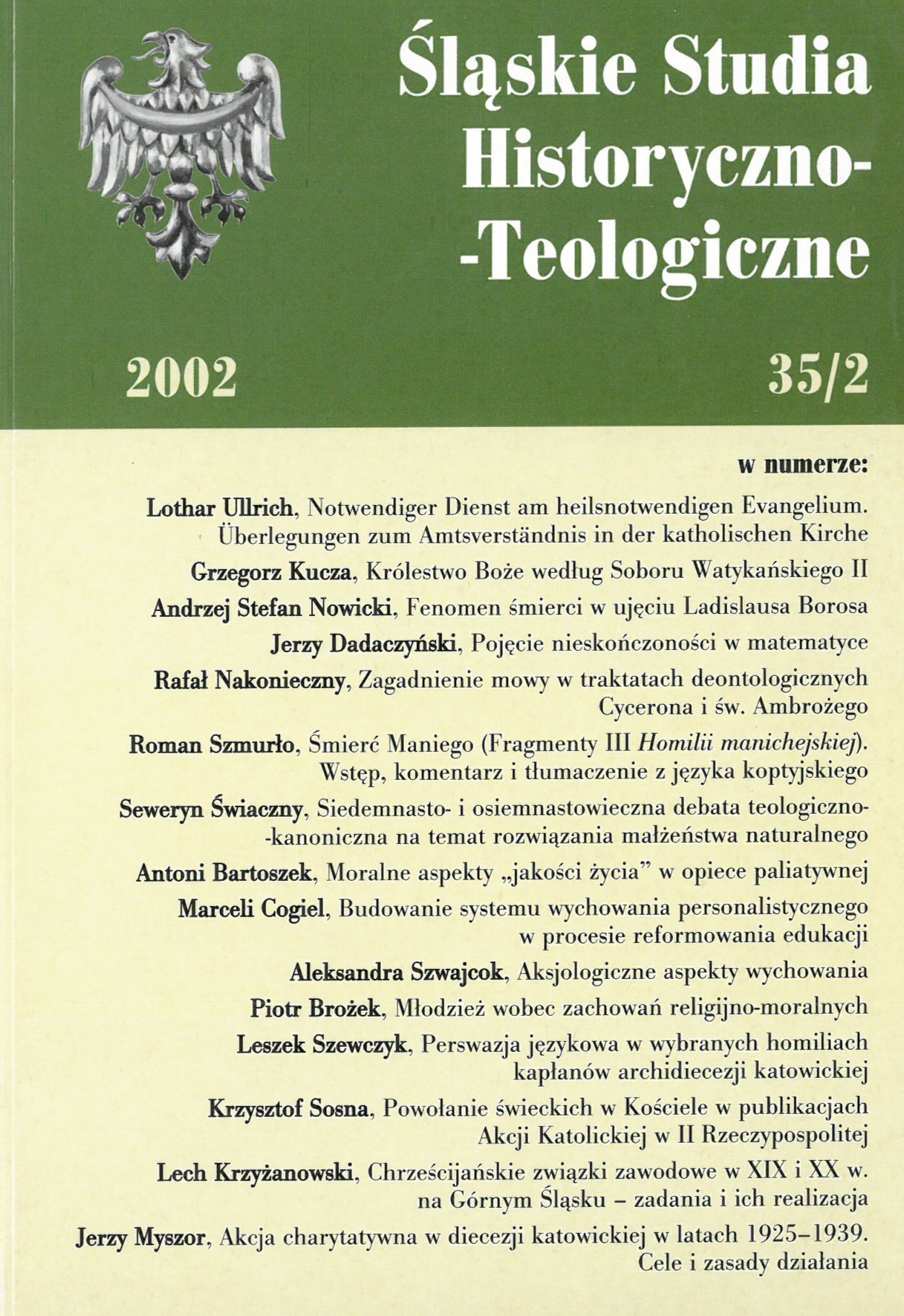
Vol. 35 No. 2 (2002)
Published: 2002-12-31
This work is licensed under a Creative Commons Attribution-NonCommercial-NoDerivatives 4.0 International License.

 English
 Język Polski