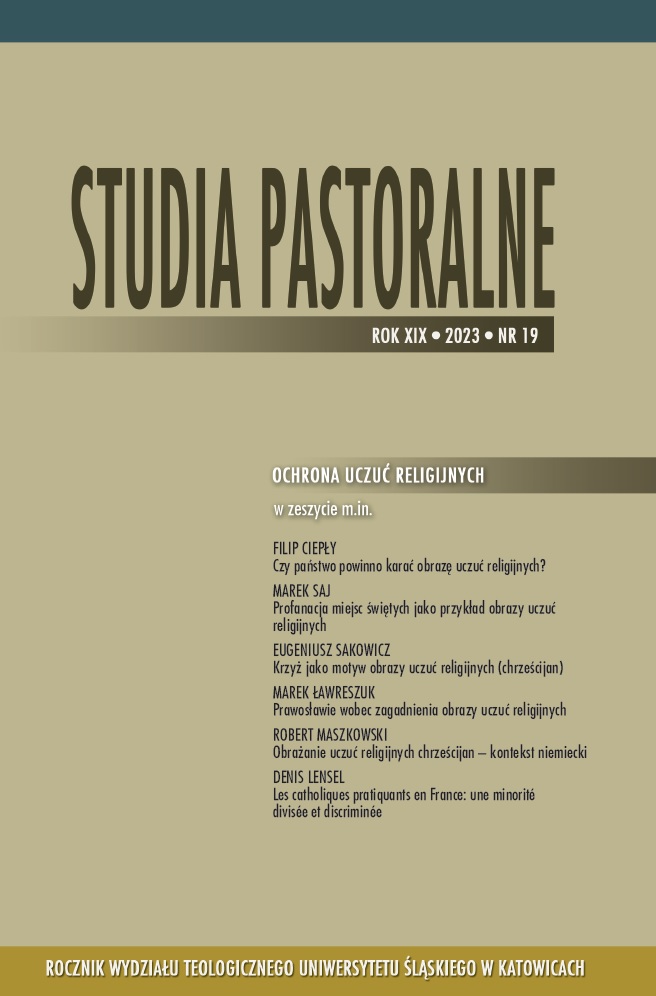
Zgodnie z treścią art. 196 polskiego kodeksu karnego z 1997 r., kto obraża uczucia religijne innych osób, znieważając publicznie przedmiot czci religijnej lub miejsce przeznaczone do publicznego wykonywania obrzędów religijnych, podlega grzywnie, karze ograniczenia wolności albo pozbawienia wolności do lat 2. Wskazany przepis ustawy karnej podlega krytyce w debacie naukowej i publicystycznej. Postuluje się jego uchylenie. Celem artykułu jest przegląd najważniejszych argumentów za i przeciw stosowaniu sankcji karnych za obrazę uczuć religijnych, a także próba odpowiedzi na pytanie, czy państwo powinno karać tego typu zachowania oraz jak ewentualnie prawidłowo to uzasadnić we współczesnym pluralistycznym, liberalnym społeczeństwie.
Artykuł przedstawia pojęcie miejsc świętych zgodnie z normami Kodeksu prawa kanonicznego z 1983 roku, by następnie zająć się zagadnieniem ich profanacji. Dalsze rozważania skupiają się na sposobie przywrócenia sakralnego charakteru zbezczeszczonemu miejscu przeznaczonemu do kultu Bożego. Celem artykułu jest ukazanie profanacji jako przykładu obrazy uczuć religijnych osób wierzących.
W artykule naświetlono kwestie związane z obrazą uczuć religijnych w kontekście głównego symbolu chrześcijaństwa – krzyża. Uczucia w ogóle, w tym uczucia religijne, nie są fikcją. Odgrywają ważną rolę zarówno w życiu osoby, jak i społeczności. Motywują wybory moralne człowieka. Nie ma religii bez uczuć. Obraza uczuć religijnych jest nade wszystko przestępstwem wobec wolności religijnej. Świadoma, dokonana publicznie obraza tych uczuć osoby wierzącej w Boga jest złamaniem prawa. Istnieje szereg sposobów obrazy uczuć religijnych odnoszących się wprost do osoby wierzącej oraz do jej czynności związanych ze sprawowaniem kultu, a także miejsc sakralnych. Najważniejszy symbol chrześcijaństwa – krzyż – wykorzystywany jest często przez określone środowiska wrogie religii w ogóle, a chrześcijaństwu w szczególności, z premedytacją dążące do obrażenia uczuć religijnych. Staje się on upatrzonym symbolem, którym łatwo jest manipulować.
Tekst podejmuje kwestie prawnej ochrony uczuć religijnych w kontekście nauczania Cerkwi prawosławnej. Analiza zagadnienia wymaga wstępnego określenia wzajemnych relacji świeckiego prawa i chrześcijańskiej etyki, po którym przedstawione zostaną problemy wynikające z ustanowionych aktów prawnych, ich poprawności, zakresu i stopnia stosowania wobec działań o niejednoznacznych lub trudnych do określenia intencjach. Tekst skupia się na jednoznacznym i powszechnie obowiązującym w Cerkwi ujęciu zagadnienia z perspektywy prawosławnej eklezjologii i prawa kościelnego. Jednocześnie, konkretne prawne rozwiązania zostały przedstawione z węższej perspektywy: polskiego prawodawstwa oraz zasad eklezjalnych Polskiego Autokefalicznego Kościoła Prawosławnego.
W społeczeństwie pluralistycznym, laicyzującym się i odchodzącym od fundamentów chrześcijaństwa, jakim są Niemcy, będzie dochodziło do napięć i konfliktów między prawem do wolności słowa i prawem do wolności wyznawania religii. Z tego powodu podejmuje się dyskusję, która próbuje dać odpowiedź na pytanie: czy i w jakim stopniu możliwe jest ograniczenie tej pierwszej wolności na rzecz respektu dla drugiej? Prawne ustalenia w Niemczech regulują tę kwestię nie dość wyraźnie i nie tyle chronią uczucia religijne wyznawców, co raczej zachowanie ładu społecznego. To kryterium sprawia, że zachodzą różne rozstrzygnięcia w poszczególnych sprawach spornych. Można zauważyć, że jednym z istotnych czynników wpływających na osąd instytucji prawa jest często siła wyrażenia swej nieakceptacji dla obrażania uczuć religijnych, co rzadziej, a na pewno słabiej, występuje po stronie chrześcijan. Media oraz wokandy sądów nie poświęcają dostatecznie dużo uwagi gorszącym chrześcijan przedstawieniom treści ich wiary, symboli i świętych postaci, przeciwnie aniżeli w przypadku innych religii. Być może jest to spowodowane tym, że chrześcijanie, w przeciwieństwie do wyznawców judaizmu i islamu, którzy jednoczą się w protestach i mówią jednym głosem, nie wyrażają dość wyraźnie swojego oburzenia.
Stanowiący już mniejszość społeczeństwa, praktykujący katolicy we Francji cierpią zarówno z powodu wewnętrznych podziałów, jak i dyskryminacji z zewnątrz. Z jednej strony współistnieją u nich dwie zwalczające się nawzajem tendencje schizmatyckie: „postępowa”, która zniekształciła nauczanie Soboru Watykańskiego II, i „tradycjonalistyczna” (często bliska fundamentalizmowi), która ślepo potępia sobór. Ponadto wpływy polityczne „lewicy” i „prawicy” radykalnie pogłębiają podziały w łonie katolików. Do tego dochodzi, z drugiej strony, zewnętrzne odrzucenie przez sekciarsko-ideologiczny „sekularyzm”. Nie ulega żadnej wątpliwości, że zarówno wewnętrzne kontrowersje, apostazja, jak i marginalizacja katolików, wypieranie się chrześcijańskich korzeni, ataki słowne i fizyczne, niszczenie obiektów kultu, oszczercze kampanie medialne osłabiają Kościół katolicki we Francji. Ta trudna sytuacja sprawia, że znajduje się on niejako pomiędzy młotem pełzających prześladowań politycznych a kowadłem skrajnego fundamentalizmu, za którym bezwiednie podążają niektórzy nieuświadomieni wierni.
Artykuł przedstawia przemyślenia dwóch filozofów języka na temat performatywności w aktach mowy. Następnie konkretyzuje się ich przyjęcie do przepowiadania w posłudze duszpasterskiej oraz wspólną rytualność, a także wskazuje dalsze praktyczno-teologiczne wątki badawcze nad performatywnością w teologii pastoralnej.
Data publikacji:
22-12-2023
|
Abstrakt
| s. 100-117
Integralny rozwój i wychowanie osoby stanowią istotę zarówno teoretycznej refleksji, jak i praktyki pedagogicznej w edukacji katolickiej. Podejmowane we wszystkich obszarach rozwoju dziecka od wczesnych lat służą kształtowaniu fundamentu dla całego jego życia i doskonalenia osobowego. W czasie dynamicznych przemian społeczno-kulturowych, trudnych wydarzeń i postępującej sekularyzacji konieczne jest doskonalenie praktyki wczesnego wychowania. W harmonijnym wspieraniu całościowego rozwoju dziecka i jego ukierunkowaniu zgodnie z wrodzonym potencjałem i możliwościami bardzo ważne jest uwzględnienie wychowania religijnego i moralnego z wykorzystaniem liturgii i jej inicjacyjnego wymiaru. Jest to możliwe dzięki wsparciu rodziny przez korzystanie z podstaw teoretycznych katolickiej pedagogii przedszkolnej, opartej na uniwersalnych wartościach i prawidłowościach rozwoju dziecka.
Data publikacji:
22-12-2023
|
Abstrakt
| s. 118-129
W artykule przedstawiony jest dokument noszący tytuł: Wskazania dla polskojęzycznego duszpasterstwa w Niemczech, który został przygotowany przez Konferencję Episkopatu Niemiec i Konferencję Episkopatu Polski i podpisany 17 września 2001 roku. Jest on analizowany w kontekście postanowień zawartych w instrukcji Erga migrantes caritas Christi wydanej przez Papieską Radę ds. Duszpasterstwa Migrantów i Podróżujących 3 maja 2004 roku. Na początku artykułu przedstawiona jest krótka historia polskojęzycznego duszpasterstwa w Niemczech. Następnie omówione są kolejne części dokumentu: preambuła, zadanie i cel duszpasterstwa polskojęzycznego, funkcja delegata, proboszczowie i wikariusze polskojęzycznych misji katolickich, świeccy w polskojęzycznych misjach katolickich. Każda z tych części jest prezentowana w perspektywie instrukcji Erga migrantes. Analiza obu dokumentów ukazuje jasno ich zgodność oraz fakt, że Wskazania dla polskojęzycznego duszpasterstwa w Niemczech realizują założenia opublikowanej później instrukcji.
Data publikacji:
22-12-2023
|
Abstrakt
| s. 130-143
Artykuł dotyczy wyników badań wypowiedzi dotyczących parafii, które zostały zaprezentowane w polskiej syntezie krajowej Synodu 2021-2023. Uczestnicy spotkań synodalnych ujawnili wiele problemów funkcjonowania ich parafii, współpracy duchownych i świeckich, podmiotowości świeckich w parafii, roli liturgii jako ośrodka życia parafii. Badania wykazały, że metody ewangelizacji i formacji ks. Franciszka Blachnickiego (1921-1987) mogą i powinny stanowić odpowiedź na wiele zgłaszanych problemów. Jego metody odnowy eklezjalnej, oparte na ewangelizacji, deuterokatechumenacie i liturgii, okazują się niezwykle adekwatne dla ukazywanej w wypowiedziach synodalnych trudnej problematyki, związanej z utrwalonymi w parafiach relacjami osobowymi i strukturami duszpasterskimi.
Data publikacji:
22-12-2023
|
Abstrakt
| s. 145-150
Autor tego krótkiego przyczynku – kapłan podparyskiej diecezji Nanterre – wskazuje na soteriologiczny i eklezjalny aspekt chrześcijańskiej refleksji na temat obrazy uczuć religijnych. Zwracając uwagę na wciąż dokonującą się historię zbawienia objawionego i dokonanego w Jezusie Chrystusie, przypomina soborową naukę o Kościele jako wspólnocie wierzących i przestrzeni braterstwa między ludźmi.
Data publikacji:
22-12-2023
|
Abstrakt
| s. 151-169
Problematyka milczenia Boga pojawia się we współczesnym świecie nie tylko u ateistów i agnostyków, lecz także u wierzących. Ci pierwsi, którzy negują sferę ducha, widzą w nim dowód na tragiczność świata, w którym nie ma miejsca dla Boga. Drudzy zaś, wierzący, wskazują na inną możliwość. Odwołując się do świadectw skrypturystycznych o milczeniu Boga oraz doświadczając w codziennym życiu jak gdyby Jego „nieobecności”, nie godzą się na pustkę istnienia czy też negację sensu ludzkiego losu i na sprowadzenie pytania o Boga do wytworu złudnej czy bojaźliwej wyobraźni niedorosłego jeszcze do samodzielności człowieka. Co więcej, stan „nieobecności i braku” Boga uznają za – konieczne do spotkania z żywym Bogiem – mistyczne oczyszczenie i duchowe doświadczenie dorastania kruchego człowieka przyjmującego na siebie cały wymiar swojej przygodności i cały bezmiar łaski na modlitwie, czyli w akcie zawierzenia, zaufania i miłości.
Data publikacji:
22-12-2023
|
Abstrakt
| s. 170-189
Artykuł jest refleksją z zakresu teologii duchowości i liturgiki. Traktuje o znaczeniu Liturgii Godzin odmawianej codziennie we wspólnocie monastycznej ss. Benedyktynek z Vanves we Francji. Artukuł koncentruje się na roli psalmów nazwanych przez autorkę „nauczycielami modlitwy”. Uświęcają one człowieka, pomagają mu wielbić Boga, ale też wspierają w trudnościach życia tych, którzy je odmawiają. Psalmy stają się czasem krzykiem ludzkiego bólu i wzywają do nawrócenia. Autorka stara się odpowiedzieć na pytania o siłę i żywotność głosu Boga zawartego w psalmach, a jednocześnie podaje praktyczne narzędzia i wskazówki przygotowujące do modlitwy psalmami. Nakreśla także rolę psalmów w życiu Jezusa, by pokazać w jaki sposób niosą one w swej treści i dzisiaj Jego głos. Jest to również próba spojrzenia na psalmy jako część tkanki liturgii. One wzmacniają jej głos, będący głosem samego Boga.




 English
 Italiano
 Język Polski
 Deutsch