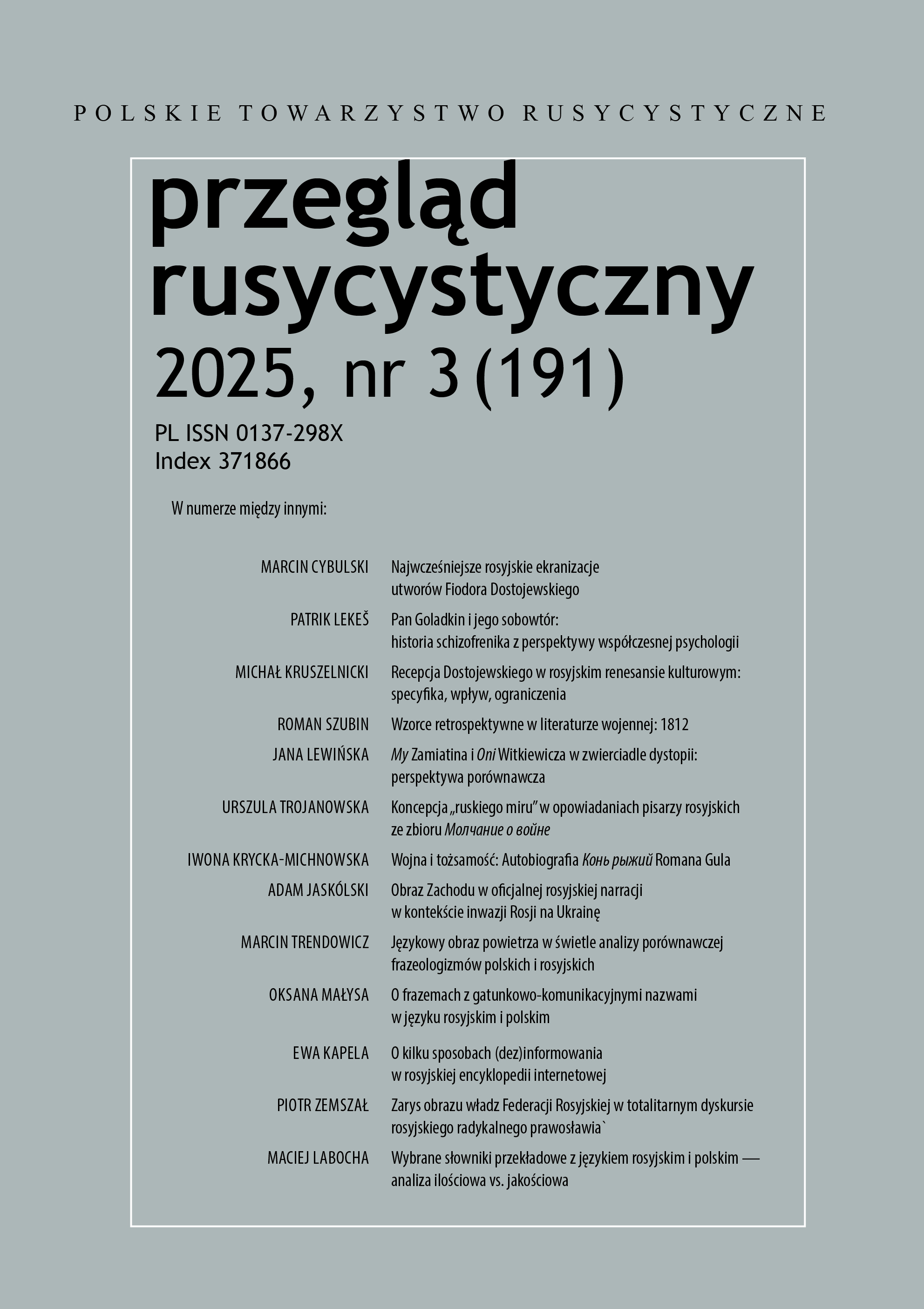
Przedstawiony artykuł stawia sobie za cel zebranie i uporządkowanie wiedzy na temat ekranizacji utworów prozatorskich Fiodora Dostojewskiego, które powstały w Imperium Rosyjskim w czasie panowania ostatniego cara – Mikołaja II. Tam, gdzie było to możliwe, autor przedstawił recepcję krytyczną danego obrazu – najczęściej sięgając do poczytnych periodyków przedrewolucyjnych lub – znowu w miarę możliwości – także do rezultatów badań współczesnych naukowców. W toku analiz stało się jasne, że filmów nakręconych na kanwie powieści i nowel Dostojewskiego było w zakreślonym przedziale czasowym najprawdopodobniej dziewięć, w opublikowanych materiałach pojawiają się też niezweryfikowane sądy o istnieniu trzech kolejnych adaptacji kinowych „klasyka złotego wieku” literatury rosyjskiej.
Artykuł, poświęcony analizie opowiadania F.M. Dostojewskiego „Sobowtór” (1845-1846), bada (psycho)patologię osobowości – schizofreniczny stan głównego bohatera, pana Goladkina, w odniesieniu do estetyczno-antropologicznej koncepcji sztuki i literatury (Andrej Červeňák). W centrum uwagi niniejszego artykułu znajduje się obraz psychiki głównego bohatera – symptomy i geneza choroby – jednocześnie niebagatelną rolę przy tworzeniu się tego obrazu odgrywa jego sobowtór, będący swoistym wyzwalaczem dla rozwoju zaburzenia psychicznego. W oparciu o dane z dziedziny psychologii, przy użyciu terminologii psychologicznej (katatonia, proksemika, inkongruencja itp.), badane są objawy różnych typów schizofrenii, przejawiające się na kilku poziomach ludzkiej egzystencji postaci.
Przedstawiciele renesansu kulturowego jako pierwsi dostrzegli w Dostojewskim nie tylko pisarza realistycznego poruszającego ważkie społeczne problemy, jak Bieliński, i nie tylko „okrutny talent” jak z kolei określił Dostojewskiego Michajłowski (wyrażenie tak wymowne, że przylgnęło do pisarza na dziesięciolecia) lecz artystę religijnego, ogarniającego jakimś nieledwie boskim zamysłem każdą stronicę swojej twórczej rzeczywistości. Odczytać „prawidłowo” twórczość Dostojewskiego znaczyło dla nich związać go ściśle z chrześcijaństwem i właśnie ten związek na różne sposoby w swych pismach pokazywali i potwierdzali. Celem niniejszego tekstu nie jest, jak się może zdawać na pierwszy rzut oka, podważenie i odrzucenie tez religijnej interpretacji Dostojewskiego, lecz pokazanie, że jest też inny Dostojewski, którego w ramach wygenerowanej w rosyjskim renesansie kulturowym wykładni konfesyjnej nie sposób dostrzec przez co cierpi pluralistyczna i filozoficzna heterogeniczność jego tekstu. Spróbuję to uczynić w trybie problematyzowania w oparciu o literę powieści kilku koncepcji i idei jako szczególnie się wybijających w świecie Dostojewskiego a zarazem najbardziej inspirujących dla przedstawicieli rosyjskiego odrodzenia kulturowego.
W artykule zbadano zjawisko tworzenia się wzorców retrospektywnych w literaturze o wojnie 1812 roku. Zarówno w czasie kampanii wojskowej, jak i po niej wykształciło się niezwykle różnorodne zaplecze literacko-informacyjne, spełniające jednocześnie funkcje propagandowe, prawdy i zrozumienia historycznego, a także późniejszej interpretacji. To właśnie w tym okresie pojawiła się literatura patriotyczna, dając impuls późniejszemu kształtowaniu się konserwatywnych partii i słowianofilów. Jednak w tej różnorodności dziennikarstwa, wspomnień, relacji naocznych świadków i literatury wysokiej wyróżniają się motywy przekrojowe, ukształtowane na podstawie wiedzy retrospektywnej (czyli zjawiska wiedzy z perspektywy czasu). Różne kombinacje motywów retrospektywnych tworzą wzorce — duże obrazy, które z góry determinują interpretację wydarzeń. Jednym z tych wzorców jest wzór zwycięstwa, uformowany z perspektywy czasu na długo przed wojnami napoleońskimi. Schemat ten tworzy ideę niezwyciężoności armii rosyjskiej i uwzględnia oczywiste (Austerlitz 1805, Frydland 1807) i nieoczywiste (Borodino 1812) porażki lub bitwy, które nie przyniosły rezultatu w aspekcie zwycięstwa i chwały, straty — w aspekcie świętej ofiary. Ze względu na dominację schematu zwycięstwa relacje z Wojny Ojczyźnianej 1812 roku odbiegają od rzeczywistego stanu rzeczy, gdy zagrożone było istnienie państwa rosyjskiego.
Artykuł analizuje dwa utwory literackie z lat 20. XX wieku – powieść My Jewgienija Zamiatina oraz dramat Oni autorstwa Stanisława Ignacego Witkiewicza. Oba utwory są rozpatrywane jako obrazy reżimów totalitarnych w perspektywie dystopijnej. Główna uwaga jest poświęcona kwestii relacji między jednostką a władzą z punktu widzenia problemu osobowości, oporu i sztuki. Główną metodą jest analiza porównawcza. Wnioski z analizy wskazują na różnice i podobieństwa w przedstawieniu zagrożeń wynikających z rozwoju systemu dystopijnego. U Witkiewicza ukazany jest początek powstawania totalitarnego reżimu, podczas gdy u Zamiatina przedstawione społeczeństwo jest już w pełni ukształtowaną dystopią.
W artykule podejmuję analizę opublikowanego w niezależnym wydawnictwie Freedom Letters tomu małej prozy Milczenie o wojnie. Zbiór ten zawiera reakcje pisarzy rosyjskich na wojnę w Ukrainie i w związku z tym stanowi ważny dokument epoki. W niniejszym tekście koncentruję się na pojęciu ruskij mir, które w moim odczuciu łączy wszystkie, bardzo różne, utwory wchodzące w skład tomu. Pokazuję, w jaki sposób konstrukt ten realizuje się w poszczególnych opowiadaniach, jakie jego aspekty i negatywne konsekwencje są przez autorów eksponowane, a także po jakie środki artystyczne sięgają w tym celu. Staram się wykazać, że omawiane utwory potwierdzają tezę historyczki z Doniecka, Larisy Jakubowej, uznającej ruskij mir za przestrzeń całkowitego kłamstwa, uniemożliwiającą funkcjonowanie w normalnym świecie.
Data publikacji:
21-09-2025
|
Abstrakt
| s. 122-140
Głównym przedmiotem badań w artykule jest autobiografia Конь рыжий (Koń rudy) Romana Gula, a punktem odniesienia – jego wspomnienia Marsz lodowy. Celem analizy jest uzyskanie odpowiedzi na pytanie, w jaki sposób pisarz rekonstruuje i interpretuje swą wojenną przeszłość na różnych etapach życia, z wykorzystaniem takich narzędzi badawczych, jak teorie autobiografii, badania pamięci, a także koncepcje tożsamości narracyjnej. Przeprowadzona analiza prowadzi do wniosku, że w autobiografii pisarz rozlicza się z własną przeszłością: przepracowuje trudne okresy swego życia, wyjaśniając je i interpretując w koherentnej opowieści po to, by rozstrzygnąć dwuznaczność swej postawy podczas wojny oraz usprawiedliwić swe wybory przed współczesnymi i potomnymi. Znacznie poszerza tło swej opowieści, uzupełnia ją o dodatkowe informacje i komentarze, inne natomiast pomija, wybierając epizody utrzymujące spójność narracji i obrazu autobiograficznego bohatera.
Data publikacji:
21-09-2025
|
Abstrakt
| s. 141-158
Głównym celem niniejszego artykułu jest przedstawienie i analiza cech obrazu tzw. Zachodu w oficjalnej rosyjskiej narracji, a konkretnie w publicznych wypowiedziach najwyżej postawionych przedstawicieli rosyjskiej władzy w trakcie pełnoskalowej wojny na Ukrainie. Punktem wyjścia do analizy jest w niniejszej pracy archetypowa opozycja semiotyczna „My – Oni”. Istnienie rozróżnienia typu „My – Oni” czy „Swój – Obcy” pociąga za sobą konieczność budowy pozytywnego wizerunku mówiących (piszących), jak i negatywnej charakterystyki „Obcego”. Autor przybliża również stosowane w różnych dyskursach perswazyjnych (w tym ideologicznych) chwyty retoryczne zaobserwowane także w badanych tekstach i mogące być przejawem manipulacji, o ile spełniają pozajęzykowe warunki bycia manipulacyjnymi. Przeprowadzona analiza potwierdziła, że w oficjalnej rosyjskiej narracji dotyczącej wojny na Ukrainie i – szerzej – sytuacji na arenie międzynarodowej, która to narracja zdaniem wielu specjalistów nosi znamiona propagandy i dezinformacji, obecna jest wyraźna antyzachodnia, a konkretnie antyamerykańska, antyunijna i antynatowska retoryka. Niniejsze rozważania potwierdzają również, że język jako narzędzie komunikacji czy też – w szerszym ujęciu – komunikacja w ogóle, a zwłaszcza komunikacja poprzez media masowe jest lub przynajmniej może być efektywnym środkiem służącym kreowaniu rzeczywistości, a także kształtowaniu ludzkich postaw czy przekonań.
Data publikacji:
21-09-2025
|
Abstrakt
| s. 159-174
Artykuł analizuje frazeologizmy zawierający leksemy powietrze i воздух w językach polskim i rosyjskim, rekonstruując fragment językowego obrazu powietrza. Badaniem objęto 51 jednostek i przeprowadzono je w oparciu o analizę leksykograficzną, a także wspierająco – badania ankietowe i analizę korpusową, a do charakterystyki porównawczej zastosowano koncepcję paraleli frazeologicznych, Wspólne cechy frazeologii obu języków obejmują powietrze jako element niezbędny do życia, związek z otwartą przestrzenią, możliwość zanieczyszczenia oraz synonimu pustki lub zwiastuna zmian. Frazeologia polska dodatkowo podkreśla świeżość, niewidzialność i potencjalną zabójczość powietrza, natomiast rosyjska akcentuje jego związek z bliskością. Analiza wskazuje z jednej strony na uniwersalne elementy obrazu powietrza w obu językach, z drugiej zaś na jego specyfikę kulturową.
W artykule rozpatrywane są rosyjskie i polskie frazemy, które zawierają nazwy gatunków mowy i innych wskaźników komunikacji, a także związane z nimi verba dicendi i przymiotniki. Szczególną uwagę zwrócono na specyfikę ich funkcjonowania w polskiej i rosyjskiej przestrzeni kulturowej, w tym przez pryzmat świadomości gatunkowej Polaków i Rosjan. Odtwarzalne związki wyrazowe oraz teksty precedensowe z nominacjami gatunków ukazane zostały również z uwzględnieniem ich korelacji z różnymi typami zdarzeń komunikacyjnych i odmianami dyskursu. Ponadto wskazano na ich wyznaczniki stylistyczne i pragm
Celem artykułu jest ukazanie potencjału dezinformacyjnego tekstów encyklopedycznych. Asumptem do podjęcia tematu było uruchomienie na początku 2024 roku rosyjskiej encyklopedii internetowej Ruwiki powstałej w wyniku skopiowania rosyjskojęzycznej edycji Wikipedii oraz krytykowanie tej ostatniej za publikowanie nieprawdziwych treści. W związku z powyższym w artykule znalazły się rozważania poświęcone zjawisku dezinformacji oraz powiązaniu informacji z prawdą. Materiał badawczy stanowiły bliźniacze artykuły hasłowe z Wikipedii oraz Ruwiki poświęcone prezydentowi Ukrainy oraz wojnie rosyjsko-ukraińskiej. Analizowane ekscerpty pochodzą z pierwszej połowy 2024 r. Porównanie zawartych w nich treści pozwoliło na pokazanie uwarunkowanych pragmatycznie różnic w językowym ukształtowaniu komunikatów oraz na omówienie kilku technik dezinformacji (np. selekcja i proporcje treści, manipulowanie informacjami, eksplicytne i implicytne sposoby wartościowania, argumenty erystyczne). Okazuje się, że współczesna encyklopedia cyfrowa jest nie tylko źródłem wiedzy, ale również prawdy stanowiącej społeczny konstrukt, który może służyć dezinformacji.
Data publikacji:
21-09-2025
|
Abstrakt
| s. 222-258
W tekście analizie poddano środki, za pomocą których wyrażana jest druzgocąca krytyka Władimira Putina i jego najbliższego otoczenia, która dokonuje się w wybranym segmencie dyskursu współczesnych rosyjskich ultraprawosławnych nacjonalistów. Wyprowadzenie tej krytyki poza pole pragmatyczne (w sensie pragmatyki politycznej) i wprowadzenie jej na terytorium manichejsko pojmowanej ideologii determinuje jej bezkompromisowość, która w wielu aspektach przypomina bezkompromisowość ataków prowadzonych w dyskursach totalitarnych.
Przytłaczająca większość przeanalizowanych środków językowych służących budowaniu obrazu Putina i jego otoczenia oparta jest na wartościujących opozycjach, które nie są opozycjami ideologicznymi. Uniwersalna aksjologia widoczna jest w takich uogólnionych kategoriach pojęciowych, jak przestępczy charakter władzy, jej szkodliwość, kłamliwość, nieczystość intencji i podstępność, nielegalność itd. Totalitarność tego dyskursu polega na tym, że negatywna waloryzacja w oparciu o uniwersalne opozycje możliwa jest tylko i wyłącznie wtedy, gdy pokrywa się z negatywną waloryzacją dokonywaną na podstawie skali wartości ideologicznych oraz na jego manicheizmie i skrajności wyrażanych ocen, które znajdują wyraz w dość uderzających w swojej wymowie środkach językowych.
Artykuł prezentuje dwa podejścia do ewaluacji słowników przekładowych: ilościowe i jakościowe. Badanie wskazuje, że ewaluacja słowników powinna być wielowymiarowa, a analizy powinny być prowadzone komplementarnie. Uwzględnienie różnych aspektów, związanych z makro- i mikrostrukturą, obiektywizuje i niuansuje ocenę słowników

 10.31261/pr


 Język Polski
 Русский
 English