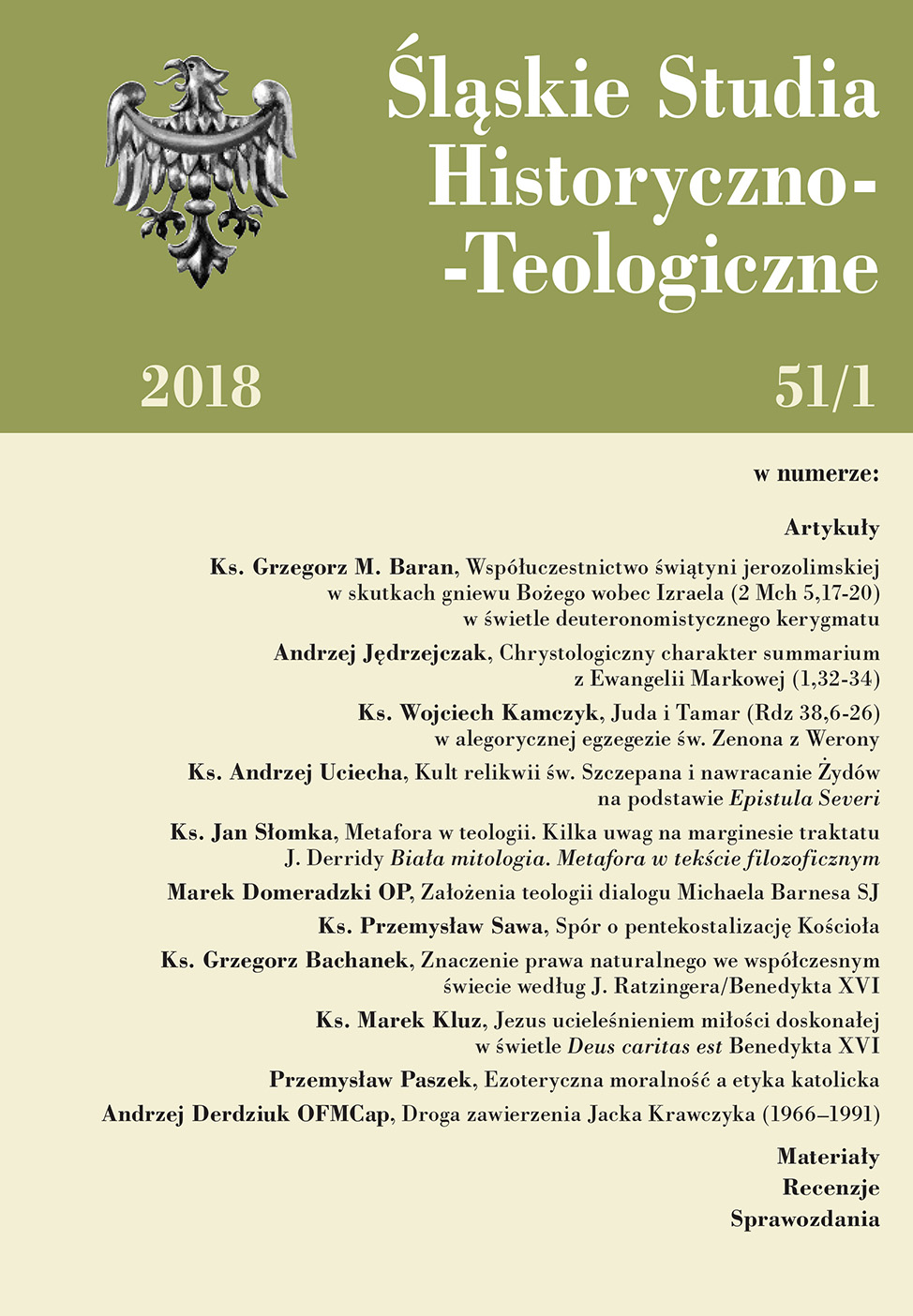
W nakreślonej historii losów świątyni jerozolimskiej w czasach machabejskich wyraźnie można dostrzec rys kerygmatu deuteronomistycznego. Z wybraństwem narodu izraelskiego bardzo mocno splatało się wybraństwo świątyni. Jej los zależał wprost od losu narodu wybranego. Istotą pomyślności zarówno Izraela, jak i świątyni była wierność Prawu narodu wybranego. Odstępstwo od Prawa wywoływało gniew Boga, który w konsekwencji zsyłał karę na swój lud. W tej karze bezpośrednio uczestniczyła świątynia. Nawrócenie narodu wybranego stawało się natomiast podstawą okazywania mu miłosierdzia przez Boga (przemiana gniewu Bożego w miłosierdzie) i cieszenia się błogosławieństwem Bożym jako owocem wierności Prawu. Wyrazem miłosierdzia Boga była także możliwość odbudowania czy też oczyszczenia świątyni, aby w niej Bóg mógł zamieszkiwać pośród swego narodu i aby w tym wybranym miejscu na powrót Izrael mógł się modlić i sprawować prawowity kult w celu otrzymywania Bożego błogosławieństwa i zmiłowania.
W prezentowanym artykule nakreślam linię chrystologiczną Ewangelii wg św. Marka, jaką ewangelista zawarł w krótkim summarium z pobytu Jezusa w Kafarnaum. Bogactwo motywów, jakie napotyka czytelnik już w pierwszym rozdziale dzieła Markowego, kieruje uwagę na wersety 32-34, będące niejako streszczającym opisem pobytu Jezusa w Kafarnaum, a zarazem mogą posłużyć jako wstęp i podsumowanie do całej Ewangelii wg św. Marka. Streszczenie to wypada uznać za istotne, a skłaniają ku temu dwie przesłanki: teologiczna wizja Jezusa jako lekarza oraz jako Syna Bożego. Idea samouniżenia się Boga widoczna jest w działaniach podejmowanych przez Chrystusa na rzecz człowieka.
W swojej kaznodziejskiej działalności św. Zenon z Werony, jak wielu współczesnych mu duszpasterzy, wielokrotnie wykorzystywał fragmenty biblijne w celu pouczenia wiernych i przekazania najistotniejszych prawd wiary. W kontekst przygotowań katechumenów do chrztu wpisał także starotestamentalną historię o Judzie i Tamar. Artykuł stanowi próbę analizy egzegezy biblijnego fragmentu, dokonanej na użytek duszpasterski przez biskupa Werony. Wskazuje, w jaki sposób alegoryczne odczytanie tekstu pomogło kaznodziei zaprezentować najważniejsze zagrożenia religijności katechumenów oraz konieczność nawrócenia i przyjęcia sakramentów wiary. Prezentuje wreszcie wizję Kościoła – nowego ludu Bożego, który duszpasterz odkrył w biblijnej postaci Tamar.
Przedmiotem opracowania jest Epistula Severi. Dokument ten zawiera relację z wydarzeń, jakie miały miejsce na jednej z wysp balearskich na przełomie 417 i 418 roku. Biskup Minorki Severus opisał okoliczności sytuacji, która rozegrała się w mieście Magonia (Mahon) w związku ze sprowadzeniem relikwii świętego Szczepana. Raport incydentów jest bardzo szczegółowy chronograficznie i topograficznie. Konflikt zakończył się spaleniem synagogi i nawróceniem 540 Żydów. Celem artykułu jest próba charakterystyki narracji zawartej w liście Severusa i zbadanie ewentualnych zależności między propagowaniem kultu męczennika a wydarzeniami, które miały miejsce na Balearach na początku V wieku. W 415 roku cudownie odnalezione relikwie pierwszego męczennika zostały przeniesione do jerozolimskiej katedry Świętego Syjonu i rozpoczęły swoje pielgrzymowanie w Kościele Afryki Północnej i całym Imperium Romanum. W relacji Sewera dominuje apologetyka antyjudaistyczna. Autor zna rozpowszechnianą w chrześcijaństwie IV i V wieku hagiograficzną narrację świętych męczenników machabejskich, ale jej obecność jest śladowa. W konstrukcji narracji Epistula Severi widoczny jest wyraźny wpływ metod stosowanych w księgach biblijnych. Użycie literackich figur polaryzacji i paralelizmów przeciwstawnych pozwala łatwiej dotrzeć do odbiorcy i skuteczniej wpłynąć na jego decyzje.
Derrida w swoim eseju udowadnia, że filozofia, choć dąży do uściślenia myśli i jej usystematyzowania, a więc w tekstach filozoficznych preferowane są możliwie precyzyjne pojęcia abstrakcyjne, nie jest w stanie, i to z powodów zasadniczych, całkiem uciec od metafory. Prowadząc swój dowód, Derrida analizuje Arystotelesową definicję metafory oraz wynikające z niej konsekwencje językowe i intelektualne. Pokazuje, że nie można traktować metafory jako wtórnej wobec pojęcia. Te rozważania mogą być przydatne dla teologa. Próby usystematyzowania metafor są pomocne w lepszym rozumieniu metafor biblijnych oraz w staranniejszym dobieraniu metafor w trakcie pisania tekstów teologicznych. Szczególnie interesujące są krytyczne uwagi o pojęciach matematycznych i dziełach techniki jako punkcie wyjścia do tworzenia metafor. Analizy Derridy pokazujące metaforę jako „samo wyłonienie się języka” są istotną inspiracją do namysłu nad wzajemną relacją pojęć abstrakcyjnych i metafor w tekście teologicznym.
Michael Barnes jest brytyjskim jezuitą, należącym do grona teologów zajmujących się współczesną teologią religii. Jego teologia dialogu stanowi próbę refleksji nad chrześcijańskim rozumieniem powszechnie doświadczanego dziś pluralizmu religijnego. Sytuując się w nurcie inkluzywistycznym, odcina się on od poglądów Johna Hicka i innych teologów opcji pluralistycznej. Barnes przejmuje od Karla Rahnera koncepcję „anonimowych chrześcijan” i rozwija ją przy pomocy filozofii dialogu Emmanuela Levinasa. Jej założenia służą jezuicie do interpretowania dokumentów Soboru Watykańskiego II , a także wskazują na etyczny wymiar dialogu międzyreligijnego. Dla Michaela Barnesa dialog z wyznawcami innych religii jest warunkiem odkrywania własnej tożsamości i rozpoznawania Bożego działania w świecie.
Data publikacji:
30-06-2018
|
Abstrakt
| s. 100-119
Coraz częściej mówi się o pentekostalizacji chrześcijaństwa. Wyraża się ona w rozwoju zborów i Kościołów neopentekostalnych jak i w oddziaływaniu tych wspólnot na tradycyjne Kościoły, także katolicki. Na temat wartości tego zjawiska trwa dyskusja. Zwolennicy zarzutu o pentekostalizację widzą w niej źródło zgubnych dla Kościoła tendencji oraz drogę do zacierania różnic pomiędzy denominacjami. Przeciwnicy, nie negując gdzieniegdzie zaistniałych nadużyć, widzą wymianę duchowych darów. Niniejszy artykuł włącza się w powyższą dyskusję, szczególnie akcentując głos polskich teologów. Autor wyraża przekonanie, że otwartość na nowe wymiary duchowości i pobożności, jak również formy istnienia czy organizacji Kościoła nie oznacza sprzeciwu wobec Tradycji. Idea ciągłości tożsamości katolickiej zawiera bowiem zachowanie całego dziedzictwa wiary, przy jednoczesnym odważnym odnajdywaniu się w tym, co nowe, bardziej odpowiednie dla współczesnego człowieka. Taka nowość wpisuje się w samo jądro Ewangelii, a dla samego Kościoła stanowi możliwość rozwoju. Potrzebny jest tylko solidny fundament doktrynalny, troska o świętość oraz zdrowy rozsądek.
Data publikacji:
30-06-2018
|
Abstrakt
| s. 120-130
J. Ratzinger/Benedykt XVI wskazuje na znaczenie prawa naturalnego jako podstawy polityki troszczącej się o sprawiedliwość. Prawo to chroni przed samowolą władzy, niesprawiedliwością większości, totalitaryzmem państwa. Poszanowanie prawa naturalnego stanowi konieczny warunek pokoju. Przekonanie o istnieniu prawa, które może być poznane przez wszystkich ludzi, umożliwia autentyczny dialog osób różnych kultur i religii. W obliczu współczesnej globalizacji i ruchów migracyjnych dialog ten nabiera szczególnego znaczenia. Prawo naturalne umożliwia rozpoznanie i obronę praw człowieka oraz uznanie godności ludzkiej osoby. Staje się ono szczególnie istotne dzisiaj, w obliczu tzw. dyktatury relatywizmu. Odzyskanie świadomości moralnego charakteru bytu ma istotne znaczenie dla przetrwania ludzkości. Koncepcja prawa naturalnego to jedno z największych osiągnięć europejskiej kultury i stanowi o jej wielkości.
Data publikacji:
30-06-2018
|
Abstrakt
| s. 131-145
Temat miłości chrześcijańskiej, z racji swojego fundamentalnego znaczenia, od wieków był obecny w refleksji teologicznej Kościoła katolickiego. Nie oznacza to jednak, że w dzisiejszych czasach temat ten w jakikolwiek sposób się zdezaktualizował. Wręcz przeciwnie, orędzie o Bogu, który jest Miłością, oraz o odpowiedzi człowieka na Bożą miłość, musi być przekazywane ludziom także dzisiaj. Centrum Bożego planu miłości stanowi Osoba Chrystusa: w Nim miłość stała się widzialna i namacalna. Jest to perspektywa, w której usytuowana jest encyklika Benedykta XVI "Deus caritas est". Dlatego idąc śladami tej encykliki, poświęconej tematowi miłości, za punkt wyjścia należy przyjąć pierwsze źródło miłości, którym jest Jezus Chrystus. On – jako ucieleśnienie miłości doskonałej – stanowi kryterium, według którego może być rozpoznawana prawdziwa miłość chrześcijańska.
Data publikacji:
30-06-2018
|
Abstrakt
| s. 146-156
Teoria ezoterycznej moralności, powstała na gruncie etyki utylitarystycznej, stanowi próbę realizacji postulatu głoszącego, że etyka powinna mieć przede wszystkim zastosowanie praktyczne. Celem artykułu jest próba odpowiedzi na pytanie, czy teoria ta może stać się wspólnym stanowiskiem etycznym dwóch odległych od siebie spojrzeń na moralność – utylitarystycznego i personalistycznego, a także czy właściwe są próby uzasadnienia ezoterycznej moralności argumentami, które bliższe są etyce katolickiej. W artykule podjęto polemikę z przykładami takiego pozornego konsensusu, a także wskazano, jakie jest stanowisko etyki katolickiej wobec ezoterycznej moralności.
Data publikacji:
06-02-2018
|
Abstrakt
| s. 157-170
Jacek Krawczyk (1966–1991), studiujący teologię dla świeckich na KUL , osiągnął doskonałość w życiu wiarą, nadzieją i miłością, całym sercem angażując się w służę Bogu i człowiekowi. Otrzymał staranne wychowanie religijne w domu rodzinnym i przez pogłębione życie modlitwy odnalazł drogę swojego świeckiego powołania do świętości, które zostało potwierdzone przez jego heroiczną miłość w służbie chorym i ubogim. Dojrzałość wiary i głębia zaufania wobec Boga wyraziła się przez mężne znoszenie śmiertelnej choroby, w której karmiony sakramentami Kościoła, do końca okazał wierność Chrystusowi. Jacek jest wzorem młodego, nowoczesnego człowieka, który zachowując wrażliwość na piękno i dobro oraz krótko ciesząc się życiem w małżeństwie, konsekwentnie dojrzewał do wieczności.



 English
 Język Polski
 https://doi.org/10.31261/SSHT.2018.51.1.01