Data di pubblicazione:
12-12-2022
|
Abstract
| p. 13-22
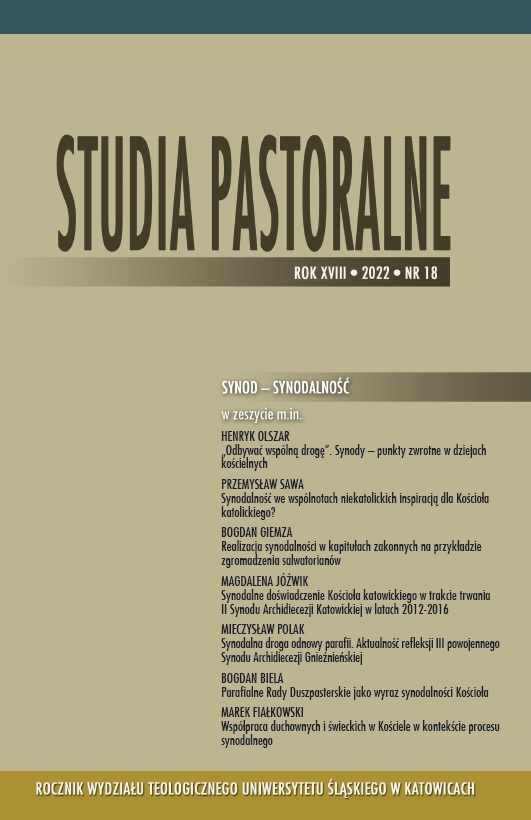
Synody były dla Kościoła okazją do słuchania i dialogu duchownych i świeckich na poziomie lokalnym. W starożytności podejmowały one istotne kwestie doktrynalne i dyscyplinarne w Kościele w kontekście pojawiających się herezji. Dokumenty tych synodów stanowią do dziś wyjątkowe źródło badań teologicznych. Synody katowickie z lat 1972-1975 i 2012-2016 wyrażały wspólną troskę „o bycie Kościołem i bycie w Kościele”.
Data di pubblicazione:
12-12-2022
|
Abstract
| p. 23-47
Artykuł prezentuje formy synodalności w poszczególnych nurtach chrześcijaństwa: w Kościołach wschodnich (prawosławnych i orientalnych), starokatolickich, anglikańskich, luterańskich, reformowanych, metodystycznych oraz ewangelikalnych. Wskazane zostały główne mechanizmy funkcjonujące w odmiennych denominacjach oraz ich teologiczne uzasadnienie. To doświadczenie może być inspiracją dla katolickich poszukiwań przeżywania synodalności i współodpowiedzialności wszystkich ochrzczonych za życie i misję wspólnoty.
Tekst zawiera przykładowe modele synodalności w określonych grupach Kościołów i wspólnot chrześcijańskich, a jednocześnie usiłuje sformułować postulaty do dyskusji w Kościele katolickim. Z jednej strony więc praca ma charakter sprawozdawczy i systematyzujący, a z drugiej może prowokować do rozmowy o synodzie i synodalności jako normalnym funkcjonowaniu wspólnoty ochrzczonych.
Data di pubblicazione:
12-12-2022
|
Abstract
| p. 48-62
Instytucja kapituły zakonnej ma swoją wielowiekową tradycję. Od początku jest nierozerwalnie związana z kształtowaniem się różnych form życia konsekrowanego. Na przestrzeni wieków przyjmowała ona różną formę, w zależności od proponowanej duchowości. W kontekście procesu synodalnego rozpoczętego w Kościele katolickim w dniu 9 października 2021 r. pod hasłem „Ku Kościołowi synodalnemu: komunia, uczestnictwo, misja” i przygotowań do XVI Zgromadzenia Ogólnego Synodu Biskupów, kapituła zakonna stanowi przykład, jak w praktyce realizować właściwie rozumianą synodalność. W ciągu kilkunastu wieków jej kształtowania zostały wypracowane szczegółowe normy zawarte obecnie w prawodawstwie ogólnokościelnym i w prawie własnym, które określają naturę, skład osobowy, zasady proceduralne i czas odbywania kapituł. Zostało to ukazane na przykładzie zgromadzenia salwatorianów. Oby osoby i instytucje zaangażowane w proces synodalny chciały czerpać z wielowiekowej tradycji sprawdzonej instytucjonalnej formy zarządzania, uczestnictwa i odpowiedzialności.
Data di pubblicazione:
13-12-2022
|
Abstract
| p. 63-85
Der Beitrag stellt kompakt die weltkirchlichen Impulse zur Synodalität im Pontifikat von Papst Franziskus vor. Sodann wird der zweistufige, neunjährige synodale Prozess im Erzbistum Vrhbosna (Sarajevo) beschrieben, mit der Zielsetzung, das methodische Herangehen wie auch das Erreichen eines Ergebnisses zu besprechen. Zuletzt wird kurz reflektiert, dass die weltkirchlichen Impulse in der bosnisch-herzegowinischen Synode sichtbar sind.
Data di pubblicazione:
12-12-2022
|
Abstract
| p. 86-100
Międzynarodowa Komisja Teologiczna w wydanym w 2018 r. dokumencie Synodalność w życiu i misji Kościoła przedstawia synodalność jako styl życia i działania Kościoła. W świetle tego dokumentu można zobaczyć, jak w Kościele katowickim intuicje odnośnie do procesu synodalnego zostały zrealizowane w czasie trwania II Synodu Archidiecezji Katowickiej w latach 2012-2016. Intuicje te odnoszą się głównie do dwóch podstawowych obszarów: duchowego przeżywania Kościoła jako wspólnoty wiary, w której wszyscy wezwani są do uczestnictwa i współodpowiedzialności, oraz instytucjonalnej organizacji dającej możliwość usłyszenia głosu wszystkim chcącym wziąć udział w rozmowie o Kościele lokalnym. W niniejszym artykule zostaną przedstawione zarówno etapy wspólnotowego rozeznawania głosu Bożego Ducha (przebieg synodalnych prac), jak i konkretne działania formacyjne i organizacyjne podejmowane w trakcie trwania II Synodu.
Data di pubblicazione:
12-12-2022
|
Abstract
| p. 101-116
Synodalność to jeden z elementów tożsamości wspólnot kościelnych, a przez to i całego Kościoła. Papież Franciszek postrzega synodalność jako wyzwanie dla Kościoła w trzecim tysiącleciu chrześcijaństwa. Punktem kulminacyjnym jego troski o odnowę synodalności w Kościele jest zwołane XVI Zwyczajne Zgromadzenie Ogólne Synodu Biskupów, którego temat brzmi: „Ku Kościołowi synodalnemu: komunia, uczestnictwo i misja”. Synod został zainaugurowany w Rzymie w dniach 9-10 października 2021 r. Synodalność nie jest jednak nowym zjawiskiem. Od samego początku Kościoła posiada ona istotne znaczenie dla jego życia, dla przygotowania i podejmowania decyzji (Dz 15). Jedną z podstawowych form synodów są synody diecezjalne, do których zalicza się III Powojenny Synod Archidiecezji Gnieźnieńskiej obradujący w latach 1995-2000. Celem niniejszego opracowania jest ukazanie aktualności refleksji synodu gnieźnieńskiego w odniesieniu do problemu odnowy współczesnych parafii. Artykuł składa się z trzech części: (1) prezentacja synodu, (2) synodalna teologia parafii, (3) model odnowy parafii. Nauczanie synodu zostało porównane ze współczesnym nauczaniem Kościoła. To porównanie potwierdziło tezę o aktualności refleksji gnieźnieńskiego synodu.
Data di pubblicazione:
12-12-2022
|
Abstract
| p. 117-135
Synodalność stanowi integralną część natury Kościoła. Jest jednakże nie tyle wydarzeniem czy hasłem, co raczej stylem i sposobem bycia, poprzez który Kościół przeżywa swoją ewangelizacyjną misję w świecie. W realizacji tej misji szczególną rolę do spełnienia w parafii ma przewidziana przez prawo rada duszpasterska. Aby jednak mogła ona rzeczywiście spełnić swoją rolę w budowaniu parafii jako wspólnoty wspólnot, musi opierać się na trzech istotnych filarach Kościoła synodalnego: komunii, uczestnictwie i misji. Artykuł pokazuje, jak te trzy wymiary wyłaniają się z nauczania Kościoła, jaki jest stan faktyczny i co jest istotnym faktorem mającym wpływ na to, aby parafialna rada duszpasterska służyła życiu synodalnemu w parafii.
Data di pubblicazione:
12-12-2022
|
Abstract
| p. 136-147
Trudno przecenić wagę współpracy duchownych i świeckich w Kościele, który realizując zleconą mu przez Chrystusa misję prowadzenia ludzi do zbawienia, potrzebuje zaangażowania wszystkich swoich członków. Zarówno duchowni, jak i katolicy świeccy winni prowadzić dialog, który zakłada świadomość własnego miejsca, roli i zadań we wspólnocie kościelnej. Wzajemna współpraca wymaga ciągłego doskonalenia i poszukiwania nowych form i płaszczyzn. Kwestia ta nabrała nowego znaczenia w związku z zainicjowanym przez papieża Franciszka synodem biskupów, którego hasło brzmi: „Ku Kościołowi synodalnemu: komunia, uczestnictwo i misja”. Odbywa się on w nowej formule opartej o konsultacje i wysłuchanie opinii wszystkich ochrzczonych. Szczególna rola w procesie synodalnym przypada właśnie katolikom świeckim. Artykuł stawia sobie za cel ukazanie współpracy duchownych i świeckich w Kościele w kontekście wspominanego synodu. Wymaga to najpierw omówienia samego procesu synodalnego, a następnie wskazania najważniejszych płaszczyzn tej współpracy oraz trudności i przeszkód, na jakie ona napotyka.
Data di pubblicazione:
12-12-2022
|
Abstract
| p. 148-159
Artykuł omawia teologiczne podstawy dla planowego działania w duszpasterstwie. Źródło planowania widzi w Bożym planie zbawienia odzwierciedlonym w biblijnych tekstach. Porównuje sens planowania w Kościele z planowaniem w sferze świeckiej, wskazując podobieństwa i zasadnicze różnice. Planowanie duszpasterskie jest czynnikiem wspomagającym przyjęcie Bożej łaski. W pierwszym rzędzie stanowi pomoc w prowadzeniu Kościoła ku zbawieniu. W ostatnim paragrafie autor prezentuje wybrane przykłady planowania duszpasterskiego.
Data di pubblicazione:
12-12-2022
|
Abstract
| p. 160-206
Biskup Michał Klepacz odegrał kluczową rolę w pracach Konferencji Episkopatu Polski w okresie powojennym. Mianowany pod koniec 1946 r. ordynariuszem łódzkim, już w 1949 r. powołany został na członka Komisji Głównej Episkopatu Polski. Aktywność ta miała bezpośredni związek z pracami w Komisji do Rozmów z Rządem/Komisji Wspólnej Przedstawicieli Rządu PRL i Episkopatu Polski (1949-1967). Wcześniej wszedł w skład Komisji do Spraw Studiów Teologicznych na Fakultetach Kościelnych i w Seminariach Duchownych (członek w latach 1947-1951 i przewodniczący 1951-1953/1956), przekształconej następnie w Komisję Studiów/Studiów i Seminariów Duchownych (przewodniczący w latach 1959-1967). Zasiadał również w Komisji Szkolnej (członek w latach 1947-1953/1956), Komisji Prasowej (członek w latach 1950-1953/1956) i Komisji Soborowej (członek w latach 1959-1967). W tym ostatnim gremium odgrywał szczególną rolę, z uwagi na fakt wyboru do soborowej Komisji do Spraw Studiów i Seminariów oraz uczestnictwa we wszystkich czterech sesjach Soboru Watykańskiego II. Ordynariusz łódzki był pierwszoplanową postacią polskiego Episkopatu w okresie uwięzienia i odosobnienia prymasa Polski kard. Stefana Wyszyńskiego (lata 1953-1956). Jego wybór na przewodniczącego Konferencji Episkopatu Polski oraz postawa wobec problemów Kościoła naznaczone były bezpośrednią ingerencją władz PRL. Do najważniejszych zadań realizowanych przez bpa Michała Klepacza należało: 1) wyznaczanie głównych kierunków i treści nauczania pasterskiego; 2) kształtowanie stosunków z władzami PRL; 3) kontrola i nadzór nad wikariuszami kapitulnymi z uprawnieniami biskupa rezydencjonalnego na Ziemiach Zachodnich i Północnych; 4) ogólny dozór działalności zgromadzeń zakonnych. Podejmowane przez przewodniczącego Konferencji Episkopatu Polski trudne wybory i złożona sytuacja społeczno-polityczna sprawiają, że całościowa ocena rządów bpa Michała Klepacza domaga się podjęcia nowych badań biograficznych.
Data di pubblicazione:
12-12-2022
|
Abstract
| p. 207-229
Artykuł omawia zagadnienie przygotowania homilii na bazie tekstów euchologijnych. Inspirację autor odnalazł w opublikowanym przez Kongregację ds. Kultu Bożego i Dyscypliny Sakramentów w 2015 r. Dyrektorium homiletycznym. Podjęcie tematyki związanej z tekstami euchologijnymi sprowokowane zostało wrażeniem, jakoby we wspomnianym dyrektorium poświęcono zbyt mało miejsca zarówno samym tekstom¸ jak i możliwym do zastosowania metodom pracy nad nimi w perspektywie przygotowania homilii. W dyrektorium jest wprawdzie mowa o tym, że do spektrum inspirującego twórczość homiletyczną należą – oprócz czytań czerpanych z Biblii - teksty typowo liturgiczne, a więc nade wszystko formuły euchologijne, niemniej po dokładniejszej lekturze dokumentu trudno oprzeć się wrażenie, że jednak uwaga skupiona na czytaniach biblijnych jest w nim zdecydowanie dominująca. Metodą proponowaną przez dyrektorium jest wyrastająca z patrystycznej egzegezy duchowych sensów Pisma Świętego lectio divina. W metodzie tej chodzi o teksty biblijne przynależne do kanonu ksiąg uznanych za natchnione. Euchologijne formuły natomiast przynależą do otwartego katalogu, który jest wciąż uzupełniany, więc odróżniają się od tekstów biblijnych. Stąd powstaje w artykule teza, iż metodą lectio divina można się w pracy nad formułami modlitewnymi posługiwać modelowo, traktować ją inspirująco, niemniej sięgać należy po metody typowe dla hermeneutyki liturgicznej. W treści opracowania proponuje się korzystanie przy pracy nad homilią na bazie tekstów euchologijnych z metody historyczno-krytycznej, która pozwala odczytać ich diachroniczność, oraz z metody lingwistycznej (semiotycznej), dzięki której można zgłębić ich bogactwo synchroniczne. Zestawienie tych metod pozwala dostrzec, jak one korespondują ze sobą, a przez to potwierdzają racjonalność przeprowadzonego wywodu oraz słuszność tezy wskazującej na potrzebę posługiwania się przy pracy nad homilią na bazie formuł euchologijnych metodami adekwatnymi.
Data di pubblicazione:
12-12-2022
|
Abstract
| p. 231-247
Niniejszemu opracowaniu nadano rangę „wprowadzeniaˮ w lekturę instrukcji wydanej w 2020 r. przez Kongregację ds. Duchowieństwa, zatytułowanej Nawrócenie duszpasterskie wspólnoty parafialnej w służbie misji ewangelizacyjnej Kościoła. Stąd też studium tegoż opracowania nie może zastąpić lektury samego dokumentu, ale ma wzbudzić pragnienie osobistego kontaktu z nim. Celem zaś tego kontaktu ma być dokładne zapoznanie się z jego treścią, która na poczesnym miejscu stawia potrzebę duszpasterskiego nawrócenia w różnych obszarach zarówno życia, jak i działania duszpasterskiego wspólnot parafialnych, powoływanych do istnienia po to, by skutecznie służyć misji ewangelizacyjnej Kościoła. Oddawszy się takiej lekturze omawianej instrukcji, znajdziemy w jej treści wiele nieodzownych wskazówek, inspirujących do tego, by współczesnemu duszpasterstwu parafialnemu nadawać kształt adekwatny do potrzeb i problemów dzisiejszego świata.
Data di pubblicazione:
12-12-2022
|
Abstract
| p. 248-258
Artykuł wraca do Orędzia biskupów polskich do biskupów niemieckich z 18 listopada 1965 r. i jednego z jego głównych inicjatorów kard. Bolesława Kominka. Mimo iż liczba publikacji, jaka ukazała się na temat treści Orędzia jest stosunkowo duża, to jednak w dzisiejszym przekazie opinii i informacji na ten temat gubi się teologiczna refleksja, dotykająca głębszych warstw tekstu Orędzia, pozostająca poza zainteresowaniem socjologów, politologów czy historyków. Ich uwaga skupiała się bowiem przede wszystkim na poznawaniu procesów transformacji polsko-niemieckiego pojednania i jego społeczno-politycznych skutków. Artykuł – przywołując atmosferę tamtych lat – podkreśla, że u źródeł ówczesnych sporów i podziałów kryło się powszechne niezrozumienie teologicznego wymiaru słów o przebaczeniu.
Data di pubblicazione:
12-12-2022
|
Abstract
| p. 259-270
Księgi liturgiczne były i nadal są komponowane dla liturgii oraz z myślą o liturgicznym użyciu. Są one nieodzownym elementem celebracji liturgicznej. Teksty, które są w nich zawarte, stanowią integralną część każdego sprawowanego misterium. Księgę liturgiczną można również rozumieć w szerszym znaczeniu – jako dokument, który zawiera teksty liturgiczne. Z drugiej strony dokument jako taki nie jest używany w liturgii. Służy on jako zbiór modlitw, z których bogactwa czerpie Kościół w czasie celebracji sakramentów. Dla liturgii rzymskiej kluczowymi dokumentami są m.in. mowy św. Leona Wielkiego (440-460) i sakramentarze. W sakramentarzach biskup lub sprawujący liturgię kapłan znajdował teksty modlitw używanych podczas liturgii. Omawiany w artykule dokument ma charakter źródłowy dla tekstów liturgicznych. Mamy tu bowiem do czynienia ze zbiorem, który nie zawiera modlitw przewidzianych bezpośrednio do użycia w liturgii, ale jest bardziej kolekcją łacińskich oracji pochodzących z różnych okresów.
Data di pubblicazione:
13-12-2022
|
Abstract
| p. 271-288
Autentycznie chrześcijańska modlitwa zakorzeniona jest na stałe w wierze i praktyce Kościoła. Stanowi dla wierzącego człowieka religijną przestrzeń wspólnoty z Bogiem Przymierza i akt solidarności z bliźnim. Na tak nakreślonym tle autor artykułu porusza najpierw problem fałszywego i nie do przyjęcia wyobrażenia o modlitwie chrześcijańskiej. Następnie ukazuje myślenie o modlitwie w soteriologicznej przestrzeni objawienia, którego znamiennym rysem jest struktura dialogiczna. W końcu dokonuje teologicznej refleksji nad rzeczywistym sensem modlitwy wstawienniczej za żywych i umarłych. Nawiązując zaś do świadectwa śląskiego poety mistycznego epoki baroku Anioła Ślązaka (Angelus Silesius), zwraca uwagę na specyficzną przestrzeń modlitwy, która bierze swój początek z ciszy serca wierzącego i prowadzi go do otwarcia się na ciszę Boga wspaniałomyślnie zbawiającego człowieka.




 English
 Italiano
 Język Polski
 Deutsch