


ER(R)GO jest międzynarodowym, dwujęzycznym, czasopismem naukowym nawiązującym do kilkunastoletniej działalności interdyscyplinarnej grupy seminaryjnej o tej samej nazwie. Periodyk poświęcony jest przede wszystkim refleksji nad wytworami kultury współczesnej - także kultury popularnej - ze szczególnym naciskiem na zagadnienia teoretyczne i w najszerszym sensie z teorią związane. Tematyka obejmuje analizę zjawisk, dzieł, procesów kulturowych i literackich oraz ich uwarunkowań, analizę kontekstów je określających, zagadnienia metodologii badań literaturoznawczych i kulturoznawczych, analizę współczesnych tendencji w kulturze i ich założeń myślowych, zmiany paradygmatów teoretycznych i metodologicznych, analizę etycznych i aksjologicznych uwikłań prądów oraz zjawisk kulturowych i literackich, syntezy teoretycznoliterackie i kulturoznawcze, związki literatury z filozofią i innymi naukami. Istotny nacisk kładzie się na zagadnienia teoretycznoliterackie, przy czym literatura postrzegana jest w jej powiązaniach z kontekstami i procesami ogólnokulturowymi. Zadaniem pisma jest wypełnienie niszy między periodykami literaturoznawczymi i kulturoznawczymi oraz umożliwienie spotkania tych dwóch szerokich dziedzin w jednej przestrzeni czytelniczej. Ogólny tenor pisma należy określić jako interdyscyplinarny. Czasopismo finansowane jest z funduszu badań statutowych Instytutu Literaturoznawstwa Wydziału Humanistycznego Uniwersytetu Śląskiego w Katowicach. Czasopismo nie pobiera opłat za publikacje artykułów i jest dostępne w formule Open Access Gold. (WIĘCEJ o czasopiśmie...)
Numery w opracowaniu:
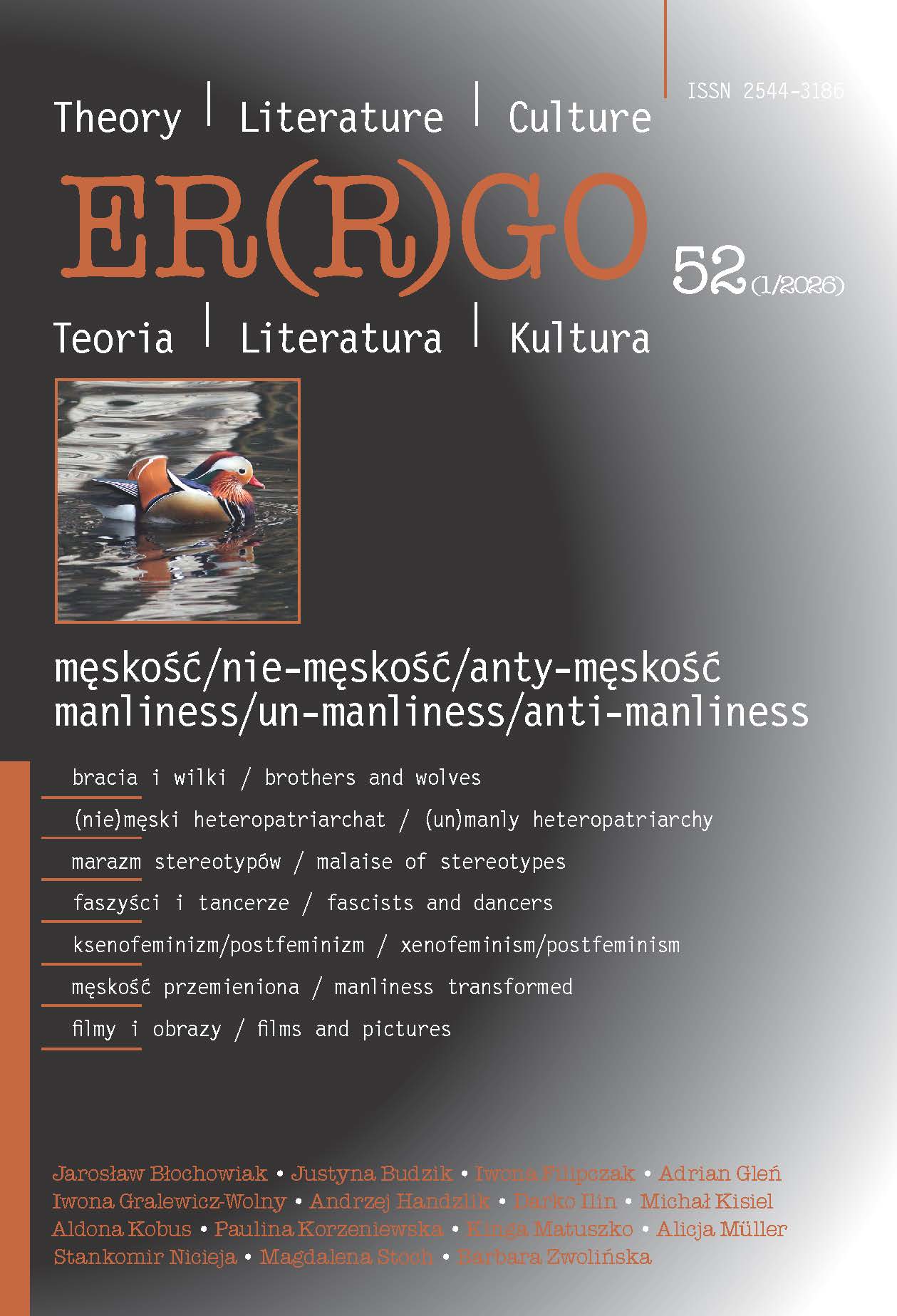
52 (1/2026) – męskość/nie-męskość/anty-męskość (kliknij, by przejść do CFP)
53 (2/2026) – tkanki/rzeczy/materie (kliknij, by przejść do CFP)
Zaproszenie do zgłaszania tekstów
Kolejny numer - 54 (1/2027) - dom/udomowienie/bezdomność (kliknij, by przejść do CFP)
Kolejny numer – 55 (2/2027) – gra/zabawa/lenistwo (kliknij, by przejść do CFP)
From Data to Scenarios: On the “Imaginative Coefficient” of Futurology 1663
1663
Artificial Intelligence and the Limits of the Humanities
700
The Eco-Logic of Olga Tokarczuk’s Prose Worlds Tenderness and Anger as the Pillars of a New Order
538
Exodus or Exile: The Trope of "more life" in Louise Glück’s Poetry
457
2026-01-19
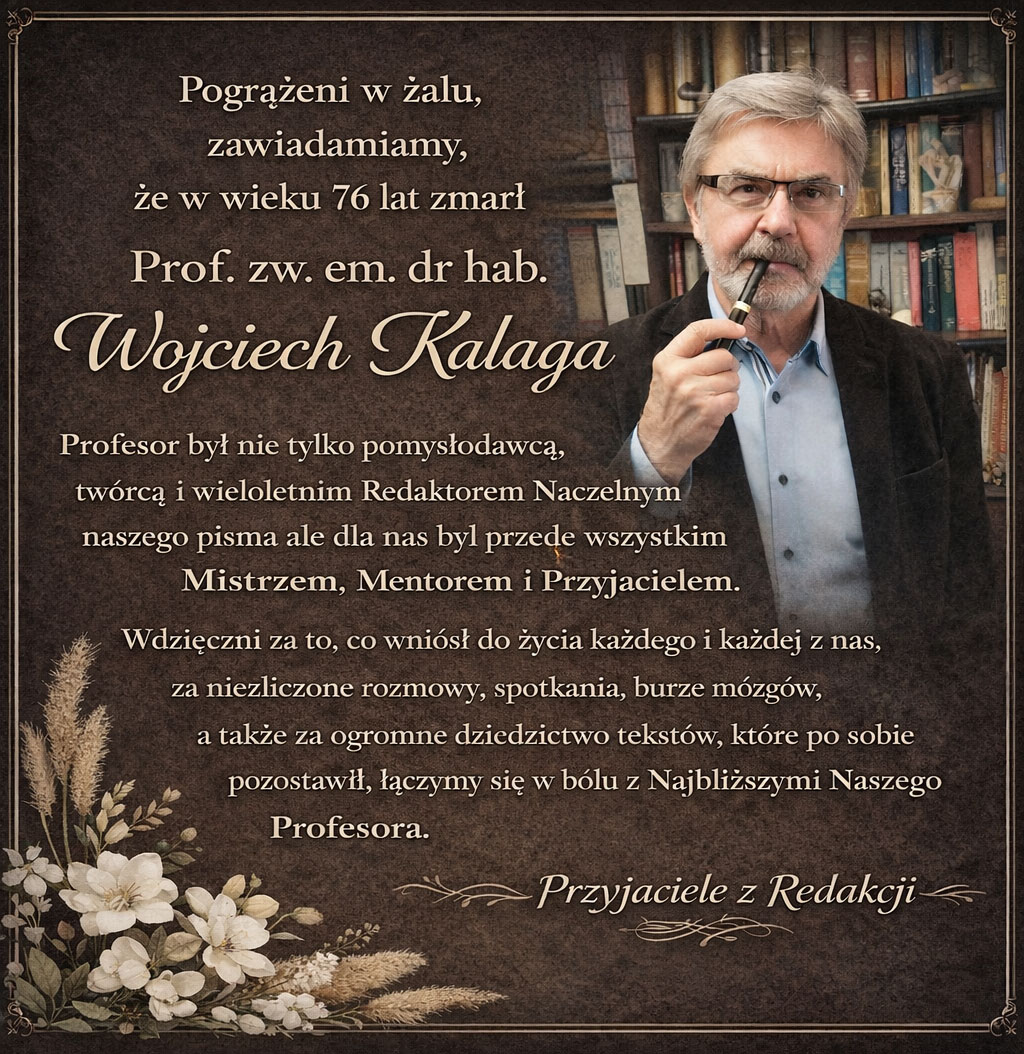
Pogrążeni w żalu, zawiadamiamy, że w wieku 76 lat zmarł
Prof. zw. em. dr hab. Wojciech Kalaga
Profesor był nie tylko pomysłodawcą, twórcą i wieloletnim Redaktorem Naczelnym naszego pisma, ale dla nas był przede wszystkim Mistrzem, Mentorem i Przyjacielem.
Wdzięczni za to, co wniósł do życia każdego i każdej z nas, za niezliczone rozmowy, spotkania, burze mózgów, a także za ogromne dziedzictwo tekstów, które po sobie pozostawił, łączymy się w bólu z Najbliższymi Naszego Profesora.
Przyjaciele z Redakcji
2025-12-01
Kolejny numer – 55 (2/2027) – gra/zabawa/lenistwo
termin nadsyłania tekstów: 15 września 2026
Myślenie o grach, zabawach i lenistwie wydaje się zajęciem równie lekkim, co podejrzanym. Współczesna humanistyka Zachodu — naznaczona etyką produktywności, wiedzy użytecznej i nieustannego działania — od dawna z niepokojem przygląda się wszystkiemu, co nie służy celowi, co wymyka się efektywności, co można utożsamić z marnowaniem czasu. A jednak to właśnie w tym, co pozornie niepotrzebne, kryje się antropologiczny klucz do współczesności: człowiek grający, człowiek bawiący się, człowiek odpoczywający okazać się może upostaciowieniem tego, co styl życia pierwszych dekad XXI wieku determinuje. Szczególnie, że od filozofii zabawy Friedricha Schillera poprzez Homo ludens Johana Huizingi i hermeneutykę gry Hansa-Georga Gadamera, aż po współczesne diagnozy kultury późnego kapitalizmu — gra i lenistwo stają się nie tyle marginesem tego, co społecznie akceptowalne, ile próbą ocalenia sensu. (Kliknij tutaj, żeby przeczytać całe zaproszenie do nadsyłania tekstów).
2025-09-24
Kolejny numer - 54 (1/2027) - dom/udomowienie/bezdomność
termin nadsyłania tekstów: 28 lutego 2026
Myślenie o domu w perspektywie refleksji humanistycznej jest równie wyświechtane, co nieukończone. Jedną z podstawowych prób namysłu nad byciem-w-świecie było rozpoznawanie oraz przekraczanie jego granic, a także definiowanie prawa do zamieszkiwania go oraz wykorzystania tego, co oferuje. Na początku trzeciej dekady XXI wieku niezwykle trudno jest nie tyle jednak nakreślić wymiar owej próby, ile myśleć o doświadczeniu domu w sposób skończony i stabilny. (Kliknij tutaj, żeby przeczytać całe zaproszenie do nadsyłania tekstów)
2025-01-07
Numer w opracowaniu - 53 (2/2026) - tkanki/rzeczy/materie
termin nadsyłania tekstów: 15 września 2025
Chociaż zachodnia humanistyka twórczo i krytycznie starała się porządkować myślenie o świecie za pomocą stabilnych kategorii podmiotu i przedmiotu, wciąż niezwykle trudno jest jej uchwycić materialną rzeczywistość. To, co powinno ją przybliżać, często służyło jako zgoła utopijna perspektywa, która nie tyle ujmowała materialność w perspektywie myśli, ile lokowała ją w nieprzekraczalnym dystansie, niemożliwości czy nawet aporii. Ostatnimi spadkobiercami tej tendencji okazały się zresztą teorie literatury i kultury wpisujące się w tzw. zwrot lingwistyczny, które nie bez powodu sprowadziły humanistykę osadzoną w myśleniu kontynentalnym do pewnego tekstualnego determinizmu. Myślenie za pomocą dwuwarstwowych znaków nigdy nie zestawiało przecież konceptu z materialną rzeczywistością, a jedynie z jej słyszalnym lub widzialnym przebłyskiem: sygnałem, który ów koncept miał przywoływać. (Kliknij tutaj, by przeczytać pełne zaproszenie do nadsyłania tekstów)
2024-10-03
Numer w opracowaniu - 52 (1/2026) – męskość/nie-męskość/anty-męskość
Termin nadsyłania tekstów: 30 stycznia 2025 r.
Dominująca we współczesnych dyskursach humanistycznych krytyka patriarchatu zepchnęła pojęcie męskości do rangi historycznego anachronizmu utożsamianego z większością dramatów współczesnego świata, od korporacyjno-militarnego imperializmu począwszy, poprzez uprzedmiotowienie kobiet, na dewastacji środowiska naturalnego skończywszy. Napędzana nieustannie powielanymi medialnymi stereotypami męskość stała się synonimem wrodzonej agresji, programowej dominacji, wiecznego współzawodnictwa, wszechobecnego racjonalizmu i nieustającej potrzeby optymalizacji i efektywności legitymizowanych wymiernymi sukcesami zachodniego modelu społeczno-technologicznej egzystencji. A kiedy do głosu dochodzą poglądy kwestionujące budowaną na owych stereotypach męską tożsamość, ta ostatnia niemal natychmiast postrzegana jest w kategoriach nowej kolokacji – kryzysu męskości. (Kliknij tutaj, by przeczytać całe zaproszenie do składania tekstów).
2023-10-14
Numer w opracowaniu - 50 (1/2025) - refleksja/dystans/ironia (Kliknij tutaj, by przeczytać zaproszenie do nadsyłania tekstów)
Nr 52 (2026)
Opublikowane: 2026-07-03
 10.31261/errgo

MNISW: (2024) 100
Oryginalny rozmiar po kliknięciu











 English
 Język Polski