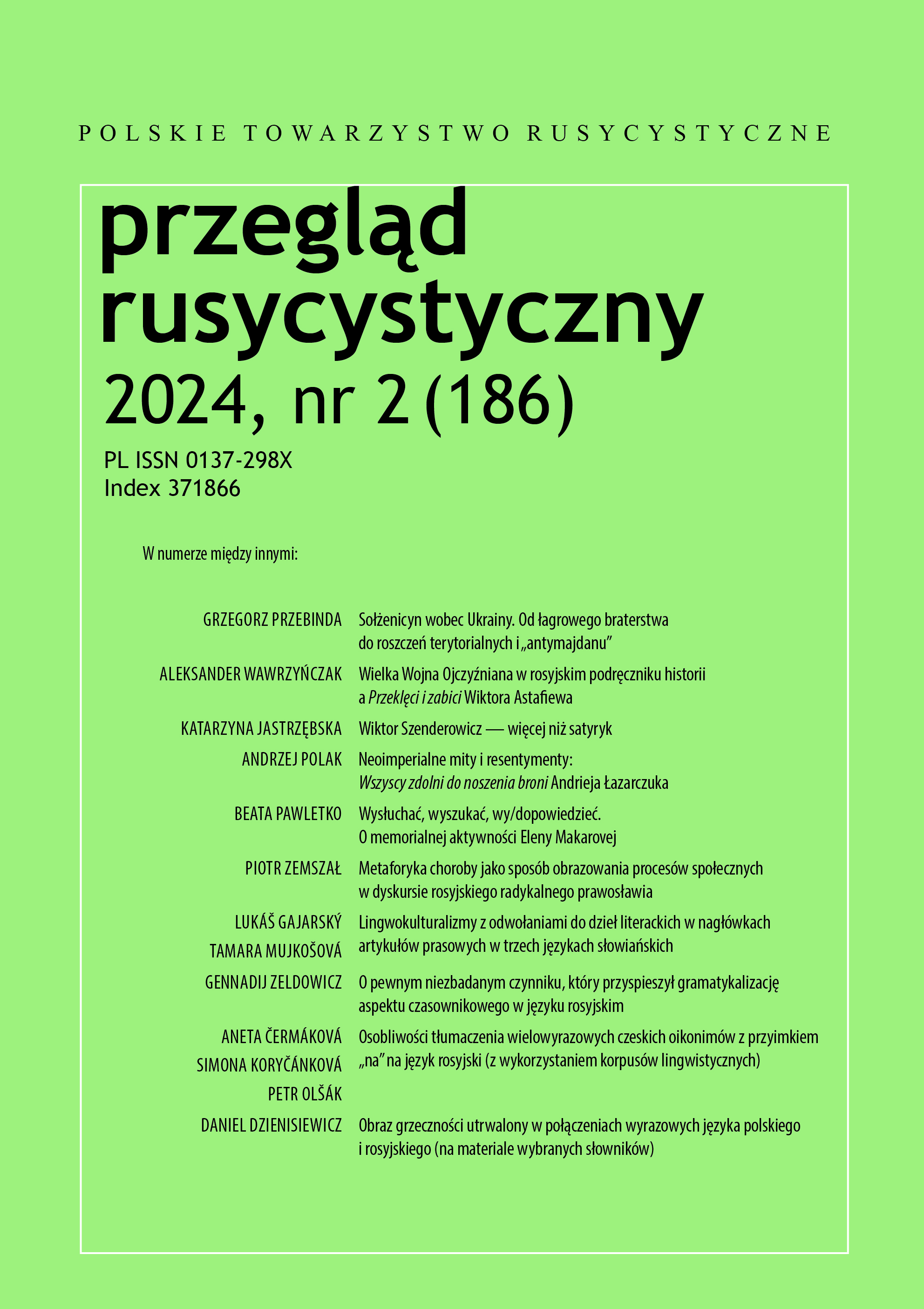
Artykuł traktuje o fundamentalnej ewolucji poglądów wielkiego rosyjskiego pisarza Aleksandra Sołżenicyna (1918–2008) w „kwestii ukraińskiej” – od łagrowego braterstwa, zarysowanego przede wszystkim w Archipelagu Gułag (1973–1975), aż do gniewnych filipik przeciwko tzw. „leninowskim granicom” nowej Republiki Ukraińskiej, ogłaszanych przez Sołżenicyna w trybie narastającym po 1991 roku. Z tego punktu widzenia zostały przeanalizowane w artykule tak różne utwory Sołżenicyna, jak wspominany już Archipelag Gułag, Jak odbudować Rosję? (1990), Rosja w zapaści (1998), a także jego ustne wypowiedzi, ogłaszane w latach 1992–2008 wobec prasy i telewizji rosyjskiej. Najbardziej paradoksalny wydaje się fakt, iż Sołżenicyn w 2005 roku uznał Rewolucję Pomarańczową w Kijowie – całkowicie notabene w zgodzie z prezydentem Putinem – za wielkie zagrożenie także i dla Rosji. Pisarz traktował bowiem owe wydarzenia w stolicy Ukrainy – nie mając ku temu żadnych racjonalnych podstaw – za powtórkę niegdysiejszej rosyjskiej rewolucji lutowej 1917 roku, którą z kolei przedstawił w sposób ze wszech miar potępiający w wielotomowej epopei historycznej Czerwone Koło (1971–2005).
Artykuł porusza problem wprowadzenia do szkół rosyjskich nowej ujednoliconej ideologicznie serii podręczników historii, przede wszystkim zaś podręczników do historii Rosji dla klasy 10 oraz 11 autorstwa Anatolija Torkunowa i Władimira Miedinskiego. Zawarte w podręczniku treści dotyczące wydarzeń Wielkiej Wojny Ojczyźnianej, zostały skonfrontowane z obrazem wojny w wybitnej epopei Wiktora Astafiewa Przeklęci i zabici, która znalazła się w spisie rekomendowanych w podręczniku lektur. Przeprowadzona analiza dowodzi, że w warunkach restauracji w Rosji systemu imperialnego i totalitarnego literatura rosyjska w jej najlepszych dokonaniach, a do takich należy dzieło Astafiewa, którego 100 rocznica urodzin przypada w 2024 roku. pozostaje świadectwem prawdy o złu, jakie niesie jakakolwiek wojna.
Artykuł prezentuje sylwetkę Wiktora Szenderowicza (ur. 1958) – współczesnego pisarza, określanego mianem czołowego rosyjskiego satyryka, eseisty, scenarzysty kultowego programu telewizyjnego Kukły, aforysty, dysydenta, obecnie emigranta. Zreferowano jego biografię twórczą, w której omówiono najważniejsze osiągnięcia literackie – Szenderowicz jest dramaturgiem, autorem licznych sztuk utrzymanych w konwencji satyry politycznej, w której sięga często do wydarzeń najnowszych w historii Rosji. W artykule omówiono też jego działalność dysydencką. W roku 2010 pisarz został laureatem nagrody Helsińskiej Fundacji Praw Człowieka w kategorii „obrona praw człowieka środkami kultury i sztuki”. Wielokrotnie aktywnie sprzeciwiał się polityce Kremla, podpisując liczne apele i protesty, kierowane do prezydenta Federacji Rosyjskiej. Po napaści Rosji na Ukrainę stanowczo potępił wojnę, był w grupie artystów i działaczy społecznych nawołujących do deeskalacji konfliktu i zaprzestania działań wojennych. W grudniu 2021 roku jego nazwisko zostało umieszczone na liście „zagranicznych agentów”, co stało się bezpośrednim impulsem wyjazdu Szenderowicza z kraju. W artykule omówiono również związki pisarza z polską kulturą, przede wszystkim historię powstania jego autorskiego projektu zatytułowanego Lec. XX wiek.
Autor niniejszego artykułu stara się wyjaśnić przyczyny niepokojącego zjawiska występującego w rosyjskiej fantastyce alternatywnej. W kreślonych od początku lat 90. przez rosyjskich fantastów alternatywnych dziejach Rosji coraz wyraźniej tracą na atrakcyjności rozwiązania kojarzone z zachodnią liberalną demokracją kosztem postaw nacjonalistycznych, szowinistycznych, autokratycznych i totalitarnych. Nieufność Zachodu wobec Rosji oraz wrogość tej ostatniej wobec państw NATO i Unii Europejskiej doprowadziła do wzrostu nastrojów proimperialnych. W fantastyce rosyjskiej świadczy o tym popularność imperium w alternatywnych historiach oraz w tak zwanej fantastyce imperialnej. Analizowana w artykule powieść Andrieja Łazarczuka Wszyscy zdolni do noszenia broni należy do nielicznych rosyjskich alternatywnych historii, w których Rosja zawdzięcza swój dobrobyt rozwiązaniom społeczno-politycznym importowanym z Zachodu – z Niemiec i Stanów Zjednoczonych. Jednocześnie autor stara się pokazać, że odrzucenie przez społeczeństwo rosyjskie i rosyjskich fantastów zachodniej liberalnej demokracji stanowi problem głębszy – jak się bowiem okazuje system ten znajduje swoich krytyków również na Zachodzie, o czym świadczą prace Immanuela Wallersteina czy Patricka Deneena.
Data publikacji:
19-04-2024
|
Abstrakt
| s. 100-116
Artykuł stanowi próbę przyjrzenia się działalności związanej z kultywowaniem pamięci o Holokauście pisarki, arteterapeutki i kuratorki wystaw Eleny Makarovej w pierwszych latach po repatriacji z ZSRR do Izraela. W przybliżaniu głównych pól aktywności memorialnej Makarovej pomocą służyć będzie korespondencja z matką, poetką Inną Lisnianską, zebrana w tomie Имяразлуки. Działalność Makarovej jest przykładem intuicyjnego wpisania się w epokę zwrotów — pamięciowego, wizualnego i afektywnego. Prekursorskie pod tym względem są studia poświęcone austriackiej artystce, Friedl Dicker-Brandeis oraz życiu kulturalnemu i naukowemu toczącemu się w Theresienstadt. Analizie poddana została również strategia literacka faction, która, zdaniem autorki artykułu, znajdzie odzwierciedlenie w takich utworach Makarovej jak Фридл czy Kopiści. O zapomnianych artystach z getta białostockiego.
Data publikacji:
19-04-2024
|
Abstrakt
| s. 117-133
Metaforyka związana ze zjawiskiem choroby od wieków używana jest w rozmaitych dyskursach dla obrazowania procesów społecznych wymagających w opinii nadawcy pilnych działań naprawczych. Szczególną popularność zdobyła sobie ok. połowy XIX wieku w wyniku dynamicznego rozwoju zainteresowania naukami biologicznymi, medycznymi, a następnie w związku z silnym wpływem materialistycznego i sensualistycznego poglądu na świat. Co ciekawe, ten typ metafory jest również intensywnie wyzyskiwany przez dyskurs wyznaniowy, w przypadku niniejszego opracowania chodzi o dyskurs radykalnego rosyjskiego prawosławia. Analizie pod kątem występowania metafory pojęciowej z domeną źródłową CHOROBA poddano niemal 800 tekstów, zidentyfikowane realizacje zostały podzielone na kategorie semantyczne odpowiadające różnym aspektom opisywanej w dyskursie rzeczywistości. Okazuje się, że metafora choroby znajduje w badanym dyskursie bardzo szerokie zastosowanie, stanowiąc istotny środek kształtowania postaw odbiorców również w przypadku dyskursu wyznaniowego.
Data publikacji:
19-04-2024
|
Abstrakt
| s. 134-157
Literatura odgrywa istotną rolę w każdej kulturze narodowej, stanowiąc istotny element, który kształtuje i wzbogaca kulturową tożsamość, wartości i światopogląd społeczeństwa. Poprzez wprowadzanie odniesień literackich do nagłówków gazet dziennikarze mogą znacząco zwiększyć głębię i emocjonalne oddziaływanie konkretnej publikacji, co zwiększa ogólną atrakcyjność nagłówka. Takie nagłówki posiadają potencjał wciągnięcia czytelników i pomagają im w zrozumieniu zamierzonego znaczenia tekstu. Są nie tylko narzędziem przekazywania informacji, ale także środkiem przekazywania wartości, postaw i tożsamości określonej lingwistyki kulturowej. Niniejsze badanie skupia się na wykorzystaniu lingwistyki kulturowej w odniesieniu do dzieł literackich w nagłówkach gazet sześciu wybranych periodyków internetowych publikowanych w Rosji, na Słowacji i w Czechach. Na podstawie analizy wykazano, że cytaty, parafrazy lub różne formy odniesień do dzieł literackich są wykorzystywane w odrębny sposób w nagłówkach gazet różnych słowiańskich kultur językowych. Badania te przyczyniają się również do pełniejszego zrozumienia, w jaki sposób literatura wpływa na język mediów masowych i pokazują, w jaki sposób określone elementy literackie manifestują się w dyskursie medialnym.
Data publikacji:
19-04-2024
|
Abstrakt
| s. 158-180
Artykuł jest poświęcony pewnej dotychczas nie opisanej okoliczności, która przyczyniła się do powstania aspektu czasownikowego w języku staroruskim. Jej istotą była poważna asymetria pomiędzy dwiema klasami czasowników: tymi posiadającymi prefiks lesykalny (tzn. zauważalnie zmieniającymi znaczenie rdzenia) a tymi posiadającymi prefiks semantycznie „pusty”. Ponieważ, z jednej strony, czasowniki tych dwóch typów miały równy stopień złożoności formalnej i, zgodnie z zasadą ikoniczności, powinni wykazywać się podobnym zachowaniem funkcjonalnym, z innej zaś strony, rezultat implikowany przez czasownik o prefiksie leksykalnym był mniej naturalny, a zatem mniej „zwarty”, bardziej „kruchy” stawał się odpowiedni „scenariusz”, język staroruski uciekł się do szczególnych środków łagodzenia opisanego kontrastu. Jednym z tych środków było szerokie użycie tzw. wtórnych (proto)imperfektywów.
Data publikacji:
19-04-2024
|
Abstrakt
| s. 181-194
OSOBLIWOŚCI TŁUMACZENIA WIELOWYRAZOWYCH CZESKICH OIKONIMÓW Z PRZYIMKIEM “NA” NA JĘZYK ROSYJSKI (Z WYKORZYSTANIEM KORPUSÓW LINGWISTYCZNYCH)
Przedmiotem naszych badań jest jeden z typów toponimów – oikonimy – nazwy osad/miast, które w każdym języku stanowią specyficzną grupę wyrazów charakteryzujących się ścisłym związkiem z historycznym, codziennym i kulturowym dziedzictwem narodu lub kraju. W języku czeskim oikonimy wielowyrazowe ze strukturami zawierającymi różne przyimki (nad, pod, u, v) stanowią produktywną i liczną grupę toponimów, podczas gdy w języku rosyjskim istnieje tylko jeden model oikonimów wielowyrazowych (на-реке – „na rzece“). Podążając za porównawczym aspektem analizy, na podstawie danych z jednojęzycznych korpusów Narodowego Korpusu Języka Czeskiego i Narodowego Korpusu Języka Rosyjskiego, określiliśmy częstotliwość użycia oikonimów wielowyrazowych z przyimkiem na w języku czeskim i rosyjskim. Następnie, na przykładach danych z równoległych korpusów dwujęzycznych InterCorp v15 i NKJR, zbadaliśmy rosyjskie tłumaczenia oikonimów Lysá nad Labem i Kamýk nad Vltavou z książki Osudy dobrého vojáka Švejka za světové války z przyimkiem na.
Data publikacji:
19-04-2024
|
Abstrakt
| s. 195-214
Artykuł stanowi analizę porównawczą połączeń wyrazowych związanych z grzecznością językową i niejęzykową, rejestrowanych przez słowniki opisowe i frazeologiczne języka polskiego i rosyjskiego jako hasła bądź stanowiących ilustrację materiałową haseł. Eksploracji poddano m.in. połączenia zawierające wyrazy grzeczność, grzeczny, grzecznie, etykieta, uprzejmość, вежливость, вежливый, этикет, этикетный, połączenia zawierające nazwy zwrotów grzecznościowych i połączenia z wyrazami często stosowanymi w pośrednich aktach etykiety (np. kłaniać się, ukłony, поклон, кланяться). W tekście dokonano rekonstrukcji obrazu grzeczności utrwalonego przez polską i rosyjską leksykografię, obejmującego m.in. cechy przypisywane grzeczności, a także przedmiot, cel i adresatów zachowań grzecznościowych. Badanie prowadzi do wniosku, że obraz uprzejmości wyłaniający się z analizowanych połączeń w dużej mierze odpowiada wypracowanym dotychczas modelom polskiej i rosyjskiej grzeczności.
Data publikacji:
19-04-2024
|
Abstrakt
| s. 235-248
Tekst pt. Święte zwierzęta bez zwierząt? jest recenzją książki Tatiany Goriczewej Święte zwierzęta w polskim przekładzie Grzegorza Ojcewicza, która została opublikowana przez wydawnictwo „GregArt” w 2022.


 10.31261/pr


 Język Polski
 Русский
 English